
For founders and small operators, building an online presence isn't just another marketing task to check off the list. It’s about strategically creating valuable content where your audience actually hangs out. Done right, it builds trust, generates leads, and opens doors you never expected. This is how your digital footprint transforms from a chore into your single greatest business asset.
Your Online Presence Is Your Greatest Business Asset
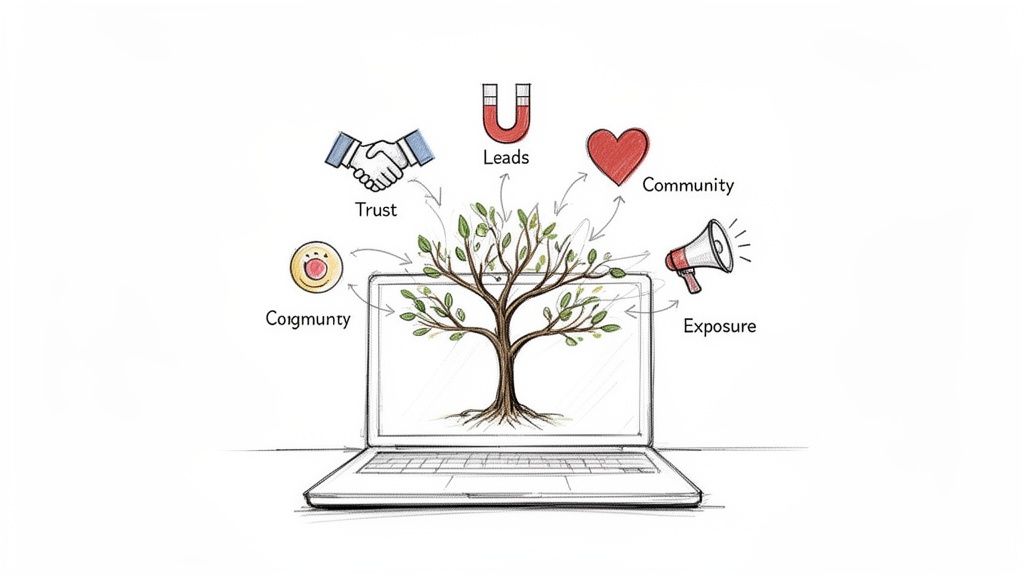
Forget seeing your online activity as just another box to check. A strong digital footprint is the modern storefront, the community town hall, and a direct line to your customers, all rolled into one. It’s where people form their first impression of you, long before they ever see your product or sales page.
A consistent, authentic presence translates directly into real business growth. This isn't about vanity metrics like follower counts. It's about building a loyal community that trusts you and champions your brand—and that trust is what turns passive scrollers into paying customers.
Moving From Noise to Impact
The business case for this is solid. With global social media users projected to hit 5.44 billion by 2025, your audience is already online looking for solutions. It’s your job to meet them there.
Marketers consistently report tangible benefits from their social media efforts, including increased exposure (80 percent), more traffic (73 percent), and lead generation (65 percent). These aren't fuzzy numbers; they show a direct path from strategic online activity to audience and business growth.
Every piece of content you share has the potential to attract, engage, and convert. The key is to shift your mindset from simply "being online" to intentionally building an asset that works for you 24/7.
A powerful online presence isn't built overnight. It's the result of showing up consistently, providing genuine value, and engaging with your audience in a way that builds authentic relationships. Think of it as compounding interest for your brand.
A Founder's Playbook in Action
Let’s look at a real-world example. A bootstrapped founder launches a niche software tool. Instead of burning cash on ads, she commits to spending 30 minutes a day on LinkedIn. She’s not selling—she’s sharing her building process, offering free advice on the problem her tool solves, and having genuine conversations with others in her industry.
Her daily workflow:
- 15 minutes: Write and schedule one helpful post about a common challenge her target users face.
- 15 minutes: Leave five thoughtful comments on posts from other leaders in her niche.
The result? Within three months, she landed her first 100 customers without a marketing budget. Her consistent, helpful presence built authority and trust, making her the go-to expert in her small corner of the market. It’s a perfect illustration of the direct line between consistent effort and real business results.
To get started on building a digital foothold that truly works for you, check out this detailed guide on how to build an online presence that attracts clients. It walks you through the entire playbook, from defining your goals to measuring what matters.
Define Your Audience and Set Clear Goals
Before you write a single post or record a video, you have to do the real work. Building an online presence that actually works doesn’t start with content—it starts with clarity. If you don't have a sharp understanding of who you're talking to and what you want to achieve, you’ll just be shouting into the void.
Getting this foundation right turns content creation from a guessing game into a focused, strategic process. It means every single thing you create has a purpose and a clear path to an audience that genuinely cares.
Let's nail this from the start.
Adopt a Problem-First Persona
Forget those generic demographic profiles listing age, location, and income. They're mostly useless. To create content that truly connects, you need to get inside your audience's head and understand their core challenges.
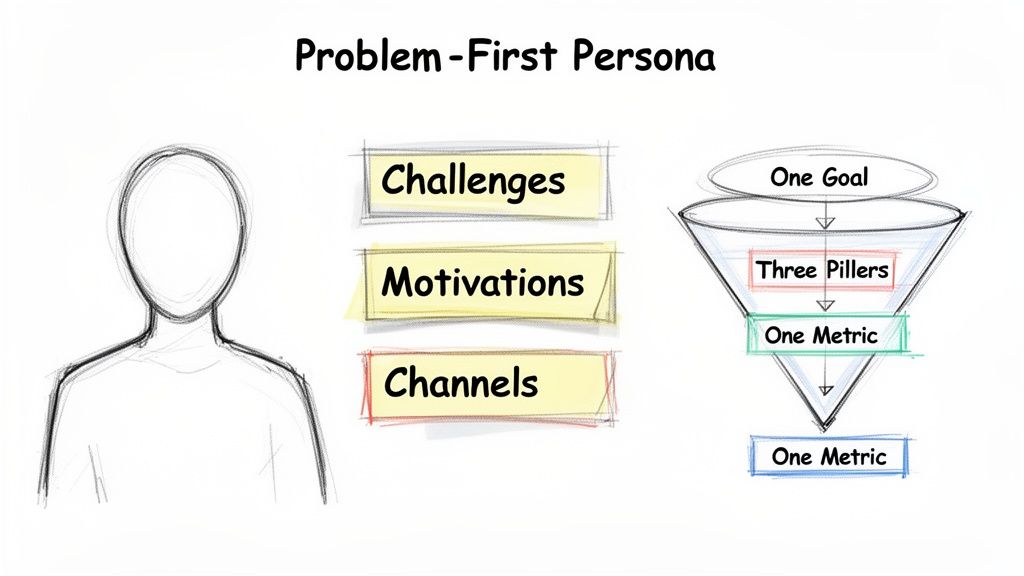
This is where a Problem-First Persona becomes your secret weapon. Instead of asking, "Who are they?" you need to be asking, "What problem are they desperately trying to solve?"
This shift in perspective forces you to lead with value. Your content immediately becomes a solution, not just another piece of information cluttering up their feed. For a deeper dive, check out our guide on how to find your target audience for more detailed frameworks.
To build your persona, get answers to these questions:
- Core Challenge: What is the single biggest pain point they face that your expertise can solve? (e.g., A freelance designer is struggling to find high-paying clients consistently.)
- Motivations: What's the real desire driving them to solve this problem? (e.g., They want financial stability and the freedom to finally choose creative projects they love.)
- Watering Holes: Where do they hang out online to find information and talk about these challenges? (e.g., Specific LinkedIn groups for freelancers, subreddits like r/freelance, or certain design-focused blogs.)
Answering these gives you a roadmap for both what to create and where to share it.
By focusing on the problem first, you stop selling a product and start offering a solution. This is the fastest way to build trust and authority with a new audience.
The 1-3-1 Method for Setting Goals
Once you know your audience, you need to define what winning looks like. It’s way too easy to get lost chasing vanity metrics like likes and follower counts, which rarely translate into actual business results.
A simple, powerful way to stay focused is the 1-3-1 Method.
This framework cuts through the noise and connects your content directly to a meaningful business objective. For a founder or operator with limited time, this kind of alignment is non-negotiable.
Here’s the breakdown:
-
One Primary Objective: Pick a single, primary business goal for your online presence for the next 90 days. This has to be a tangible outcome, not a vague wish. A great example would be to drive demo requests for your SaaS product.
-
Three Content Pillars: Choose three core themes that directly support that primary objective. These pillars will guide all your content creation, keeping you on track. For our demo request example, the pillars could be:
- Industry Insights: Sharing expert analysis that positions you as a thought leader.
- Founder Journey: Documenting the behind-the-scenes of building your product to create a human connection.
- Customer Success Stories: Showcasing how real users solve problems with your tool, which provides powerful social proof.
-
One Key Metric: Identify the one metric that best shows progress toward your primary objective. This is your North Star. While other numbers are interesting, this is the one you report on weekly. To drive demo requests, your key metric is simple: weekly demo signups from social channels.
This streamlined approach brings incredible clarity. The next time you sit down to create content, you won't be staring at a blank page. You'll know exactly who you’re talking to, what to cover, and what you want them to do next. It’s a simple system for turning online activity into real business growth.
Choose Your Platforms with Strategic Focus
The sheer number of social media platforms out there can feel like a trap. It’s so tempting to think you need to be everywhere at once, but trust me—that’s a one-way ticket to burnout with almost nothing to show for it.
The real secret isn’t being everywhere; it’s about being in the right places, over and over again. Instead of stretching yourself thin, the goal is to pick your battles. You’ll make a smarter choice by looking at three simple things: where your audience actually hangs out, what kind of content you're good at making, and how much time you realistically have.
Go Where Your Audience Lives
The first rule of building any kind of online presence is to show up where your people already are. You’re not trying to drag them to a new party; you’re joining the one they’re already at. This means you have to get past your assumptions and look at how people are actually behaving.
It’s a huge mistake to just guess. While Facebook is still a monster with 3.065 billion monthly active users, how people use it is totally different from other platforms. TikTok users, for example, are way more engaged, spending an average of 47.3 minutes a day on the app.
In the U.S., YouTube is the undisputed leader, with 84 percent of adults using it. Facebook comes in next at 71 percent. But here’s the key stat: about half of American adults visit both Facebook and YouTube at least once a day, and 37 percent hit up Facebook several times a day. This tells you that showing up consistently on the right platform is how you stay visible. For a deeper dive, it's worth exploring the latest social media demographics.
Match the Platform to Your Strengths
Every platform has its own vibe and its own "language." A strategy that absolutely kills it on LinkedIn will probably fall completely flat on TikTok. If you pick a platform that plays to your natural strengths, the whole process will feel less like a chore and more like something you can actually stick with.
Are you a great writer who can break down complicated ideas? LinkedIn articles and threads on X (formerly Twitter) could be your jam. More of a visual person who’s comfortable on camera? Then Instagram Reels or TikTok are probably a much better fit.
Don't force yourself onto a platform just because it's popular. The best platform for you is the one where you can consistently create valuable content without wanting to tear your hair out. Authenticity and sustainability win, every single time.
Platform Smackdown: Where to Invest Your Time
To help you sort through the noise, I've put together a quick comparison of the major players. Think of this as your cheat sheet for figuring out where your time and energy will deliver the best results.
| Platform | Primary Audience | Best For… | Key Content Format |
|---|---|---|---|
| B2B professionals, founders, industry experts, job seekers. | Building professional authority, B2B lead generation, and networking with peers. | Text-based posts, articles, carousels, and professional video. | |
| X (Twitter) | Journalists, tech industry, marketers, and engaged communities. | Real-time conversations, sharing quick insights, and engaging in industry news. | Short-form text (threads), memes, and quick video clips. |
| B2C consumers, creators, and visually-driven brands (ages 18-34). | Building a visual brand identity, community engagement, and creator collaborations. | High-quality images, Reels (short video), and Stories. | |
| TikTok | Gen Z and Millennials seeking entertainment and authentic content. | High-engagement, short-form video content, and trend-based marketing. | Short, entertaining, and educational videos with trending audio. |
| YouTube | A broad demographic seeking educational and entertainment content. | In-depth tutorials, long-form educational content, and building a loyal subscriber base. | Long-form video, tutorials, vlogs, and shorts. |
Use this table as a starting point, not the final word. The sweet spot is where your audience, your skills, and your schedule all meet. My advice? Start with just one or two platforms. Get really good at them. Once you've got a solid workflow humming, then you can think about expanding. A focused approach is always going to be more productive than a scattered one.
Build a Sustainable Content Creation Workflow
Knowing what to post and where is a huge first step. But let's be honest, the real challenge is actually doing it. Consistency is the engine of growth online, but it’s usually the first thing that gets dropped when you’re juggling a dozen other priorities as a founder.
The secret isn’t working harder; it’s about having a repeatable system.
A solid workflow turns content creation from a chaotic, last-minute scramble into a predictable, low-stress part of your week. It's the only way to avoid that dreaded cycle: posting like crazy for a week, then radio silence for a month.
The Content Batching and Repurposing Method
For busy founders, the most effective system I’ve found is Content Batching & Repurposing. It’s built for maximum output with minimal time, freeing you up to actually run your business.
The idea is incredibly simple: dedicate one focused block of time each week to handle your entire content process. Instead of trying to come up with ideas, write, and post on the fly every single day, you knock it all out at once.
Here’s a practical workflow you can implement this week:
- Ideation (30 mins): Open a simple document or spreadsheet. Brainstorm four core content ideas for the month—one for each week. Productivity tip: Mine your sent emails, customer support tickets, and sales call notes for recurring questions. These are pure gold.
- Creation (90 mins): Dedicate a "deep work" session to flesh out these ideas. For one idea, write a detailed LinkedIn post. For another, script a 60-second video. Don't edit heavily, just get the raw material down.
- Scheduling (30 mins): Use a scheduling tool to load your content for the upcoming week. Productivity tip: Schedule posts for times your audience is most active. Most scheduling tools provide this data.
That’s a two-hour weekly commitment. It’s enough to ensure you show up consistently and build real momentum without derailing your entire schedule.
The point of a content workflow isn’t just to create more content. It’s to create better content, more consistently, with less effort. Batching gives you back your time and mental energy—a founder’s most valuable assets.
Turn One Idea Into Many
The other half of this workflow is repurposing. You don't need a brilliant new idea for every single post. You just need one strong idea that can be spun out and adapted for different platforms. This is how you get the most mileage out of your insights and reach a much wider audience.
Let's say your core idea is a unique take on a common industry problem. Here’s a practical repurposing workflow:
- Pillar Content: Start with a detailed, 600-word LinkedIn article that digs into the problem, your perspective, and the solution. This is your authority piece.
- Micro Content:
- X (Twitter) Thread: Pull the key points from the article and turn them into a punchy, 8-tweet thread with a strong hook.
- Instagram Carousel: Convert the main takeaways into a visually sharp 5-slide carousel. Use a free tool like Canva for quick, professional-looking graphics.
- Short Video Script: Use the core idea as a script for a 60-second TikTok or Reel. Look at the camera, talk directly about the viewer's pain point, and give them a quick, actionable tip.
From one single thought, you’ve just created four distinct pieces of content, each speaking the native "language" of its platform. You've worked smarter, not harder.
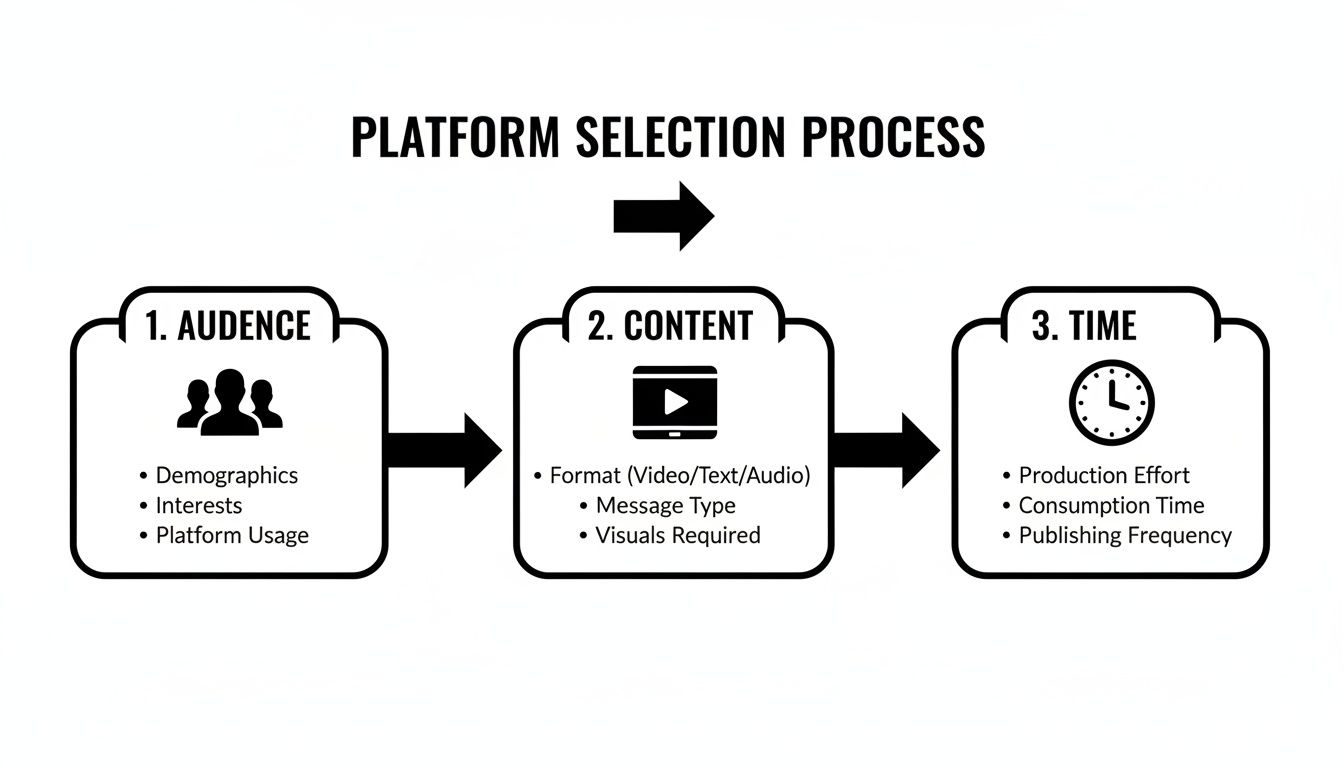
This just reinforces the whole idea: your workflow should focus your efforts on the platforms where your audience, content style, and available time actually line up.
Leverage Tools for Productivity
Putting a system in place doesn't mean you have to do everything by hand. The right tools can automate the boring stuff and give your creativity a jumpstart, making the whole process way more efficient.
Here is a practical toolkit to streamline your workflow:
- Idea Generation: Use AI assistants like Postful for curated ideas and templates to overcome writer's block. Set up Google Alerts for your industry keywords to get a steady stream of relevant news and topics delivered to your inbox.
- Drafting & Refinement: Use Grammarly to polish your writing and catch errors. For more complex ideas, use a mind-mapping tool like Miro or Coggle to visually organize your thoughts before you start writing.
- Scheduling & Automation: Use a social media scheduler like Buffer or Later to queue up your batched content. This is non-negotiable for consistency.
When you combine batching and repurposing with smart tools, you get a powerful system for building your online presence. It turns content creation from a source of stress into a manageable—and maybe even enjoyable—process that gets consistent results. For more on keeping it all organized, check out our guide on how to create a content calendar.
Amplify Your Reach Beyond Just Posting Content
Getting into a consistent rhythm with high-quality content is a huge win. But it’s really only half the battle.
If you want to build a real presence online, you have to move beyond just broadcasting your ideas. The next step is to actively amplify your work and turn those passive viewers into a genuine community. This is where you graduate from being a content creator to a community builder. It’s all about proactive, strategic engagement that gets your hard work in front of the right people and sparks real conversations.
Create Daily Engagement Loops
One of the most powerful—and most overlooked—growth tactics is building a daily engagement loop. I'm not talking about mindless scrolling. This is a focused, 15-minute routine designed for maximum impact. The goal is to become a visible, valuable member of your niche, not just another account dropping links.
Here is a simple, effective workflow to follow daily:
- Targeted Commenting (10 minutes): Identify 3-5 key accounts in your niche. In your feed, look for a post you can add value to. Instead of "great post!", write something like, "This is a great point. We tried a similar approach and found that [add a specific result or insight]. Have you considered [ask a thoughtful question]?" This immediately positions you as an expert.
- Reply to Everyone (5 minutes): Make it a rule to never leave a comment on your own posts unanswered. A simple "Thanks for sharing your thoughts, [Name]!" shows you're engaged and encourages more people to comment in the future.
This small daily investment builds reciprocity and puts your name in front of hundreds, maybe thousands, of the exact people you want to reach.
Don’t think of engagement as a chore. Think of it as planting seeds. Every thoughtful comment is a potential new connection, a new follower, or a future customer who discovered you through your valuable contributions.
Pursue Strategic Collaborations
You don't have to build your audience in a silo. Partnering up with others is one of the fastest ways to tap into new, relevant communities. Forget trying to land a major celebrity; focus on micro-influencers or complementary brands where the value exchange is clear and achievable for everyone involved.
For example, if you sell a project management tool for freelancers, a fantastic partner could be a popular freelance finance coach. You aren't direct competitors, but you share the exact same target audience.
Here’s a simple outreach template you can adapt:
Subject: Collaboration idea – [Your Brand] + [Their Brand]
Hi [Name],
I've been following your work on [Platform] for a while and love how you [mention something specific you admire].
My audience of [describe your audience] is always looking for ways to [solve a problem they care about], and I thought a collaboration could be a great fit. I'm the founder of [Your Brand], and we [briefly explain what you do].
Would you be open to a quick chat about doing a joint Instagram Live or a simple content swap?
Best,
[Your Name]
This approach is direct, respects their time, and puts mutual value front and center.
Amplify Content in Niche Communities
Your best content deserves to be seen more than once. Sharing it in relevant, niche communities on platforms like Reddit or dedicated Facebook Groups can drive a ton of traffic and attract highly qualified followers. The key is doing it without being spammy.
Never just drop a link and run. Instead, follow the Value-First Workflow:
- Join and Listen (Week 1): Join 3-5 relevant communities. For the first week, don't post. Just read and upvote to understand the group's culture and rules.
- Provide Standalone Value (Week 2): Find a question you can answer thoroughly. Write a helpful, native post directly in the group. Don't include any links.
- Link Naturally (Week 3+): After you've established yourself as a helpful member, you can share your content. Frame it helpfully: "I saw a few people asking about [topic]. I wrote a detailed guide on this that might help. Here's the link if you're interested."
When you're tracking how well these links perform, you'll want to learn more about setting up UTM parameters in our guide. This approach positions you as a helpful expert, not a self-promoter.
Building an online presence has become essential. There are 5.66 billion social media user identities worldwide, and with 259 million new users joining in just one year, the opportunity for entrepreneurs is immense. Since the average user visits 6.75 different platforms each month, these amplification strategies are crucial for staying visible where your audience spends their time. Discover more insights on social media user growth.
Answering Your Top Online Presence Questions
Even with the best plan, you're going to hit some roadblocks. It's just part of building something online. Founders and small operators almost always run into the same hurdles when they try to turn a good strategy into daily habits.
This section tackles those common sticking points head-on. Think of it as a quick guide for getting unstuck, whether you're wondering about your time commitment or how to handle that first negative comment.
How Much Time Should I Spend on Social Media Each Week?
When you're starting out, it's all about consistency over intensity. Don't try to boil the ocean. A manageable 3-5 hours per week is a great target. The most common mistake I see is founders going all-in, burning out, and then disappearing for weeks—killing any momentum they just built.
Here’s a practical weekly time-blocking schedule:
- Monday (2 hours): Content creation and scheduling for the entire week.
- Tuesday-Friday (15-20 mins/day): Focused engagement. Reply to comments on your posts and leave thoughtful comments on 3-5 other accounts.
This keeps you visible without letting social media eat your entire schedule.
Should I Focus on a Personal or Business Brand Account?
For a founder or solo operator, a personal brand is almost always the right move, especially at the beginning. People connect with people, not logos. Sharing your own journey, your expertise, and what's happening behind the scenes builds trust way faster than a faceless business account ever could.
Your personal account is what makes your business human. It tells a story.
A strong personal brand acts as the lead magnet for your business brand. Use your personal account on platforms like LinkedIn or X to share your story and expertise, which naturally drives interested followers to your business's offerings.
If you're strapped for time, put your energy into your personal brand. You can always use the business account for product updates or customer stories, but the real connection happens with you.
What Should I Do If I Get Negative Comments?
First, just breathe. It happens to everyone. The trick is to figure out if you're dealing with real criticism or just a troll. Your response depends entirely on their intent.
- Constructive Criticism: If someone leaves thoughtful, genuine feedback, thank them for it. Acknowledge their point. This is a huge opportunity to show you're listening and can turn a critic into a fan.
- Trolling or Negativity: For comments that are just plain rude or hateful, the best move is usually to ignore them. Don't get into a mud-wrestling match. Use the platform's tools to hide or delete the comment and just move on with your day.
No matter what, keep your tone professional and calm. You're trying to build a positive community, so focus your energy on the productive conversations.
How Long Until I See Real Results?
This is a marathon, not a sprint. You're building trust and authority, and that just takes time. You won't see a flood of followers, leads, or sales in the first few weeks. It doesn't work that way.
For the first 90 days, your job is to look for the leading indicators—the small signs that you're on the right track.
Are people leaving thoughtful comments instead of just emojis? Are they starting to ask you questions? Is your engagement rate slowly ticking up?
Those are the things that matter early on. Real, noticeable momentum usually starts to build after about 3-6 months of consistent, valuable content and genuine interaction. As your audience grows, you might find that exploring AI-powered customer support solutions can help you efficiently manage and answer their common questions, which is a great problem to have.
The key is to stick with it, keep showing up with value, and trust the process.
Ready to stop guessing and start growing? Postful is the AI-powered social media tool built for busy founders and operators like you. Get curated post ideas, smart brainstorming tools, and automation that gives you back your time. Join the waitlist today to build a consistent, confident online presence. Secure your early access to Postful.