
For a small business owner, social media can feel like a constant battle against the blank page. The pressure to post consistently, engage authentically, and drive results is immense, especially when you're juggling every other aspect of the company. Staring at an empty content scheduler is not just frustrating; it's a productivity killer that pulls you away from core business operations.
This isn't another list of generic social media ideas for small business that leaves the hard work to you. This is a productivity-focused playbook designed to save you time and eliminate the daily guesswork. We will break down 10 powerful, actionable strategies you can implement immediately. Each idea comes with practical examples, copy-and-paste prompts, workflow suggestions, and the key performance indicators (KPIs) you should actually be tracking to measure success.
You will learn not just what to post, but how to create a sustainable and effective content system. The goal is to move beyond reactive, last-minute posting and into a structured, strategic approach. To maintain this consistency and maximize your productivity, a key first step is often focused on building a social media content calendar to map out your efforts in advance. This guide provides the building blocks for that calendar.
We'll cover everything from leveraging user-generated content and short-form video to executing strategic partnerships and paid ad campaigns. By the end, you'll have a clear framework for turning content creation from a daily chore into a strategic advantage, freeing you up to focus on what you do best: running your business.
1. User-Generated Content (UGC) Campaigns
User-Generated Content (UGC) campaigns turn your customers into your most authentic marketers. This strategy involves encouraging your audience to create and share content featuring your products or services, which you can then reshare on your own channels. It's one of the most powerful social media ideas for small business because it builds a community around your brand and provides a steady stream of genuine, high-trust content that resonates more deeply with potential customers than polished, branded ads.
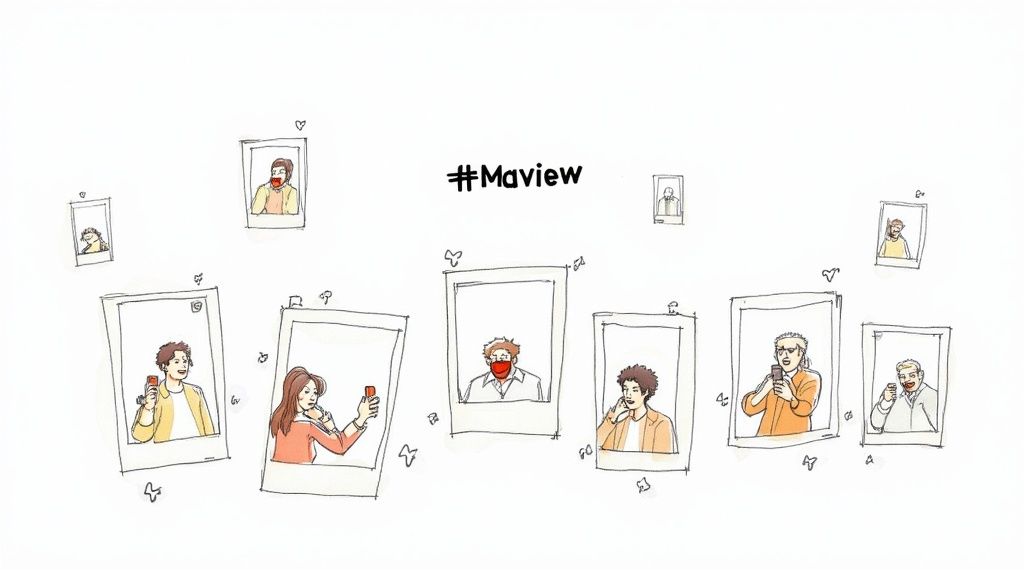
Practical Example: A local coffee shop runs a "Mugshot Monday" contest using the hashtag #CaffeineAndCoMugs. Customers post photos with their branded reusable mugs for a chance to win a free coffee. The shop gets dozens of authentic photos to feature on their feed all week.
How to Implement a UGC Campaign
- Create a Unique, Branded Hashtag: Develop a simple, memorable hashtag that is specific to your campaign or brand (e.g., #MyBrandStyle, #CafeNameMornings). This makes it easy to track submissions and build a searchable gallery of customer posts.
- Offer a Clear Incentive: Motivate your audience to participate. This could be a contest with a prize, a discount on their next purchase, or the chance to be featured on your official social media profiles and website.
- Set Clear Guidelines: Explain what kind of content you're looking for. Do you want photos, videos, or text reviews? Specify the theme and any rules for entry. Managing these submissions is key; establishing effective user-generated content moderation practices is crucial to protect your brand and foster a positive community space.
- Productivity Workflow: Create a dedicated folder in your cloud storage (e.g., Google Drive) for approved UGC. When you see a great post, screenshot it and ask the user for permission to reshare in a DM. Once they agree, save the image to your folder. Now you have a bank of content ready to schedule. For more ideas on this, learn how to repurpose customer photos and reviews into weekly content.
2. Instagram Reels and TikTok Short-Form Video
Leveraging Instagram Reels and TikTok short-form video is no longer optional; it's one of the most vital social media ideas for small businesses looking to achieve rapid growth. This strategy involves creating short, engaging videos (typically 15-90 seconds) designed for vertical mobile viewing. Both platforms' algorithms heavily favor this format, pushing your content to new "For You" and "Explore" pages, providing unparalleled organic reach and brand visibility that static posts often cannot match.

Practical Example: A handmade soap company creates a 15-second Reel showing the mesmerizing process of swirling colors into a new batch of soap, set to a trending audio track. The caption reads: "Lavender Dreams coming next week! ✨" This simple video generates excitement and pre-launches a product with minimal effort.
How to Implement Short-Form Video
- Jump on Trends Quickly: The lifespan of a trend is short. Use trending sounds, filters, and formats within 48-72 hours of them peaking to maximize algorithmic favor. Keep an eye on your "For You" page for inspiration that aligns with your brand's voice.
- Provide Value and Entertainment: Your content should either teach something (a quick tutorial), solve a problem (a simple hack), or entertain (a behind-the-scenes look or funny skit). Don't just sell; tell a story that captures attention in the first three seconds.
- Optimize for Silent Viewing: Many users watch videos without sound. Use bold text overlays, captions, and clear on-screen visuals to ensure your message gets across even when muted. End with a clear call-to-action (e.g., "Shop the link in bio," "Follow for more tips").
- Productivity Workflow: Use a tool like CapCut or InShot to edit videos on your phone. Batch-film 4-5 short videos in one session. You can change your shirt or location slightly for variety. Then, spend another session editing them all at once. This "batching" method is far more efficient than creating one video from scratch every day. The principles for engaging content also apply to other platforms; for a deeper dive, explore what YouTube Shorts are.
3. Educational Content and How-To Tutorials
Providing educational content positions your brand as an expert in your field, building trust and offering genuine value far beyond just selling a product. This strategy involves creating how-to guides, tutorials, and informational posts that solve your audience's problems or teach them a new skill related to your industry. It's one of the most effective social media ideas for small business because it attracts an engaged audience that sees you as a go-to resource, encouraging follows, saves, and shares.
Practical Example: A financial advisor creates an Instagram carousel post titled "5 Common Money Mistakes to Avoid in Your 20s." Each slide details one mistake and offers a simple, actionable solution. The final slide has a call-to-action: "Save this post for later!" This content is highly shareable and establishes the advisor's authority.
How to Implement Educational Content
- Identify Customer Pain Points: What are the most common questions you receive? Use a tool like AnswerThePublic or browse forums like Reddit to find what your audience is asking. A local bakery could create a tutorial on "3 Ways to Keep Bread Fresh Longer."
- Break Down Complex Topics: Don't overwhelm your audience. Turn a big topic into a series of smaller, digestible posts, like a carousel, a short video series, or a weekly tip. This keeps them coming back for more.
- Use Visuals and Demonstrations: Show, don't just tell. Use video tutorials, screen recordings, infographics, and step-by-step photo guides to make your instructions clear and easy to follow. For instance, a software company can create short screen-recorded GIFs to explain a new feature.
- Productivity Workflow: Adopt a "Pillar Content" strategy. Write one in-depth blog post or create one detailed YouTube video per month (your pillar). Then, spend the rest of the month breaking that pillar down into smaller "micro-content" for social media: 5-7 quote graphics, 2-3 short video clips, a carousel post, and several tweets. This creates a month's worth of content from a single effort. For more ideas, learn how to create social media content that truly connects with your audience.
4. Influencer Partnerships and Micro-Influencer Collaborations
Collaborating with influencers allows your small business to tap into pre-built, trusting communities. This strategy involves partnering with creators who have an engaged audience in your specific niche, leveraging their credibility to introduce your brand to potential customers. It's an effective social media idea for small business because it places your product in a context of authenticity and authority, often driving higher conversion rates than traditional ads.
Practical Example: A small, eco-friendly cleaning supply brand partners with a "CleanTok" micro-influencer (15k followers) who focuses on sustainable living. They gift her a product bundle, and she creates a genuine "Sunday Reset" video featuring the products in action. The post feels authentic and drives targeted traffic to the brand's website.
How to Implement Influencer Collaborations
- Focus on Micro-Influencers: Don't just chase huge follower counts. Micro-influencers (typically 10k-100k followers) often have higher engagement rates and a more dedicated, niche audience. Their endorsements can feel more genuine and are usually more affordable for a small business budget.
- Vet Potential Partners: Ensure an influencer's audience aligns with your target demographic. Use tools like HypeAuditor or Upfluence to check for authentic followers and analyze engagement metrics. Look for partners whose values and aesthetic genuinely match your brand's identity.
- Establish Clear Deliverables: Create a clear, concise brief outlining your expectations. Specify the number of posts, stories, or videos, key messaging points, and usage rights for the content they create. Agree on timelines and compensation (whether it's a fee, commission, or free product) before starting.
- Productivity Workflow: Create a spreadsheet to track potential influencers. Include columns for their handle, follower count, engagement rate, niche, contact info, and status (e.g., "Contacted," "Negotiating," "Active"). This CRM-style system keeps your outreach organized and scalable.
5. Live Streaming and Real-Time Engagement
Live streaming offers an unfiltered, real-time connection with your audience that pre-recorded content simply cannot match. This strategy involves broadcasting live video on platforms like Instagram, Facebook, TikTok, or YouTube, creating an interactive space for immediate engagement. It's an invaluable social media idea for small businesses because platforms often prioritize live content, boosting your visibility and fostering a sense of urgency and community among viewers.
Practical Example: A local boutique hosts a weekly "First Look Friday" on Instagram Live, where the owner unboxes and tries on new arrivals. Viewers can ask questions about sizing and material in real-time and are the first to know when items are available online, creating urgency and driving immediate sales.
How to Implement Live Streaming
- Schedule and Promote in Advance: Treat your live stream like an event. Announce it a few days beforehand using posts, Stories, and email newsletters to build anticipation and maximize attendance. Use countdown stickers on Instagram to remind followers.
- Prepare an Outline, Not a Script: Have a clear plan with key talking points, questions to ask your audience, and a call to action. However, avoid a rigid script to maintain a natural, conversational tone that encourages interaction.
- Engage with Viewers in Real-Time: The magic of live video is the interaction. Acknowledge viewers by name as they join, answer their questions as they come in, and respond to their comments. This makes your audience feel seen and valued.
- Productivity Workflow: Create a reusable checklist for your live streams. Include items like "Test internet connection," "Clean camera lens," "Set up lighting," "Post reminder 1 hour before," and "Save video after." This standardized process reduces pre-live stress and ensures you don't miss a crucial step.
6. Community Building and Engagement Strategy
A Community Building and Engagement Strategy shifts your social media from a simple broadcast channel to a vibrant, interactive hub for your audience. Instead of just posting content, you actively foster conversations, build relationships, and create a space where customers feel connected to your brand and each other. This is one of the most sustainable social media ideas for small business because it cultivates loyalty, turning one-time buyers into long-term brand advocates who feel a true sense of belonging.
Practical Example: A company that sells gardening tools creates a private Facebook Group called "Gardening Growers." Members share photos of their gardens, ask for advice on plant diseases, and celebrate their harvests. The company moderates the group and posts a weekly tip, fostering a valuable community with minimal direct selling.
How to Implement a Community Building Strategy
- Be Responsive and Proactive: Make it a policy to respond to comments and direct messages as quickly as possible, ideally within a few hours. Don't just answer questions; engage with positive feedback and ask follow-up questions to spark deeper conversations.
- Create Dedicated Community Spaces: Consider launching a private Facebook Group, a Discord server, or a Slack channel for your most dedicated customers. Use this space to offer exclusive content, early access to products, and direct access to your team.
- Ask Open-Ended Questions: Don't just talk at your audience; talk with them. Post questions related to your industry, their challenges, or their experiences with your products. For example, a coffee shop could ask, "What's your go-to drink on a rainy Monday morning?"
- Productivity Workflow: Dedicate two 15-minute "engagement blocks" to your daily schedule—one in the morning and one in the afternoon. During this time, your only task is to respond to comments, engage with tagged posts, and comment on 5-10 posts from relevant accounts. This focused approach is more effective than being "always on."
7. Email Marketing Integration with Social Media
Integrating your email marketing with your social media creates a powerful, cohesive system that nurtures leads and drives conversions. This strategy connects your platforms, allowing you to guide followers from a casual social interaction to a more direct, personalized communication channel like email. It's one of the most effective social media ideas for small business because it allows you to own your audience list, reducing reliance on algorithms and increasing customer lifetime value.
Practical Example: A business coach offers a free "5-Day Productivity Challenge" PDF. She promotes it on her Instagram Stories with a direct link to a sign-up landing page. Followers who sign up are added to her email list and receive a welcome sequence that builds rapport and eventually offers her paid coaching services.
How to Implement Email Marketing Integration
- Promote an Irresistible Lead Magnet: Offer something of genuine value in exchange for an email address. This could be a checklist, an ebook, a webinar, or a template. Create this once and promote it consistently. Use your link-in-bio tool (like Linktree or Later) to feature the sign-up link prominently.
- Segment Your Audience by Source: When a new subscriber signs up, track which social media platform they came from. You can do this with unique landing pages or UTM parameters. This allows you to tailor your email welcome series and future content to what you know resonates with an Instagram or a LinkedIn audience, for example.
- Repurpose Content Across Channels: Don't create everything from scratch. Share a preview of your latest newsletter on your Instagram Stories with a "link in bio" sticker. Turn a high-performing email into a Twitter thread or a short-form video. This workflow maximizes your content's reach and saves you valuable time.
- Productivity Workflow: Use an email marketing tool like Mailchimp or ConvertKit to set up an automated "welcome sequence." This is a series of 3-5 emails that are automatically sent to new subscribers. You write them once, and they work for you 24/7 to nurture new leads without any manual effort.
8. Consistent Branding and Aesthetic Identity
Developing a consistent brand identity across all your social media platforms is crucial for building a memorable and professional presence. This strategy involves using a cohesive set of colors, fonts, logos, and a consistent tone of voice in every post. It's one of the most fundamental social media ideas for small business because it makes your brand instantly recognizable, fostering trust and improving brand recall in a crowded digital landscape.

Practical Example: A freelance graphic designer uses the same three colors (e.g., navy, mustard, and cream), two fonts, and a friendly, encouraging tone in every single Instagram post, LinkedIn article, and Tweet. Over time, their audience can recognize their content in a crowded feed even before seeing their name.
How to Implement Consistent Branding
- Create a Brand Style Guide: Develop a simple one-page document outlining your official logo usage, primary and secondary color palettes (with hex codes), and approved fonts. This guide becomes the single source of truth for anyone creating content for your brand.
- Use Design Templates: Tools like Canva or Adobe Express are perfect for small businesses. Create a set of 5-10 reusable templates for different post types like quotes, announcements, and testimonials. This ensures every graphic aligns with your aesthetic and saves you significant time.
- Establish a Consistent Voice: Decide on your brand's personality. Are you witty and informal, or professional and authoritative? Document this "tone of voice" and apply it to all captions, comments, and direct messages to create a cohesive brand experience.
- Productivity Workflow: In Canva, use the "Brand Kit" feature to save your logos, colors, and fonts. Create your templates, and then when it's time to make a new post, simply duplicate a template and update the text and image. This reduces content creation time from hours to minutes.
9. Paid Social media Advertising and Retargeting
While organic growth is crucial, Paid Social Media Advertising and Retargeting are indispensable tools for amplifying your reach and driving conversions. This strategy involves using the built-in advertising platforms on sites like Facebook, Instagram, and LinkedIn to deliver highly targeted ads to new audiences and re-engage people who have already interacted with your business. It's a key social media idea for small business because it complements your organic efforts, providing predictable traffic and measurable ROI.
Practical Example: An online course creator runs a Facebook ad campaign targeting people who watched 50% of her free webinar video but didn't click the link. The ad shows a testimonial from a successful student and includes a special "last chance" discount code to encourage them to enroll. This retargeting is highly effective because it reaches a warm, interested audience.
How to Implement Paid Social and Retargeting
- Install Tracking Pixels: Before running any ads, install the Meta Pixel (for Facebook and Instagram) and LinkedIn Insight Tag on your website. This is non-negotiable as it allows the platforms to track conversions, build retargeting audiences, and optimize ad delivery for better results.
- Define Your Audience and Objective: Be specific about who you want to reach. Use detailed demographic, interest, and behavioral targeting. Also, choose a clear campaign objective, such as website traffic, lead generation, or sales. This tells the platform's algorithm exactly what you want to achieve.
- Start with a Small Test Budget: You don't need a massive budget to begin. Start with $5-$10 per day to test different ad creatives, headlines, and audience segments. This A/B testing approach helps you identify what resonates before scaling up your spending on the winning variations.
- Productivity Workflow: Create a "swipe file" of ads that you find compelling. When you see an effective ad in your feed, screenshot it and save it to a folder. When it's time to write your own ads, review your swipe file for inspiration on hooks, visuals, and calls to action. This saves you from staring at a blank page.
10. Strategic Partnerships and Cross-Promotions
Strategic partnerships allow you to tap into a new, relevant audience by collaborating with a complementary, non-competing business. This approach involves co-creating content, running joint campaigns, or simply cross-promoting each other's offerings to your respective followers. It's one of the most efficient social media ideas for small business because it effectively doubles your marketing reach and splits the creative workload, providing fresh value to both audiences.
Practical Example: A wedding photographer and a florist team up for an "Ultimate Wedding Giveaway" on Instagram. To enter, users must follow both accounts, like the post, and tag a friend. The campaign pools their marketing efforts and allows both businesses to gain hundreds of highly relevant, local followers who are actively planning a wedding.
How to Implement a Partnership Campaign
- Identify Complementary Partners: Look for businesses whose products or services appeal to your target customer but don't directly compete with you. A local bookstore could partner with a coffee shop, or a graphic designer could team up with a copywriter. Ensure their brand values and audience demographics align with yours.
- Establish Clear Terms: Before launching, create a simple agreement outlining the goals, responsibilities, timeline, and how you'll both promote the collaboration. This prevents miscommunication and ensures a balanced effort from both sides.
- Create Mutually Beneficial Content: Brainstorm content that benefits both brands. Ideas include co-hosting an Instagram Live Q&A, creating a joint guide or resource, running a shared contest, or offering a bundled discount. The key is to create value that neither business could easily offer on its own.
- Productivity Workflow: Create a standardized outreach template for potential partners. This email or DM should briefly introduce your brand, explain why you think a partnership would be a good fit, and suggest one or two specific collaboration ideas. A template makes it easy to reach out to multiple potential partners efficiently.
Top 10 Social Media Ideas — Comparison
| Strategy | 🔄 Implementation complexity | ⚡ Resource requirements | 📊 Expected outcomes | 💡 Ideal use cases | ⭐ Key advantages |
|---|---|---|---|---|---|
| User-Generated Content (UGC) Campaigns | Moderate — setup, moderation, legal oversight | Low–Medium — community management + incentives | High engagement and authentic social proof | Retail, cosmetics, hospitality, consumer goods | Cost-effective content; builds trust |
| Instagram Reels & TikTok Short-Form Video | Moderate — trend monitoring and editing cadence | Low–Medium — mobile production and editing time | High reach and viral discovery, short lifespan | Fashion, food, lifestyle, service brands; broad appeal | Rapid audience growth and visibility |
| Educational Content & How-To Tutorials | High — requires subject-matter expertise and planning | Medium–High — research, production, and updates | Long-term authority, SEO traffic, shareability | B2B, consulting, software, education, health | Establishes thought leadership and trust |
| Influencer & Micro-Influencer Collaborations | Moderate — partner selection and contract management | Medium — creator fees, coordination, tracking | Targeted reach and credibility; ROI varies | Fashion, beauty, fitness, lifestyle, consumer products | Access to engaged niche audiences |
| Live Streaming & Real-Time Engagement | High — technical setup and performer readiness | Medium — streaming equipment and promotion | Strong real-time interaction; good for launches | Fitness, coaching, retail, education, entertainment | Authentic connection and immediate feedback |
| Community Building & Engagement Strategy | High — ongoing moderation and content planning | High — time-intensive community management | Long-term loyalty, advocacy, customer insights | Subscriptions, fitness, gaming, lifestyle brands | Retention and word-of-mouth growth |
| Email Marketing Integration with Social | Moderate — integration and campaign coordination | Medium — email platform + creative resources | Improved conversions, higher LTV, owned data | E-commerce, subscriptions, digital products, B2B | Better ROI through personalization and funnels |
| Consistent Branding & Aesthetic Identity | Moderate — initial design plus governance | Low–Medium — design assets and templates | Strong brand recall and professional appearance | All businesses, esp. luxury, fashion, lifestyle | Easier content production; consistent recognition |
| Paid Social Media Advertising & Retargeting | Moderate–High — setup, targeting, and optimization | High — ad spend and analytical expertise | Fast, measurable conversions and scalable results | E-commerce, lead generation, local businesses, B2B | Precise targeting and quick ROI potential |
| Strategic Partnerships & Cross-Promotions | Moderate — partner vetting and coordination | Low–Medium — shared content and co-marketing costs | Expanded reach and audience diversification | B2B, local businesses, service providers, product brands | Cost-sharing and access to new audiences |
Turning Ideas Into Impact: Your Next Steps
You now have a comprehensive toolkit filled with actionable social media ideas for small business, from harnessing the power of User-Generated Content to executing strategic paid ad campaigns. We've moved beyond generic advice, providing you with specific frameworks, templates, and platform-specific tweaks designed for immediate implementation. The journey from inspiration to impact, however, depends entirely on what you do next.
The sheer volume of possibilities can feel overwhelming, but the secret to sustainable social media growth isn't about doing everything at once. It’s about doing the right things consistently. The most successful small businesses don’t just post; they build systems that make high-quality content creation a manageable, repeatable part of their weekly workflow.
From List to Action Plan: Your 30-Day Launchpad
To avoid the common trap of analysis paralysis, commit to a focused 30-day experiment. This approach transforms a long list of ideas into a tangible, low-risk action plan.
- Select Your “Power Pair”: Review the ten core strategies we covered. Which two resonate most with your brand’s personality and your audience's behavior? A local cafe might choose Community Building (hosting a "Mug of the Month" contest) and Instagram Reels (showing the art of the perfect latte pour). A SaaS startup, in contrast, might focus on Educational Content (a tutorial series on LinkedIn) and Paid Retargeting (serving ads to recent website visitors).
- Theme Your Weeks: Assign a primary focus for each of the next four weeks. This creates structure and prevents last-minute content panic.
- Week 1: Foundation & Education. Focus on creating a pillar piece of how-to content. Write a detailed blog post, film a comprehensive YouTube tutorial, or design an informative carousel post.
- Week 2: Engagement & Community. Dedicate this week to your second chosen idea. Run a poll, launch a UGC hashtag, go live for a Q&A session, or actively engage in five relevant conversations daily.
- Week 3: Promotion & Amplification. Repurpose your content from Week 1. Break the blog post into ten tweets, turn the video tutorial into a 60-second Reel, and create quote graphics from key takeaways.
- Week 4: Analyze & Iterate. Use your platform’s built-in analytics to review the past three weeks. Which posts had the highest reach? Which drove the most engagement or clicks? Use this data to inform your plan for the next month.
Building a Sustainable Content Engine
The goal is to create a system that runs without burning you out. This is where productivity workflows become your competitive advantage. A simple yet powerful technique is content batching.
Instead of trying to come up with a new idea every single day, set aside a 2-3 hour block once a week. During this "Content Day," you can plan, create, and schedule all your posts for the upcoming week. This small shift in process frees up immense mental energy and ensures your brand maintains a consistent, professional presence even when you're busy running the other parts of your business.
Ultimately, this collection of social media ideas for small business is more than just a list; it’s a strategic menu. Your task is to pick the ingredients that best suit your brand’s flavor, mix them into a cohesive plan, and serve them to your audience with consistency and authenticity. Start small, measure your results, and build momentum. The most powerful strategy is the one you can stick with, and the right system is what makes that possible.
Ready to turn these ideas into a streamlined, automated workflow? Postful uses AI to help you generate endless content ideas, write compelling captions, and schedule posts in minutes, giving you back the time you need to focus on your business. Discover a smarter way to manage your social media at Postful.