
Acquiring a new customer can be five times more expensive than retaining an existing one. For small businesses, solopreneurs, and side-hustlers, this isn't just a statistic; it's a lifeline. In a competitive market, sustainable growth isn't about a revolving door of new faces. It's about building a loyal community that chooses you again and again.
The question is, how do you turn one-time buyers into lifelong advocates? The answer lies in smart, actionable customer retention strategies for small business that fit your limited resources and unique goals. Generic advice won't cut it. You need specific, repeatable workflows that deliver real results without demanding a huge budget or a dedicated marketing team.
This guide moves beyond the basics to give you a prioritized collection of 10 proven methods tailored for the unique challenges of small businesses. We'll break down why each strategy works, how to implement it step-by-step with practical examples, and the key metrics to track your success. To dive deeper into actionable advice for nurturing existing clients, exploring these 8 proven customer retention strategies for small business can provide further insights for sustainable growth.
From loyalty programs and proactive outreach to exclusive content and transparent communication, each item in this list is designed to be immediately useful. Get ready to boost your productivity, strengthen customer relationships, and turn your hard-earned work into a more stable, profitable business. Let’s get started.
1. Loyalty Rewards & Gamification Programs
A loyalty program is more than just a punch card; it's a powerful system for rewarding customers who consistently engage with your business. By integrating gamification, which applies game-design elements like points, badges, and leaderboards to non-game contexts, you can transform routine interactions into compelling experiences. This approach taps into our natural desire for achievement and competition, making customers active participants in your brand's ecosystem and a key part of your customer retention strategies for small business.

This strategy works because it makes retention visible and rewarding. A coffee shop offering a free drink after ten purchases is a simple example. A more advanced one is Duolingo, which uses a "streak" system to encourage daily language practice, making learning feel like a game you don't want to lose. Similarly, Spotify's annual "Wrapped" campaign turns personal listening data into a shareable achievement, fostering a sense of community and brand loyalty.
How to Implement This Strategy
To build an effective program, focus on making progress both visible and valuable.
- Tie Rewards to Key Actions: Don't just reward purchases. Award points for behaviors you want to encourage, like writing a review, referring a friend, or sharing a post on social media. For a service business, this could be awarding a "Priority Support" badge after a client completes five projects with you.
- Visualize Progress: Use progress bars, level systems, or point totals to show customers how close they are to their next reward. This transparency motivates them to complete the next action. For example, a SaaS tool can show a progress bar that fills up as a user explores new features, unlocking a discount when it reaches 100%.
- Mix Reward Types: Combine extrinsic rewards (discounts, free products) with intrinsic ones (early access to new items, special recognition, a "VIP" status). A consultant could offer a free 30-minute strategy session to their top three most engaged clients each quarter.
- Keep it Fresh: Consider refreshing your reward tiers or challenges quarterly. This maintains novelty and prevents your program from becoming stale. For instance, an e-commerce store could run a "Summer Challenge" where customers earn double points for specific seasonal purchases.
Expert Insight: The most effective gamification programs make customers feel like they are building status and earning recognition, not just collecting discounts. This emotional connection is a powerful driver of long-term loyalty.
2. Personalized Onboarding & First-Use Experience
A personalized onboarding process is your first, best chance to prove your product's value to a new customer. Instead of a one-size-fits-all introduction, this strategy guides new users to their "aha moment" quickly by tailoring the initial experience to their specific needs and goals. By helping them achieve a quick win, you demonstrate immediate value, making them far more likely to stick around. This is a critical component of effective customer retention strategies for small business, as it prevents early churn.
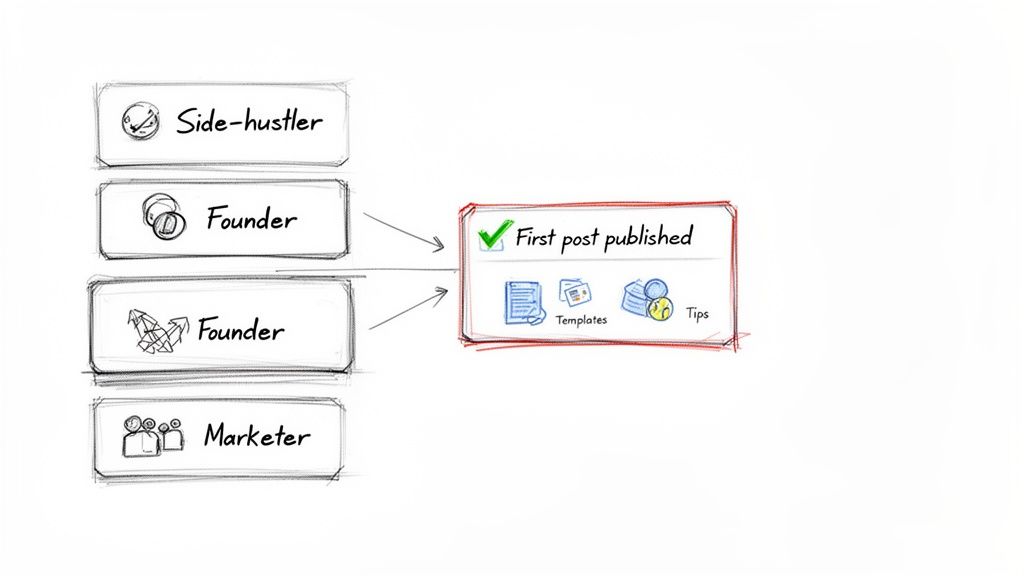
This strategy works because it addresses the user's core question: "What's in it for me?" For example, project management tool Notion offers a template gallery for different use cases like "Marketing" or "Student," immediately showing its relevance. Slack similarly reveals features gradually as you use the app, preventing overwhelm. This focused guidance builds confidence and integrates the product into the user's workflow from day one.
How to Implement This Strategy
To build an onboarding experience that retains customers, focus on delivering value, not just features.
- Segment Users from the Start: During signup, ask a simple question to understand their role or goal (e.g., "What will you use this for?"). Use this to direct them to the most relevant features. A social media tool could ask, "Are you a business owner or a social media manager?" to offer different starting templates.
- Engineer a Quick Win: Identify the single most important action that demonstrates your product's core value. Design your onboarding to guide every new user to complete that action within their first five minutes. For an invoicing tool, this would be creating and sending their first invoice.
- Follow Up with Contextual Tips: Send an automated email 24-48 hours after signup that offers a specific tip related to their initial actions. If a user connected their Instagram account, send them an email titled "3 Ways to Maximize Your Instagram Scheduling." Use an email automation tool like Mailchimp or ConvertKit to set this up.
- Provide an Escape Hatch: Always allow experienced users to skip the tutorial. Forcing a step-by-step guide on a power user creates frustration, not loyalty. A simple "Skip Tour" button is essential.
Expert Insight: The goal of onboarding isn't to show everything your product can do. It's to help the customer solve one small problem immediately. That first successful experience is what earns you the right to show them more later.
3. Community Building & User Peer Support
A community is not just an audience; it's a dynamic ecosystem where customers connect with each other and your brand. By creating a dedicated space for users to share experiences, ask questions, and offer peer support, you build a powerful sense of belonging. This transforms passive customers into active advocates and is one of the most effective customer retention strategies for small business because it creates value beyond your core product or service.

This strategy works by fostering deep emotional connections and turning your most knowledgeable users into a support network. For example, ConvertKit’s creator community offers active forums where members share email marketing strategies. Pricing: see website for details. Webflow's Slack community allows designers to troubleshoot problems together. This peer-to-peer interaction reduces your support burden and makes customers feel like insiders who are part of something bigger.
How to Implement This Strategy
Building a thriving community requires active participation and clear structure. Successful community management involves more than just setting up a group; it’s about nurturing it.
- Establish Clear Guidelines: From day one, set and enforce rules for respectful interaction. This creates a safe and welcoming environment for everyone to participate. Pin a "Community Rules" post at the top of your Facebook Group or Slack channel.
- Actively Participate, Don't Just Monitor: Have your team members join conversations, answer questions, and solicit feedback. This shows you are invested in the community's success. For a solopreneur, dedicating 15 minutes each day to engaging in the community is a high-impact workflow.
- Feature Your Members: Create "member spotlights" or feature active contributors. Recognizing your most engaged users encourages others to participate and creates role models. For instance, share a post saying, "Shoutout to Jane Doe for sharing this incredible marketing tip with the group!"
- Facilitate Themed Discussions: Spark engagement with monthly challenges, themed discussion threads, or Q&A sessions. A "Workflow Wednesday" thread where users share their productivity hacks can create immense value and consistent engagement.
Expert Insight: A community’s true value is realized when members start answering each other's questions. This indicates you’ve successfully built a self-sustaining ecosystem of brand advocates, which is the ultimate goal of customer retention.
4. Proactive Customer Success & Engagement Outreach
Instead of waiting for customers to report problems, proactive outreach involves regularly connecting with them to ensure they are getting the most value from your product or service. This strategy shifts the dynamic from reactive problem-solving to proactive value creation. By offering personalized guidance, tips, and check-ins, you can prevent churn before issues even arise, solidifying your role as a trusted partner in their success. This is a core part of building effective customer retention strategies for small business.
This strategy works because it demonstrates a genuine investment in your customer's goals. Calendly, for example, offers onboarding calls and periodic check-ins to help users optimize their scheduling. Pricing: see website for details. Similarly, Intercom uses automated messages triggered by user behavior to offer timely tips, guiding users toward features they might find valuable but haven't discovered yet. This preemptive support builds confidence and deepens the customer relationship.
How to Implement This Strategy
To execute this effectively, your outreach must feel helpful, not intrusive. Use data to ensure your communication is relevant and timely.
- Identify At-Risk Users: Use analytics to spot customers with low engagement or underutilization of key features. Reach out with a friendly email offering help or pointing them to a useful tutorial. For example, if a user hasn't logged in for 14 days, send an automated email: "Need help getting started? Here are 3 popular features our users love."
- Send Targeted Product Tips: Create email campaigns based on actual usage patterns. If a customer frequently uses your scheduling feature, send them a tip: "Pro Tip: Did you know you can create recurring events? Here's how."
- Schedule Business Reviews: For high-value clients, a quick 15-minute quarterly call to review their progress, answer questions, and share relevant insights can have a huge impact on loyalty. A freelancer can do this with their top 5 clients to reinforce the partnership.
- Automate Milestone Check-ins: Set up automated workflows that trigger messages when a customer hits a milestone, like their 90-day anniversary or after they've published their 10th post. A simple "Congrats on your 10th post!" email shows you're paying attention. For more ideas on timing and content, explore different follow-up strategies that turn one-time jobs into repeat business.
Expert Insight: Proactive engagement is about making your customers feel seen and supported throughout their journey. The goal is to solve problems they didn't even know they had, cementing your value and making your business indispensable.
5. Exclusive Content, Resources & Educational Programs
One of the most valuable customer retention strategies for small business is to empower your audience through knowledge. By offering exclusive content like guides, webinars, or courses, you shift from being a simple vendor to a trusted partner in their success. This strategy positions your brand as an authority and gives customers a compelling reason to stay engaged long after their initial purchase.
This approach works by adding value beyond your core product. For example, HubSpot Academy offers free certifications in marketing and sales, which helps users master the platform while building their professional skills. Similarly, Mailchimp provides extensive guides on email marketing best practices, ensuring its users create effective campaigns. Pricing: see website for details. These resources build a strong, loyal community that sees the company as essential to its growth.
How to Implement This Strategy
To create an effective educational program, focus on solving your customers' most pressing problems.
- Address Specific Pain Points: Develop content that directly answers your audience's questions. A business coach could create a downloadable "Quarterly Goal-Setting Workbook" exclusively for their clients. A design tool might offer a video tutorial on "Creating Your First Brand Kit in 10 Minutes."
- Host Live Engagement Sessions: Run quarterly webinars with live Q&A sessions. This creates a direct line of communication, allows you to gather feedback, and builds a sense of community. Use tools like Zoom or a private YouTube Live stream. Announce topics based on frequently asked support questions.
- Create Industry-Specific Resources: Tailor your educational materials for different customer segments. A CRM provider could create separate "Getting Started" guides for real estate agents, freelancers, and small agencies, each with relevant examples.
- Repurpose Your Content: Maximize your efforts by turning a single piece of educational content into multiple formats. A detailed blog post can be transformed into a video tutorial, a podcast episode, and a series of social media tips. A tool like Descript can help you pull text and video clips from a single recording to speed up this workflow.
Expert Insight: When customers succeed because of the knowledge you provide, your product becomes indispensable. Education is a powerful bonding agent that turns users into brand advocates.
6. Flexible Pricing & Usage-Based Value Models
Your pricing isn't just a number; it's a core part of your customer relationship. Flexible pricing models, particularly those based on usage or value, align your revenue directly with your customers' success. Instead of a one-size-fits-all fee, customers pay based on what they actually use, allowing them to start small and grow their commitment as they get more value. This creates a fair, transparent partnership and is one of the most effective customer retention strategies for small business.
This strategy works because it removes the risk of a large upfront investment and ensures customers only pay for what they need. Look at Zapier's task-based pricing or Airtable's record-based model; both allow users to scale their costs as their operational needs expand. Pricing: see website for details. Similarly, Stripe’s per-transaction fee means a business’s costs grow in lockstep with its revenue, making the service feel like a partner in growth rather than a fixed expense.
How to Implement This Strategy
To design a pricing model that encourages retention, focus on alignment and a smooth upgrade path.
- Offer a Valuable Free Tier: Your free or entry-level plan should provide enough functionality for users to experience a core "aha moment" and understand your product's value. A "freemium" plan for a form builder could allow unlimited forms but limit submissions to 100 per month.
- Make Upgrades Seamless: Clearly communicate what's included in each tier. Use in-app notifications to alert users when they are approaching their limits and make the upgrade process obvious and simple. A message like, "You're at 80% of your contact limit. Upgrade now to avoid interruptions," is clear and actionable.
- Encourage Commitment with Discounts: Offer a 15-20% discount for annual billing. This secures a customer for a longer period and improves your cash flow. Display it prominently on your pricing page, showing the "per month" cost for both monthly and annual options.
- Plan for Contraction: Allow customers to easily downgrade their plans. Preventing them from leaving entirely during a slow period makes it much more likely they will upgrade again when business recovers. This is far better than losing them to a competitor.
Expert Insight: When you update your pricing, grandfathering long-time customers at their original rate shows immense goodwill. This small gesture can turn loyal customers into vocal advocates for your brand.
7. Regular Product Updates & Transparent Roadmap Communication
Stagnation is a silent killer of customer loyalty. When customers feel a product is no longer improving, they start looking for alternatives. A key customer retention strategy for small business owners is to consistently enhance your offerings and transparently communicate what's next. This shows customers that you are invested in the product's future and, more importantly, that you value their feedback in shaping that future. It builds anticipation and transforms users into partners in your product's journey.
This strategy works because it creates a continuous dialogue with your user base, assuring them that their investment of time and money is in a product that is actively growing. Project management tool Notion excels at this by regularly announcing new features and keeping a public record of what's being worked on. Similarly, developer tool Linear publishes detailed release notes for every update, making even small fixes feel like major advancements. This keeps the community engaged and confident in the product's direction.
How to Implement This Strategy
To make this approach effective, combine consistent development with clear, engaging communication.
- Establish a Predictable Cadence: Release updates on a regular schedule, whether it's weekly, monthly, or quarterly. A "Feature Friday" or "Monthly Update" email builds anticipation and trust.
- Create a Public Roadmap: Share a high-level view of your planned features. You can use a simple Trello board or a dedicated tool like Canny.io. Label columns "Planned," "In Progress," and "Launched" to provide clarity.
- Credit Your Customers: When you release a feature based on user suggestions, give them a shout-out in your announcement. "Thanks to Sarah from Acme Inc. for suggesting our new tagging feature!" This demonstrates you listen and encourages more feedback.
- Make Announcements Exciting: Don't just list changes. Craft compelling launch announcements for new features through email, social media, and your blog. A short screen-recorded GIF showing the new feature in action is far more powerful than a block of text.
Expert Insight: A public roadmap isn't just a to-do list; it's a marketing asset. It signals momentum and a commitment to improvement, making it a powerful tool for both retaining existing customers and attracting new ones.
8. Win-Back Campaigns & Churn Recovery Programs
Losing a customer doesn't have to be a permanent breakup. A win-back campaign is a systematic process for re-engaging inactive customers through targeted messaging and special offers. Instead of just letting them go, this strategy proactively reminds them of the value you provide, addresses potential reasons for their departure, and gives them a compelling reason to return. It's one of the most direct customer retention strategies for small business, turning potential losses into renewed loyalty.
This strategy is effective because it costs significantly less to reactivate a past customer than to acquire a new one. Spotify frequently uses this tactic, sending personalized "We miss you" playlists to lapsed subscribers. Duolingo takes a humorous loss-aversion approach, with emails warning users that their learning streak is in danger. Similarly, many SaaS companies, like Slack, send feature highlight emails to inactive workspace members to showcase what they've been missing. Pricing: see website for details.
How to Implement This Strategy
A successful win-back program requires a thoughtful, multi-step approach that combines timing, segmentation, and value.
- Define Your Inactivity Threshold: First, determine what "inactive" means for your business. For a daily-use product, it might be 15 days; for a seasonal one, it could be 90-120 days. A consultant might define "inactive" as a client who hasn't booked a session in 6 months.
- Segment Your Lapsed Customers: Group inactive users based on their past behavior or known reason for leaving. A workflow could be: Create segments in your email tool for "Cancelled Subscription" vs. "Inactive Free User" to tailor messages.
- Create Tiered Campaigns: Start with a gentle nudge, like a simple "We miss you" email highlighting new features. If that doesn't work, follow up a week later with a survey asking why they left. The final step could be a special offer, like "Come back and get 25% off for 3 months."
- Offer Genuine Value: Your message must be more than just an ask. Provide a real incentive, such as a discount on their next purchase, a free piece of content like a new e-book, or early access to a new feature that wasn't available when they left.
Expert Insight: The key to a successful win-back campaign isn't just the offer; it's the timing and the relevance. By showing you understand why they left and have made improvements, you’re not just asking for a sale, you're re-establishing trust.
9. Customer Data & Behavioral Analytics for Personalization
Understanding what your customers do is just as important as knowing who they are. Behavioral analytics moves beyond basic demographics to track how customers interact with your products, services, or website. This data gives you direct insight into usage patterns, feature adoption, and potential churn signals, forming the backbone of proactive and personalized customer retention strategies for small business. By analyzing actions, you can stop guessing and start making data-driven decisions that improve the customer experience.
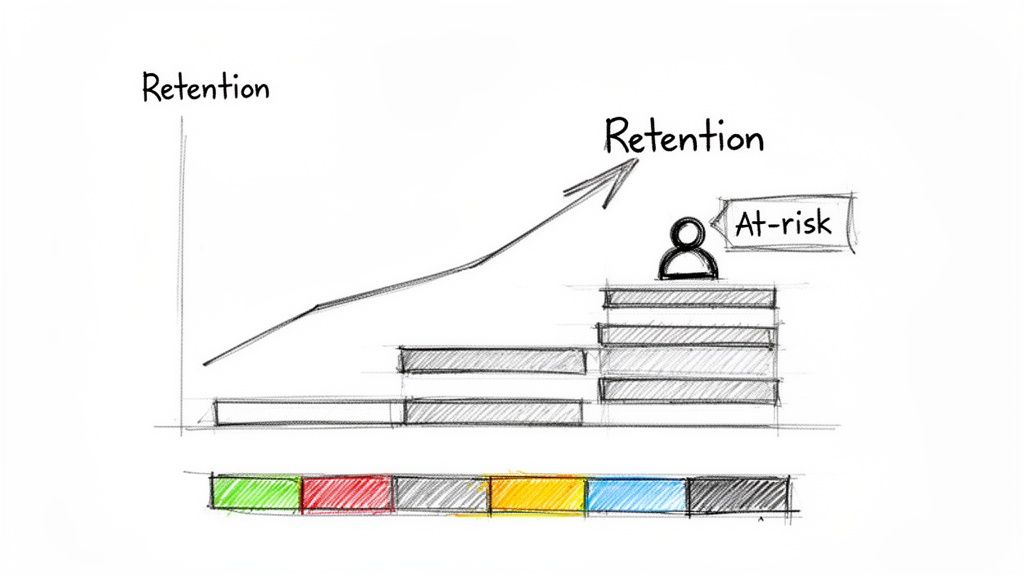
This strategy works because it reveals the "why" behind customer loyalty or churn. For instance, a SaaS company using a tool like Mixpanel might discover that users who invite three team members in their first week have a 90% retention rate after six months. This insight allows them to build an onboarding flow that encourages that specific action. Pricing: see website for details. Similarly, an e-commerce store using Drip can automatically send a "how-to" guide to customers who purchase a complex product but haven't used it, preventing frustration and returns.
How to Implement This Strategy
Start small by tracking a few key metrics and expand as you gain confidence. The goal is to connect actions to outcomes.
- Identify Key Retention Actions: Analyze your most loyal customers. What actions did they take early on? Do they use a specific feature frequently? A practical workflow is to export user data and look for common actions among your top 10% of customers. Focus your tracking on these "golden behaviors."
- Segment Your Audience: Group customers based on their behavior, such as "power users," "new users," or "at-risk users" (e.g., those who haven't logged in for 30 days). You can learn more about creating these groups by understanding what is audience segmentation. Most modern CRM and email tools allow you to create these segments dynamically.
- Set Up Automated Triggers: Create automated email or in-app messages that respond to specific behaviors. For example, send a congratulatory message when a user masters a key feature or a gentle nudge if their activity drops. This can be set up in tools like Intercom or Customer.io. To truly understand your customers and tailor experiences for them, it's crucial to learn how to conduct user research that drives results.
- Monitor Churn Signals: Establish alerts for behaviors that often precede cancellation, like a sudden drop in usage or visiting the pricing page multiple times. This gives your team a chance to intervene with a targeted survey or a personal email.
Expert Insight: Data's true power isn't in collecting it, but in making it accessible. When customer-facing teams can see user behavior in real-time, they can have more relevant, helpful, and personalized conversations that build stronger relationships.
10. Long-Term Partnership & Co-Creation with Power Users
This strategy moves beyond simple retention and transforms your most engaged customers into genuine business partners. By involving these "power users" in product decisions, co-marketing efforts, and exclusive programs, you give them a vested interest in your success. This deep collaboration builds an unbreakable bond, making them powerful advocates and a core part of your growth engine. It's one of the most profound customer retention strategies for small business because it turns transactional relationships into symbiotic partnerships.
This approach works because it taps into a desire for influence and belonging. When customers feel heard and see their feedback directly shape your offerings, their loyalty becomes deeply personal. For instance, Notion showcases templates created by its power users, giving them visibility while enriching the platform for everyone. Pricing: see website for details. Similarly, Figma’s Community Advocates program empowers top users to lead workshops and support their local design communities, strengthening both the product and its ecosystem.
How to Implement This Strategy
Building a successful co-creation program requires identifying the right people and creating a formal structure for engagement.
- Identify Your Power Users: Analyze data to find customers with high usage frequency, deep engagement with features, and a history of providing constructive feedback. Create a list of 10-20 potential candidates to start with.
- Create a Formal Advisory Board: Invite a small, dedicated group of 5-10 active users to a formal council. Schedule monthly or quarterly calls using Google Meet or Zoom to discuss your product roadmap and business strategy. Create a shared document to track ideas and feedback.
- Showcase Their Success: Feature your partners' stories on your blog, in case studies, or on social media. This gives them valuable exposure and provides social proof for your business. A practical example: "How [Partner's Name] Grew Their Business by 50% Using Our Tool."
- Offer Exclusive Benefits: Reward their commitment with premium support, early access to new features, special discounts, or even a revenue-sharing model for high-referring partners. A simple workflow is to create a private Slack channel exclusively for this group to give them direct access to your team.
Expert Insight: The goal is to make your best customers feel like insiders and true partners in your journey. When they have a stake in your success, their loyalty and advocacy become one of your greatest assets.
Small Business Customer Retention: 10-Point Comparison
| Initiative | 🔄 Implementation Complexity | ⚡ Resource & Operational Cost | ⭐ Expected Outcomes / Impact 📊 | 💡 Ideal Use Cases |
|---|---|---|---|---|
| Loyalty Rewards & Gamification Programs | Medium — setup of points/tiers + ongoing management 🔄 | Moderate ongoing ops (dev + ops + rewards) ⚡ | Higher daily/weekly engagement and measurable retention lift ⭐⭐⭐⭐ 📊 | Drive habit formation for solopreneurs; boost frequent posting 💡 |
| Personalized Onboarding & First-Use Experience | High — tailored flows, templates, and tooling required 🔄 | High (dev, UX, content, maintenance) ⚡ | Dramatically higher activation and reduced early churn ⭐⭐⭐⭐⭐ 📊 | New users across diverse personas; fast "aha" within minutes 💡 |
| Community Building & User Peer Support | Medium — platform + moderation processes 🔄 | Medium (community manager, events, content) ⚡ | Strong emotional engagement, UGC, and advocacy over time ⭐⭐⭐⭐ 📊 | Creators and small businesses seeking peer learning and feedback 💡 |
| Proactive Customer Success & Engagement Outreach | High — cadences, personalization, training 🔄 | High (CS team or advanced automation) ⚡ | Significant churn reduction and higher lifetime value ⭐⭐⭐⭐⭐ 📊 | High-value users and early-access cohorts needing hands-on help 💡 |
| Exclusive Content, Resources & Educational Programs | Medium — content production and curation 🔄 | Medium (content creators, hosting, updates) ⚡ | Improved perceived value, user success, and touchpoints ⭐⭐⭐⭐ 📊 | Users wanting skill growth; onboarding support and ongoing training 💡 |
| Flexible Pricing & Usage-Based Value Models | Medium-High — billing infra + product gating 🔄 | Medium (billing, analytics, support) ⚡ | Better conversion fairness and natural upgrade paths; revenue variability ⭐⭐⭐⭐ 📊 | Budget-conscious solopreneurs and scaling teams; pay-for-use models 💡 |
| Regular Product Updates & Transparent Roadmap Communication | Medium — release cadence + comms processes 🔄 | Medium (PM, eng, comms) ⚡ | Increased trust, re-engagement, and feature discovery ⭐⭐⭐⭐ 📊 | Early access users and markets needing visible product momentum 💡 |
| Win-Back Campaigns & Churn Recovery Programs | Low-Medium — automated sequences + segmentation 🔄 | Low-Moderate (marketing automation + offers) ⚡ | Recover small % of churned users cost-effectively (5–15%) ⭐⭐⭐ 📊 | Lapsed free or infrequent users (30–60 day inactivity) with targeted offers 💡 |
| Customer Data & Behavioral Analytics for Personalization | High — tracking, models, dashboards 🔄 | High (data infra, analysts, compliance) ⚡ | Data-driven churn prediction, targeted interventions, better ROI ⭐⭐⭐⭐⭐ 📊 | Prioritizing scalable personalization and evidence-based retention tactics 💡 |
| Long-Term Partnership & Co-Creation with Power Users | Medium-High — formal programs and collaboration processes 🔄 | Medium-High (partner management, co-marketing) ⚡ | Deep advocacy, authentic case studies, and reduced high-value churn ⭐⭐⭐⭐ 📊 | Identify and partner with breakout users for co-creation and referrals 💡 |
Turning Retention Strategies into Sustainable Growth
Moving from customer acquisition to customer retention marks a significant shift in a small business's maturity. It’s the transition from chasing every new lead to cultivating the value within your existing customer base. The ten distinct customer retention strategies for small business owners detailed in this guide, from gamified loyalty programs to transparent product roadmaps, are not just isolated tactics. They are interconnected elements of a customer-centric philosophy that builds a durable, profitable business.
The common thread weaving through all these approaches is a commitment to understanding and delivering continuous value. Whether you’re personalizing the onboarding experience or co-creating features with power users, you are actively demonstrating that you see your customers as partners, not just as transactions. This is the core principle that separates businesses that merely survive from those that truly thrive. Lasting relationships are built on trust, consistent communication, and a clear demonstration that you are invested in their success.
Your Action Plan: From Insight to Implementation
It’s easy to feel overwhelmed by a long list of strategies, but progress doesn't require doing everything at once. The goal is to start small, gain momentum, and build a system that works for your unique business.
Here’s a simple, actionable path forward:
- Choose Your Starting Point: Review the ten strategies and select just one or two that feel most achievable and relevant to your current business challenges. Is your onboarding process a weak link? Start there. Do you have a core group of enthusiastic users? A community or exclusive content program might be the perfect fit.
- Define a "Win": Before you begin, decide what success looks like. For a win-back campaign, it might be reactivating 10% of churned users. For a proactive outreach plan, it could be a 5% increase in a key feature's adoption rate. Concrete metrics will keep you focused and allow you to measure your impact.
- Execute and Iterate: Implement your chosen strategy with a focus on consistency. Use the examples and steps provided as a blueprint, but don't be afraid to adapt them to your audience. The most effective customer retention strategies for small business are those that are authentic to the brand and genuinely helpful to the user.
- Listen and Learn: Pay close attention to the feedback, both direct and indirect. Are customers using the new resources? Are they responding to your outreach? Use this data not to judge the initial effort but to refine your next iteration.
Key Takeaway: The most successful retention efforts are not grand, one-off campaigns. They are a series of small, consistent, and intentional actions that, over time, compound to create deep customer loyalty and a powerful competitive advantage.
Building a business powered by loyal advocates isn't a distant dream; it's the direct result of a focused and sustained effort in customer retention. By investing in the customers you already have, you're not just plugging a leaky bucket. You are building a stronger, more resilient foundation for long-term, sustainable growth. The work you put into these relationships today will pay dividends for years to come, creating a cycle of satisfaction, advocacy, and profitability that new customer acquisition alone can never replicate. Start with one small step today, and watch your business transform.
Ready to put these retention strategies into action? Postful makes it simple to manage your customer communication, from scheduling proactive outreach to creating exclusive content. Use our AI-powered tools and templates to implement your new retention plan with less effort and better results, turning your work into more business.