
So you want to be an influencer? Forget the get-famous-quick schemes. Building real influence is less about viral luck and more about building a legitimate business, one piece of content at a time. It’s a journey that breaks down into four core parts: finding your niche, crafting a content strategy, building a real community, and then, finally, figuring out how to get paid.
The Real Deal on Being a Modern Influencer
Let’s be honest, the word "influencer" gets a bad rap. It often brings to mind perfectly curated feeds and a life that seems a little too good to be true. But behind the curtain, it's a serious and booming business. Success isn't an accident; it's the result of treating yourself like a startup founder—with a clear vision, a solid plan, and a lot of consistent effort.
And the opportunity for new creators has never been bigger. The influencer marketing space has absolutely exploded, growing from just $1.4 billion in 2014 to a projected $32.55 billion by 2025. This isn't just a trend; it's a fundamental shift in how brands connect with people. In fact, 86% of brands now count on influencer marketing as a key part of their strategy.
Your Path from Creator to Authority
At its heart, becoming an influencer is about earning trust within a specific community. It's about becoming the go-to person people think of when they have a question or need inspiration in your field. It’s less about follower count and more about genuine authority. For anyone serious about this, a great starting point is understanding how to become a thought leader, as the principles are the same: build expertise and share it generously.
The visual below maps out the four core stages of this journey, which we'll dive into throughout this guide.
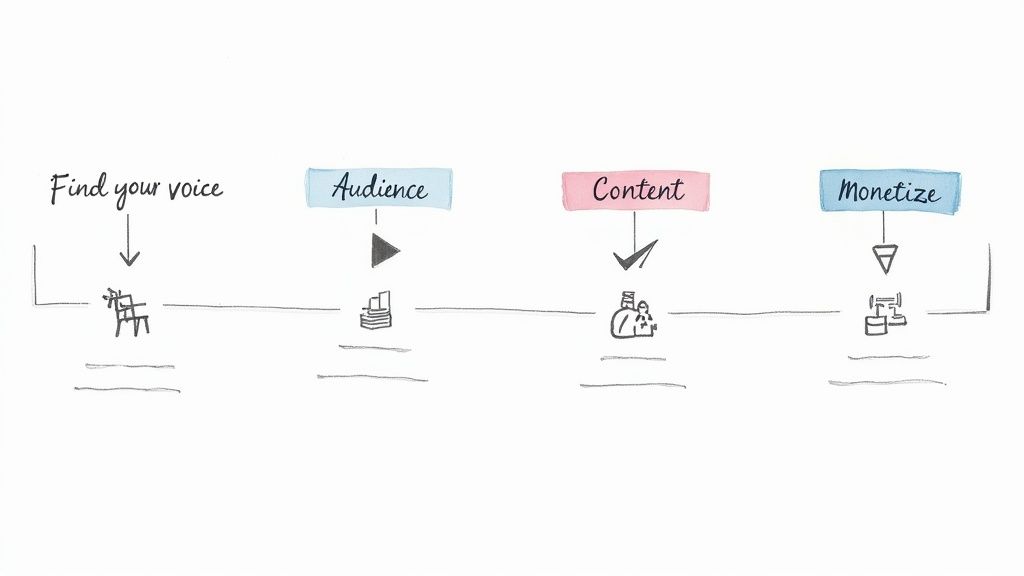
Think of this as your roadmap—it takes you from figuring out who you are to building a business around it.
The Four Pillars of Your Influencer Roadmap
To make it, you need a framework. Your journey can be broken down into four distinct stages, each one building on the last to create a solid foundation for growth and income.
The most successful influencers operate like business owners. They have a clear mission, understand their target market, create a valuable product (their content), and build systems to scale their impact and income.
To give you a clear picture of what's ahead, here’s a quick overview of the four pillars we'll be covering.
Your Influencer Journey at a Glance
This table breaks down the entire process, stage by stage. It’s the framework we’ll use to turn your idea into a real, sustainable influencer brand.
| Stage | Core Objective | Key Actions | Success Metric |
|---|---|---|---|
| Foundation | Define your unique brand and who you're talking to. | Niche selection, audience persona creation, competitor analysis. | High audience relevance and clear brand positioning. |
| Content | Develop a signature content style and a workflow you can stick to. | Choose primary platforms, create content pillars, build a content calendar. | Consistent publishing and a recognizable brand voice. |
| Growth | Build an engaged community of loyal followers. | Community engagement, collaborations, targeted outreach. | High engagement rate and steady follower growth. |
| Monetization | Turn your influence into real, sustainable income. | Brand partnerships, affiliate marketing, creating your own digital products. | Diversified revenue and increasing income per follower. |
Each of these stages is a critical piece of the puzzle. Skipping one is like trying to build a house without a foundation—it just won’t hold up in the long run.
Finding Your Niche and Defining Your Audience
Let's talk about the biggest mistake I see aspiring influencers make: choosing a niche that's way too broad.
Aiming to be a "lifestyle" or "travel" influencer is like shouting into a hurricane—your voice just gets lost. The real secret to building a solid brand is finding that specific sweet spot where your genuine passion, your actual expertise, and real audience demand all come together.
This isn't about chasing a popular topic. It's about carving out a space only you can own. Instead of general finance, you become the go-to finance expert for freelance creatives. Instead of just another gamer, you’re the one who reviews accessible controllers for players with disabilities.
That kind of focus makes you memorable. It makes you immediately valuable to a dedicated group of people.
Moving Beyond Passion to Find Your Profitable Niche
Passion is the fuel, but it's not the whole engine. To build a brand that lasts, your interests need to line up with something people are actively searching for—and something you genuinely know your stuff about.
Your perfect niche sits at the center of three simple questions:
- What am I obsessed with? What could I talk about for hours without getting bored? This is your passion.
- What am I good at? Where do I have experience, skills, or proven results that others don’t? This is your expertise.
- What do people need? Are people out there actually looking for solutions, inspiration, or information in this area? This is market demand.
Let’s run through a real-world example. A marketing manager might be passionate about productivity (Passion). Over the years, she's gotten really good at managing remote teams using specific software (Expertise). She also notices a ton of small businesses struggling to get a handle on remote work tools (Demand).
Boom. Her niche is "Productivity Systems for Remote Small Business Teams."
Your niche isn't just a category; it's a promise. It tells a potential follower exactly what problem you solve for them and why you're the credible person to help. That clarity is what turns a casual viewer into a loyal fan.
This approach ensures you're not just creating content and hoping for the best. You're building a brand with a clear purpose for a specific, hungry audience right from day one.
Crafting Your Ideal Follower Persona
Once you've nailed down your niche, it's time to get crystal clear on who you're talking to. A vague idea of your audience just won't cut it. You need to create an Ideal Follower Persona—a detailed profile of the one person you're creating every single piece of content for.
This goes way beyond basic demographics like age and location. The real magic happens when you understand their inner world.
Think about a new yoga instructor. Her persona isn't just "women aged 25-40." It's "Sarah, a 32-year-old remote project manager who feels stiff and stressed from sitting at a desk all day. She's tried intense workout classes but found them intimidating. She needs gentle, 15-minute morning yoga routines she can do at home to feel more energized and less anxious before her first Zoom call."
See the difference? That level of detail is a game-changer. Suddenly, you know exactly what kind of content Sarah needs. To get a more structured look at this process, you can dig deeper into what is a target audience and apply those frameworks here.
To build out your own persona, start asking these questions:
- What are their biggest daily struggles related to my niche? (e.g., "I don't have time to cook healthy meals.")
- What are their secret aspirations? (e.g., "I wish I felt confident enough to wear a swimsuit on vacation.")
- What content are they already consuming? (e.g., "They follow food bloggers but find the recipes too complex.")
- What specific language do they use to describe their problems? (e.g., They say they feel "bloated and tired," not "gut dysbiosis.")
Knowing these answers transforms content creation from a guessing game into a focused conversation. Every post, video, and story will feel like it was made just for them—because it was. This is how you build a loyal, engaged community that actually trusts you.
Developing Your Content and Platform Strategy
Once you've zeroed in on your niche and you know exactly who you're talking to, it’s time to build the engine that powers your influence: your content.
Think of great content as your currency. It's how you deliver on the promise you made with your niche, turning casual scrollers into a real community. A solid strategy isn't about jumping on every viral trend or posting whenever you feel like it. It’s about creating a recognizable, valuable experience for your audience, every single time. That means picking your core content themes and choosing the right platform to tell your story.
Choosing Your Primary Platform
You can't be everywhere at once, especially when you're just starting out. Trying to master Instagram, TikTok, YouTube, and a blog all at the same time is a surefire recipe for burnout. The smarter move? Get really, really good at one platform first—the one where your ideal follower is already hanging out.
Each platform has its own vibe:
- Instagram is all about high-quality visual storytelling, perfect for polished photos, insightful carousels, and engaging Reels.
- TikTok is built for short, snappy, trend-driven video that feels authentic and personality-packed.
- YouTube is the undisputed king of long-form, educational content. Think deep-dive tutorials, vlogs, and detailed reviews.
- LinkedIn is your stage for professional content, industry insights, and B2B thought leadership.
Instagram, in particular, is still a powerhouse. It's the preferred platform for 57% of brands globally and is on track to become a $22+ billion market by 2025. What's more, 73% of brands are specifically looking to partner with micro-influencers on the platform because they deliver a fantastic return on investment.
So, where does your ideal follower live online? A home decor enthusiast might be scrolling Instagram for inspiration, while a developer looking for coding tips is probably on YouTube. Pick your primary platform, and go all in.
To help you decide, here's a quick comparison of the two biggest players for visual content right now:
Platform Strategy Comparison Instagram vs TikTok
| Feature | TikTok | |
|---|---|---|
| Audience Demographics | Broader age range, strong Millennial and Gen X presence. | Heavily skewed towards Gen Z and younger Millennials. |
| Content Style | Polished, aesthetic-focused visuals (photos, Reels, carousels). | Raw, authentic, trend-driven short-form video. |
| Algorithm Focus | Leans on social graph (who you follow) and interest graph. | Heavily interest-based; viral potential is high even for new accounts. |
| Link Sharing | "Link in bio," link stickers in Stories (for some accounts). | Single "link in bio." |
| Best For | Building a visually cohesive brand, lifestyle content, community building. | Entertainment, trend participation, high-energy personality-driven content. |
This table should give you a clearer picture of where your content style and audience will feel most at home. Choose the platform that aligns best with your goals, and make it your primary focus.
Building Your Core Content Pillars
Your content pillars are the 3-5 core topics you’ll talk about again and again. They bring structure to your content and stop you from ever having that "What do I post today?!" panic. Think of them as the main sections of your own personal magazine.
These pillars should be a direct answer to the problems and dreams of your Ideal Follower Persona. They are the foundation of a repeatable content strategy.
For instance, a productivity influencer whose audience is freelance creatives might build their content around these pillars:
- Workflow Optimization: Sharing tools and tactics for managing projects.
- Client Management: Tips on communication, proposals, and setting boundaries.
- Mindset & Motivation: Tackling procrastination and creative blocks.
- Behind-the-Scenes: Showing their own workspace and daily routines.
Defining your pillars is a critical step in building a brand that feels consistent and reliable. For a deeper dive, check out our complete guide on how to develop a content strategy that lays out a repeatable framework.
The best niches sit at the intersection of what you're passionate about, what you're good at, and what people actually want. This diagram shows how it all comes together.
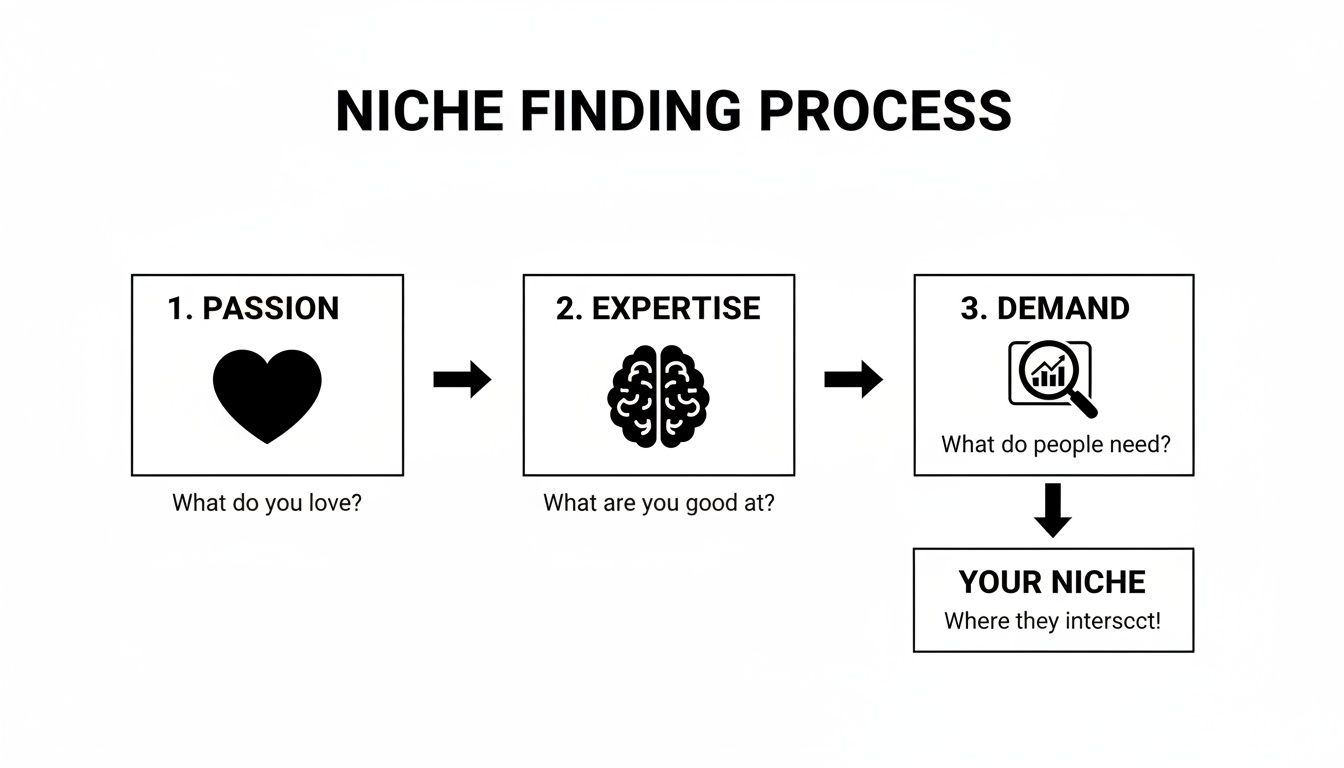
This simple model is your guide. The strongest content strategies are born where your passion and expertise meet a genuine audience need.
Creating Signature Content Series
A signature content series is basically a recurring "show" that your audience learns to look forward to. This is one of the best productivity hacks out there because it puts your content creation on rails. Instead of inventing something totally new every single day, you're just filling in a format you've already created.
Creating a recognizable content series is one of the fastest ways to build a loyal following. It trains your audience to anticipate your content and makes your brand instantly memorable in a crowded feed.
Let's make this real. Here are a few ideas:
- A sustainability influencer could run a 'Sustainable Swap Sunday' series, showing one easy eco-friendly product swap each week.
- A productivity influencer could create a 'Workflow Wednesday' Reel, screen-recording a 60-second tutorial on a specific feature in a tool like Notion or Asana.
- An AI expert could host a 'Tool Teardown Tuesday' on LinkedIn, reviewing a new AI tool and giving it a score for usability and impact.
These series create consistency, build anticipation, and make your content planning so much easier. You’re no longer staring at a blank page. You have a template, which frees up your energy to focus on what matters: creating killer content that serves your community. This is how you stop being just another creator and start becoming an essential resource.
Growing an Engaged and Loyal Community
Making great content is really just the first half of the equation. Now comes the real work: shifting from being a broadcaster to becoming a community builder. This is where you turn passive viewers into actual fans, not by shouting into the void, but by sparking genuine conversations.
Forget the spammy, outdated growth tactics. The most effective strategies are deeply human. It all comes down to showing up where your ideal followers are already hanging out and adding real value. Every comment, every DM, is a chance to build a relationship. That's how you create a community that doesn't just watch your content—they champion it.
The Power of Proactive Engagement
Honestly, one of the most underrated growth hacks out there is dedicating focused time each day to engagement—and I don't mean on your own posts. I'm talking about spending 30 minutes a day leaving thoughtful comments on other people's accounts in your niche. I’ve seen this one habit outperform creating a brand-new post, time and time again.
Why does it work so well? Because it puts you right in front of your target audience without being promotional. When you drop a meaningful, insightful comment on a larger creator's post, you're not just talking to them; you're introducing yourself to their entire audience.
Here’s a simple workflow to put this into practice:
- Pinpoint 10-15 "Hub" Accounts: These are the bigger creators, complementary brands, or publications that your Ideal Follower Persona already follows and trusts.
- Flip on Post Notifications: This is key. It gets you in the door early, giving your comment prime real estate at the top of the discussion.
- Add to the Conversation, Don't Just Compliment: Ditch the "Great post!" comments. Instead, add your own perspective. For example, if a personal finance influencer posts about saving for a down payment, a valuable comment might be, "This is a great framework. Something that really helped me was automating a transfer the day after payday so I never even 'saw' the money. It made a huge difference."
This simple habit changes the game. You go from being a passive scroller to an active, visible member of the community. It’s a slow burn, but it builds a rock-solid reputation that attracts exactly the right kind of followers.
Responding to every single comment and DM isn't just good manners; it's a core growth strategy. It signals to both your audience and the algorithm that your page is a hub of valuable interaction, turning your corner of the internet into a destination.
When you treat your comments and DMs with the same care as your posts, you create a powerful feedback loop. People remember who took the time to answer their question or acknowledge their idea. That’s how loyalty is built.
Using Hashtags as a Discovery Tool
Hashtags aren't just for labeling your content anymore. They're powerful discovery tools that act like signposts, guiding the right people straight to your profile. The trick is to use a strategic mix of broad and hyper-niche tags to get the best of both worlds: reach and relevance.
A classic mistake is to only use massive hashtags like #fitness, which has over 500 million posts. Your content will get buried in seconds. A much smarter approach is to use a tiered strategy.
Let's say you're a vegan baker in Austin:
- Broad (1M+ posts):
#veganbaking,#plantbaseddesserts– These are your big nets for general discovery. - Specific (100k-1M posts):
#vegancupcakes,#glutenfreeveganbaking– These help you connect with people looking for something in particular. - Niche (Under 100k posts):
#austinvegan,#atxvegans,#veganbakeryaustin– These are your community builders. They plug you directly into a highly targeted, local, and engaged audience.
This layered approach helps your content show up in both wide-ranging searches and specific community feeds, giving it the best possible chance of being found by people who will actually care.
Collaborating with Your Peers for Mutual Growth
If you want to accelerate your growth, start collaborating. Teaming up with other creators in your niche exposes your brand to a fresh, relevant audience that's already wired to be interested in what you do. And the best place to start is with people at a similar stage in their journey.
Forget about trying to land a collab with a creator who has a million followers when you're just starting out. Instead, find someone with a similar audience size and engagement rate whose content complements yours.
Here are a few dead-simple collaboration ideas that work:
- Instagram Live Session: Host a joint Q&A on a topic you both know well. A productivity influencer and a mindset coach could team up to talk about beating procrastination.
- Content Swap: Create a guest post or Reel for each other's account. This gives both of your audiences new value and serves as a direct, trusted endorsement.
- Collaborative Post: Use Instagram's "Collab" feature so a single post appears on both of your profiles at once, instantly doubling its potential reach.
These kinds of partnerships are a true win-win. They deliver huge value to your audience, help you build real relationships in your industry, and put your content right in front of people who are likely to become your next loyal followers. It's one of the most authentic and effective ways to grow.
Monetizing Your Influence Like a Business Owner
So, you've built a community and your content is hitting the mark. Awesome. Now comes the shift: from creator to business owner. It's time to turn your influence into a real, reliable income stream.
This isn't about "selling out." It's about building a sustainable business that lets you keep creating for the audience you've worked so hard to grow.
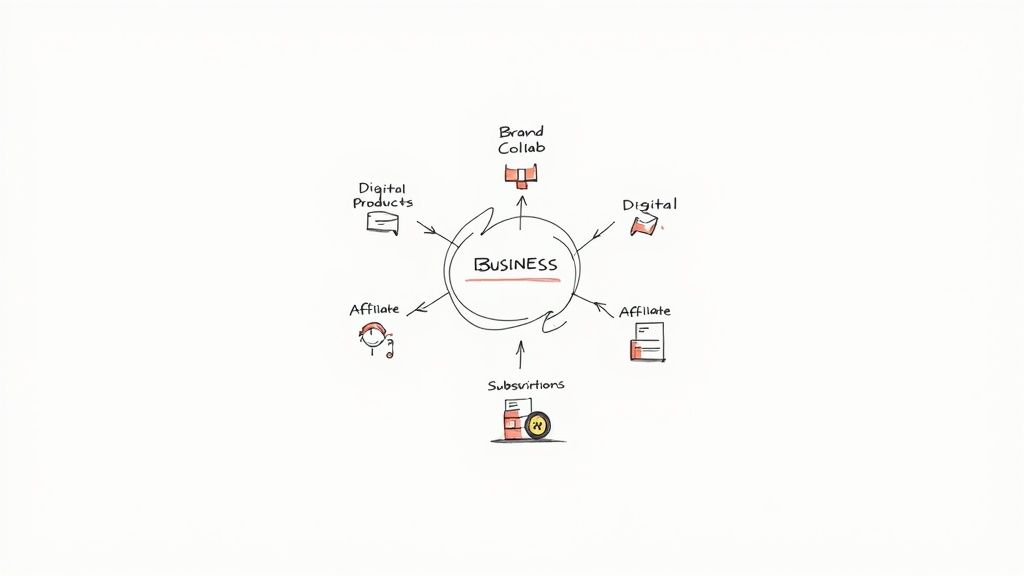
The trick is to think beyond a single paycheck. Relying only on brand deals is a risky game. Instead, you want to build a diverse portfolio of revenue streams. This makes your business stronger and gives you the freedom to pick projects you actually believe in.
Starting with Affiliate Marketing
Affiliate marketing is almost always the easiest first step. It’s a low-risk way to get started by recommending products or services you already use and genuinely love. When a follower buys something through your unique link, you get a small commission, and it doesn’t cost them anything extra.
This works because it's authentic. You're just monetizing recommendations you'd probably make anyway. Think about a food blogger who’s obsessed with their air fryer. They can become an affiliate for that specific model. Now, every recipe video they post can link to the fryer, turning great content into a passive income generator.
A simple way to manage this is to create a "My Gear" or "Favorites" page on a basic website or even just a link-in-bio tool. It gives your audience one spot to find everything you recommend.
Securing Your First Brand Collaboration
Landing that first paid partnership feels like a huge win. What brands are really looking for are creators whose audiences are a perfect match for their customers. It's less about having a million followers and more about having a super-engaged, niche community.
Before you start reaching out, you need a media kit. This is your professional resume.
Your media kit should have:
- A quick bio: Who you are and what your content is all about.
- Key stats: Follower counts, average engagement rate, and audience demographics (age, location, etc.).
- Your best work: Showcase your top-performing content or any past collaborations, even if they were unpaid.
- Services & rates: A clear menu of what you offer—a single Instagram post, a multi-part Story, a dedicated YouTube video, you name it.
Your media kit isn't just a PDF; it's a sales tool. It shows potential partners you’re a professional running a serious business, not just someone with a hobby.
When you're ready to pitch, keep your email short and focused on the value you bring. Don't just say, "I love your brand!" Explain why your specific audience is a great fit for their product and pitch a unique content idea. This shows you’ve done your homework and makes it way easier for them to say yes.
Building Your Own Products and Services
This is the end game for a lot of creators because it gives you 100% control over your income. Creating and selling your own digital products means you can scale your expertise without trading more of your time for money. You’re no longer just an advertiser; you’re an entrepreneur.
Common digital products that do really well include:
- Ebooks or Guides: That food blogger could sell a "30-Day Vegan Meal Prep Guide."
- Presets or Templates: A photographer could sell Lightroom presets; a productivity influencer could sell Notion templates.
- Online Courses: A fitness coach could build a "Beginner's At-Home Workout Program."
Let's go back to our food blogger. A smart, diversified income strategy for them could look something like this:
- Affiliate Links: Commissions from their favorite kitchen tools and ingredients.
- Sponsored Posts: A paid partnership with a plant-based milk brand.
- Digital Product: Selling a self-published ebook of their top 50 dessert recipes for $15.
- Subscription: A premium membership for exclusive monthly recipes and live cooking classes.
This multi-stream approach is what builds a stable financial foundation. Getting a grip on the different ways to earn is key, and our deep dive on how to monetize social media breaks down even more options. It also helps to understand the nuts and bolts of each platform; for example, knowing how much YouTube pays creators can shape where you focus your energy. When you start combining these income streams, you’re building a resilient business that can actually last.
A Few Common Questions I Hear from New Influencers
Diving into the creator world is thrilling, but let's be honest, it brings up a ton of questions. As you start turning your big ideas into actual posts, you're bound to hit a few snags. Here are some straight-up answers to the questions that pop up most often for aspiring influencers.
How Many Followers Do I Need to Be an Influencer?
This is easily the first thing people ask, but it's looking at the wrong number. You absolutely do not need 100,000 followers to be an influencer.
In fact, tons of brands are now actively seeking out nano-influencers (1,000-10,000 followers) and micro-influencers (10,000-100,000 followers). Why? Because smaller communities are often way more engaged and tight-knit.
The reality is, you become an "influencer" the second your content starts to genuinely sway the opinions or actions of even a handful of people. Brands care more about high engagement rates than a massive follower count. A creator with 2,000 loyal fans who trust their recommendations is often far more valuable than one with 50,000 followers who just passively scroll by.
So, forget the big number for now. Focus on building a real community and sparking conversations. The followers will come.
How Much Time Does This Really Take?
Let's get right to it: this isn't a passive hobby if you're serious about growth. Building a personal brand on social media is a real job that demands consistency. You can't just post when inspiration strikes and expect to see results.
Here’s what a realistic weekly workflow might look like:
- Content Creation (3-5 hours/week): This is your time for brainstorming, scripting, shooting, and editing. My biggest productivity tip? Batch-create your content for the week in a single session. It's a game-changer.
- Community Engagement (30-60 minutes/day): This part is non-negotiable. You have to be in the trenches, replying to comments, answering DMs, and engaging with other creators in your space.
- Planning & Strategy (1-2 hours/week): This is where you look at your analytics, map out your content calendar, and hunt for new ideas or potential collaborations.
In the beginning, plan on committing at least 8-10 hours per week. This will probably go up as you grow, but getting into that rhythm early on is what sets you up for success.
I see so many aspiring creators burn out because they underestimate the daily grind. Success isn't about landing one viral post—it's about the discipline of showing up consistently, even on days you don't feel like it. Treat it like a part-time job from the jump.
What If I Run Out of Content Ideas?
Creator's block is a real thing, but you can beat it by building a system. Your content pillars are your foundation, but when you're feeling stuck, the best place to turn is your audience and your own data.
Here are three simple habits to keep your idea pipeline permanently full:
- Listen to Your Community: Just spend 15 minutes a day scrolling through comments—on your posts and on posts from bigger creators in your niche. What are people asking? What are they confused about? Every single question is a seed for a future piece of content.
- Repurpose Your Winners: Dive into your analytics and find your best-performing posts from the last 90 days. Can you turn that popular carousel into a short video? Can you take a quick tip from a Reel and expand it into a full-blown blog post or YouTube video? Don't reinvent the wheel.
- Build an "Idea Bank": This is so simple but so effective. Start a note in an app like Notion or just a basic spreadsheet. Anytime an idea hits you, no matter how small or half-baked, jot it down immediately. This little habit means you'll never stare at a blank page again; you'll have a whole list to pull from.
With these systems in place, you stop hunting for ideas and start choosing which one to tackle next.
Ready to build a consistent and confident social media presence without the guesswork? Postful provides AI-powered tools and ready-to-use templates that help you create engaging content faster. Join the waitlist to get early access and streamline your social workflow today. Learn more about Postful.