
Social media marketing (SMM) is one of those terms that gets thrown around a lot. At its heart, it’s really about using social platforms like LinkedIn, Instagram, or X to connect with people, build up your brand, and ultimately, drive sales.
It’s not just about firing off posts into the digital ether. It's about building real relationships that turn casual followers into loyal customers. A practical workflow to improve productivity here is to use a content calendar. Simply map out your posts for the week or month in a spreadsheet or a dedicated tool. This avoids the daily scramble and ensures a consistent, thoughtful presence.
Demystifying SMM and Why It Matters for Your Business
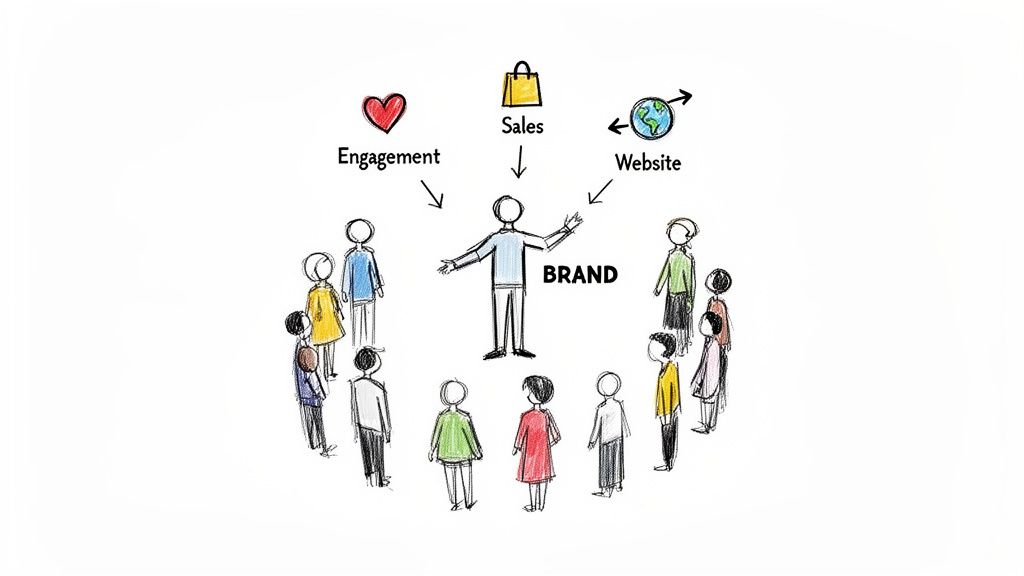
I like to think of social media marketing less like shouting from a soapbox and more like hosting a great party. Your brand is the host, and your job is to make your guests (your audience) feel welcome, spark interesting conversations, and gently guide them to where you want them to go—whether that’s your website, your shop, or your email list.
This "hosting" involves everything from creating posts that people actually want to read and share, to jumping into conversations, running targeted ad campaigns, and keeping an eye on what’s working. The whole point is to build a thriving community around your brand that leads to real business results.
The Growing Importance of SMM
The role of social media in business has absolutely exploded. We're not talking about a small trend; it's a fundamental shift.
The global SMM market is valued at a staggering $43.06 billion in 2026, a huge jump from $34.42 billion in 2025. Projections show it soaring to $106.99 billion by 2030. For small business owners and solopreneurs, this means social media is no longer a "nice-to-have"—it's a core part of being competitive.
SMM is your direct line to the people who matter most—your customers. It allows you to build authentic connections, gather valuable feedback, and create brand advocates who will champion your business far more effectively than any traditional advertisement could.
As you get started, it’s crucial to understand the two main flavors of SMM: organic and paid.
Organic SMM vs Paid SMM at a Glance
For anyone just starting out, knowing where to put your time and money is everything. This is where understanding the difference between organic (free) and paid social media marketing comes in. One is a marathon, the other a sprint, and most successful strategies use a bit of both.
Here’s a quick breakdown:
| Aspect | Organic SMM (Free) | Paid SMM (Ads) |
|---|---|---|
| Cost | Free (but time-intensive) | Direct ad spend |
| Speed | Slow, long-term growth | Fast, immediate results |
| Reach | Primarily existing followers | Broad, highly-targeted new audiences |
| Best For | Building community and brand loyalty | Driving traffic, sales, and promotions |
| Content | Value-driven, authentic, conversational | Direct, clear call-to-action (CTA) |
Organic SMM is all about building a community over time with great, unpaid content. Think of it as your long-term relationship-building effort. Paid SMM, on the other hand, lets you use advertising to get in front of very specific audiences quickly, which is perfect for promoting a sale or reaching new people fast.
The smartest strategies I've seen almost always blend the two. They use organic posts to nurture their community and paid ads to bring new people into the fold. If you're an entrepreneur just getting your feet wet, finding the right mix is a game-changer. For a deeper dive, check out our guide on social media marketing for entrepreneurs.
A solid SMM plan doesn't need to be overly complicated. By focusing on genuine connection and providing real value, you can turn your social media presence from a simple broadcast channel into a powerful engine for growing your business.
The Core Pillars of a Winning SMM Strategy
A great social media strategy isn't built on luck. It’s a simple, repeatable system built on five core pillars. Think of them less like a checklist and more like the foundation for genuine, sustainable growth.
These pillars provide a clear roadmap, turning your vague ideas into real, measurable business results. Let's walk through them with a hypothetical small business—a local coffee shop called "The Daily Grind"—to see how it all works in practice.
Pillar 1: Goal Setting
Before you even think about what to post, you have to know why you're posting. Without clear goals, you're just adding to the noise. For a small business, your goals should connect directly to what moves the needle, not just vanity metrics like likes.
A weak goal for "The Daily Grind" would be: "Get more Instagram followers." A much stronger goal is: "Increase weekday morning foot traffic by 15% in the next quarter by promoting our new breakfast specials on Instagram and Facebook."
See the difference? This goal is:
- Specific: It targets weekday morning customers.
- Measurable: The goal is a 15% increase.
- Actionable: They'll achieve it by promoting specific offers.
- Relevant: More foot traffic means more revenue.
- Time-bound: The deadline is the end of the quarter.
Pillar 2: Audience Understanding
Once your goal is set, you need to know exactly who you're talking to. You can't create content that connects if you don’t get what your audience needs, what their problems are, or what gets them excited. This is where a simple customer persona is worth its weight in gold.
"The Daily Grind" hones in on its ideal customer: "Freelancer Fiona." She’s a 30-year-old remote worker living nearby who needs a quiet spot with great coffee to work for a few hours. She discovers local gems on Instagram and is active in neighborhood Facebook groups.
Now, the coffee shop can create content for Fiona. Instead of just posting generic pictures of lattes, they can share a video of their quiet upstairs seating, highlight their super-fast Wi-Fi, or talk about the new single-origin espresso beans. It's targeted, and it works.
Pillar 3: Content Creation
With your goals and audience figured out, it’s time to actually make stuff. The best social media content either solves a problem, entertains, or teaches something new. For "The Daily Grind," this means going beyond just "buy our coffee."
Their content calendar could include things like:
- A quick video tour showing off the quiet, laptop-friendly corners of the shop.
- A "Meet the Barista" series to put a human face to the business.
- A simple poll asking followers what new pastry they’d love to see on the menu.
This approach transforms the coffee shop from just a business into a community hub. If you want to dive deeper into planning your content, understanding different content pillars can supercharge your strategy.
Pillar 4: Consistent Scheduling
Consistency is everything on social media. If you only post when you feel like it, you’ll never build momentum or stay on your audience's radar. This is where a content calendar becomes your best friend. Planning ahead lets you maintain a steady, reliable presence.
A good social media calendar template is a game-changer for staying organized and ensuring your content pipeline never runs dry.
"The Daily Grind" decides to post five times a week on Instagram and three times on Facebook. They block off time on Sunday to batch-create all their content for the week. This simple workflow saves a ton of time and eliminates that daily "what should I post?" panic. Tools like Postful make this even easier by letting you schedule everything from one place.
Pillar 5: Analytics and Refinement
Finally, you have to look at the data. Pay attention to what’s working and what’s falling flat. Every social platform gives you analytics that tell a story about your audience and your content.
After a month, "The Daily Grind" checks its numbers. They find that their video tours get 50% more engagement than static photos and that posts published at 8 AM do the best. Armed with that knowledge, they can now refine their approach—more videos, scheduled for the morning.
This constant loop of creating, measuring, and adjusting is what takes a social media strategy from good to truly great.
Choosing the Right Social Media Channels
Feeling overwhelmed by all the social media platforms out there? You’re not alone. It’s a common hurdle for small business owners and solopreneurs.
The good news is, you don’t need to be everywhere. In fact, trying to post on every platform is a surefire recipe for burnout. The real secret isn't being omnipresent; it's being strategic. Pick one or two channels where your ideal customers already spend their time, and focus your energy there. That's how you build real connections and see actual results.
This flowchart shows how a winning social media strategy works—it all starts with your goals and flows into your content and analytics. Getting this right is what helps you choose the perfect channel.
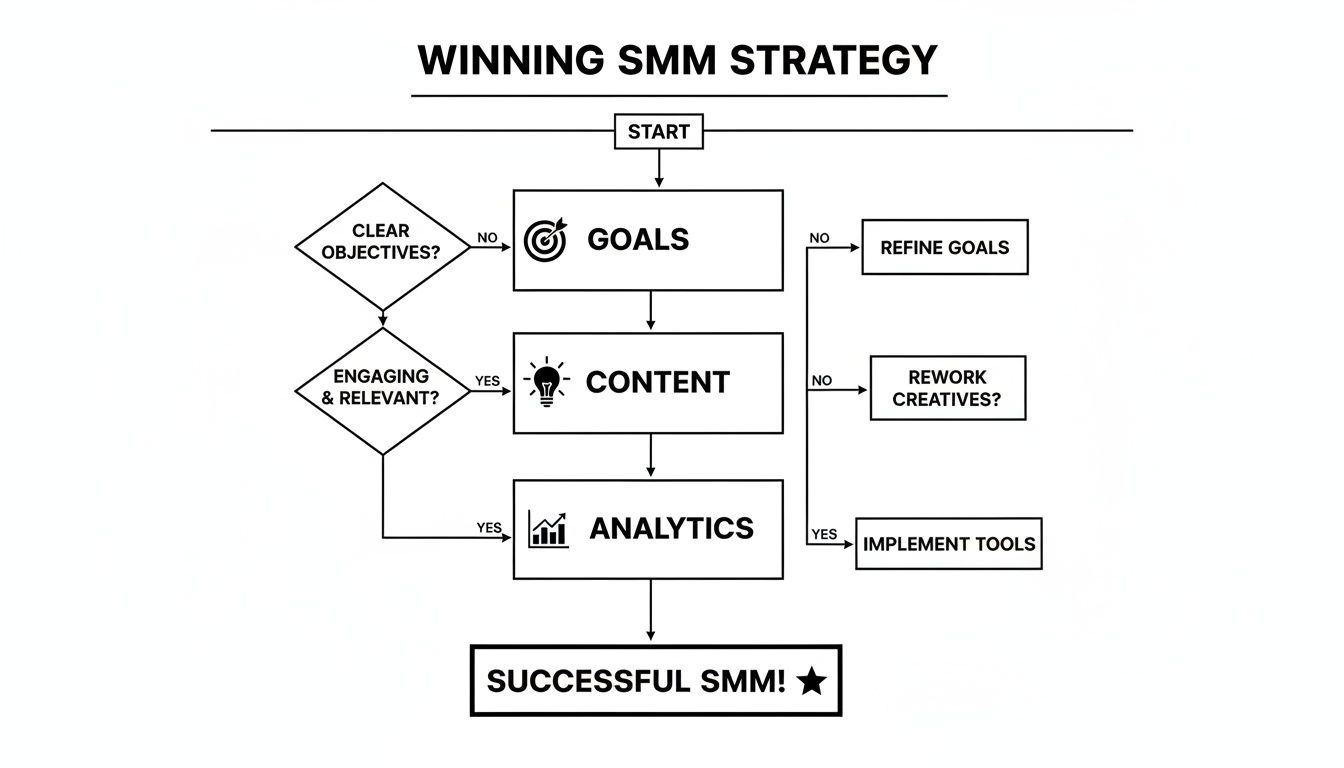
As you can see, a successful strategy isn't just about posting; it’s a cycle of setting goals, creating content, and analyzing what works. This process naturally points you to the platforms that will serve your business best.
Aligning Platforms with Your Business Goals
Think of social media platforms as tools in a toolbox. Each one is built for a specific job. Before you pick a tool, you need to know what you’re trying to build. Are you trying to land professional clients, sell products with great visuals, or just jump on the latest trends?
Let's look at a few examples:
- A B2B consultant wants to land high-ticket clients. LinkedIn is their best bet. It's the digital version of a professional networking event, perfect for sharing industry insights and connecting with decision-makers.
- A local artist wants to sell prints. Instagram and Pinterest are their go-to channels. These visual-first platforms let them showcase their work with beautiful images and video, turning casual followers into collectors.
- A boutique clothing brand wants to drive online sales for trendy new items. TikTok and Instagram are ideal. Short-form video lets them show off new arrivals, work with influencers, and tap into fast-moving fashion trends.
Choosing a platform is like picking a location for a physical store. You wouldn't open a high-end boutique in an industrial park. You want to set up shop where your target customers naturally spend their time.
Where Does Your Audience Live Online?
Once your goal is clear, the next question is simple: where do your ideal customers hang out online? Don't just guess. Do a little digging.
If you sell knitting patterns, your audience is probably all over Pinterest and in niche Facebook Groups, not scrolling through LinkedIn. If you already have some customers, the easiest way to find out is to just ask them. A quick one-question survey in your next email can give you all the insight you need.
Which Social Media Platform Is Best for Your Business
To make this even easier, I've put together a quick guide to help you choose the right platform. Think about your business type and who you want to reach, and use this table to find your perfect match.
| Platform | Best For | Primary Audience | Top Content Formats |
|---|---|---|---|
| Visual storytelling, brand building, and e-commerce. | Millennials & Gen Z (18-34). | High-quality photos, Reels (short video), Stories. | |
| Community building and local business engagement. | Broad, but strong with Gen X & Boomers (35+). | Community posts, events, live video, photo albums. | |
| B2B networking, professional authority, and lead generation. | Professionals, decision-makers, and job seekers. | Articles, industry news, text posts, case studies. | |
| TikTok | Trend-driven engagement, brand personality, and reaching younger audiences. | Primarily Gen Z & younger Millennials (16-30). | Short, entertaining videos with trending audio. |
| Driving traffic and sales for visual products and ideas. | Predominantly female, interested in DIY, style, and planning. | Vertical images (Pins), Idea Pins, tutorials. |
By being selective, you can turn social media from a time-suck into a powerful tool for growing your business. The whole point is to find the channel that lets you connect with your specific audience in the most direct and authentic way possible.
How SMM Actually Drives Business Growth
It’s way too easy to get caught up in the daily grind of creating content and lose sight of the big picture. What is all this work really doing for your business? The truth is, it’s not just about getting likes. It's about turning those little online moments into real, measurable growth.
When you do it right, social media marketing is a direct investment in your brand’s future. You’re building the kind of trust and loyalty that turns a one-time buyer into a lifelong fan—and your best advocate.
From Engagement to Revenue
Think of your social media accounts as your digital storefront and your community hub, all rolled into one. Every single post, comment, and DM is a chance to build a stronger connection with your audience. When people feel like you’re actually listening, they stick around.
That consistent, authentic engagement is what builds trust. And in business, trust is the currency that leads directly to sales.
For example, a freelance graphic designer can use Instagram Stories to share behind-the-scenes peeks at their creative process. This does more than just show off their skills; it creates a personal connection. So, when a follower needs a new logo, who are they going to call? The faceless agency, or the designer they feel like they already know?
Your Best Feedback Loop
Social media gives you something that old-school marketing never could: a real-time conversation with your customers. Your followers will tell you what they love, what they don’t, and what they wish you’d offer next. That’s priceless market research, and it’s completely free.
Imagine a small business that sells handmade candles. They could run a simple Instagram poll asking, "Which new scent should we launch for fall: 'Spiced Pumpkin' or 'Autumn Woods'?"
- You get direct product feedback: You learn what your customers actually want to buy before you make it.
- You build excitement: Followers who voted are now invested and more likely to buy the winning scent when it drops.
- You create easy engagement: It’s a low-effort way for your audience to interact with your brand.
This direct line helps you fine-tune your products, improve your services, and make smarter decisions based on real data instead of guesswork. If you're wondering how to measure all this, our guide on calculating the ROI of your social media is a great place to start.
The Direct Financial Impact
This is where the power of SMM becomes undeniable. With targeted ads, even the smallest businesses can see incredible results. The total global ad spend on social media is expected to hit $317.33 billion by 2026, which shows just how critical it's become for modern businesses. Find more social media marketing stats on Sprout Social.
A solopreneur could put $100 into targeted Instagram ads to promote a virtual workshop. By showing it to an audience based on specific interests and demographics, they could easily sell out all 20 spots, turning a small ad spend into thousands of dollars in revenue.
Similarly, a small B2B consulting firm could use Facebook’s lead generation ads to fill their pipeline. By offering a free guide in exchange for an email, they can collect contacts from potential clients and start building those relationships. This is exactly how social media engagement turns into a real sales funnel.
Your First Steps in SMM: What to Do Today
Alright, enough theory. The best way to learn social media marketing is to actually do it. Right now.
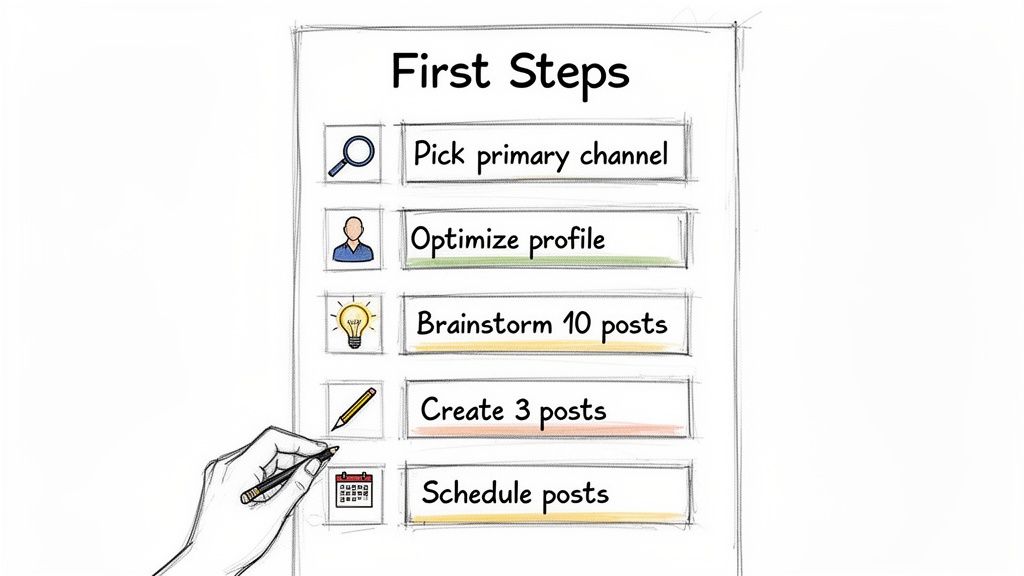
Let's cut through the noise and get you started with five simple steps you can tackle this afternoon. We’re going for quick wins that build real momentum.
Step 1: Pick Just One Channel
Don't try to be everywhere at once. It’s a recipe for burnout.
Instead, pick the one platform where your ideal customer spends their time. If you’re a B2B coach, that’s almost certainly LinkedIn. If you sell beautiful handmade jewelry, you belong on Instagram or Pinterest.
Master a single channel first. Learn its language, understand its culture, and build a real connection with the people there. You can always expand later.
Step 2: Set Up Your Profile for Success
Think of your profile as your digital storefront. Before you post a single thing, make sure it’s welcoming and tells people exactly what you’re about.
- Professional Profile Picture: Use a clean, high-quality logo or a clear headshot. No blurry photos allowed.
- Compelling Bio: In just a few lines, explain what you do and who you do it for. What problem do you solve? Use keywords your audience might search for.
- A Clear Call-to-Action (CTA): Give people the next step. Add a link to your website, your online shop, or a free resource. Tell them what you want them to do.
This simple tune-up makes a huge difference. When someone new finds you, they should instantly get what you offer and how they can learn more.
Step 3: Brainstorm Your First 10 Post Ideas
Staring at a blank screen is the worst. So let’s fix that.
Grab a notebook or open a doc and spend 15 minutes jotting down 10 rough post ideas. Don't censor yourself. Just get the ideas down.
Think about the most common questions you get asked. If you're a nutritionist, you might jot down: “quick high-protein breakfast,” “busting carb myths,” or “what I actually buy at the grocery store.”
This is where Postful’s AI comes in handy. You can feed it a single topic and get dozens of ideas back in seconds. It turns a chore into a quick, productive win.
The SMM market is exploding for a reason—it’s projected to jump from $39.14 billion in 2026 to $164.52 billion by 2034. A big driver is the rise of AI in analytics and automation. For solopreneurs, this means tools that give you AI-powered ideas aren’t just a nice-to-have; they’re how you stay competitive.
Step 4: Create and Schedule Your First 3 Posts
Now, pick 3 ideas from your list and actually create the posts. Write the captions and find or create your visuals.
This is called "batching," and it's a game-changer. Creating a few posts at once puts you ahead and helps you build a consistent rhythm without the daily scramble.
Using tools for social media scheduling lets you set everything up in advance. You can create your three posts today and schedule them to go live over the next week. It’s the secret to maintaining a consistent presence without the constant pressure.
Common SMM Mistakes and How to Avoid Them
The fastest way to get results on social media isn't some secret hack. It's learning from the mistakes everyone else has already made.
By sidestepping these common pitfalls, you can save a ton of time and money, making sure your efforts actually pay off from day one. Let's walk through the big ones and how you can steer clear of them.
Mistake 1: Overly Promotional Content
This is the single biggest mistake I see small businesses make. If every post is a hard sell—"Buy now!" or "Limited time!"—your audience will tune out faster than you can say "discount."
People are on social media to connect and learn, not to get blasted with ads. Constant selling feels like that one friend who only ever talks about their multi-level marketing gig. It's exhausting, and eventually, you just stop listening.
- Do This Instead: Stick to the 80/20 Rule. Make 80% of your content genuinely helpful, educational, or entertaining. For example, a real estate agent could share tips on home staging or local market trends for 80% of their posts, and feature their active listings for the other 20%. This simple shift builds trust and keeps people engaged, so when you do have something to sell, they're actually ready to hear it.
Mistake 2: Inconsistent Posting
Posting sporadically—once this week, three times the next, and then radio silence for a month—is a momentum killer. Social media algorithms reward consistency, and your audience will simply forget you exist if you don't show up.
An inconsistent feed doesn't just hurt your reach; it signals that your business might not be all that reliable. It makes your followers wonder if you're still open or even care.
Think of your social media feed like a TV show. Your audience expects a new episode at a predictable time. If you randomly skip a few weeks, they'll lose interest and just find another show to watch.
- Do This Instead: Plan your content in batches. A simple content calendar is your best friend here. Just set aside a couple of hours one day a week to plan, write, and schedule everything out. Tools like Postful are built for exactly this, letting you load up a whole week's worth of posts in one go. You stay consistent without the daily scramble.
Mistake 3: Ignoring Your Audience
Social media is a two-way street. Firing off posts and then ignoring the comments and DMs is like a shopkeeper who greets a customer, then turns their back when they're asked a question. It's just bad form.
Every unanswered question or unacknowledged comment is a missed chance to build a relationship, solve a problem, or make a sale. You're leaving money and loyalty on the table.
- Do This Instead: Block out 15-20 minutes every day just for engagement. A great productivity tip is to use a "power hour" workflow: spend 20 minutes replying to comments on your posts, 20 minutes engaging with content from others in your niche, and 20 minutes answering DMs. This small habit shows you're listening and you actually value them, which is how you turn passive followers into real fans. The return on that small time investment is huge.
A Few SMM Questions We Hear All The Time
Jumping into social media marketing can feel like learning a new language, and it’s normal to have a ton of questions. Getting clear, straightforward answers is the difference between feeling stuck and moving forward. Let's tackle a few of the big ones we hear from founders and solopreneurs.
How Much Time Should I Actually Spend on Social Media Each Week?
This is probably the most common question, especially when you’re already juggling a million things. When you're just starting, a good, realistic goal is 3-5 hours per week. That’s enough to cover the essentials without burning out.
Here’s a practical workflow to make that time count:
- Content Creation & Scheduling (1-2 hours): Do this once a week. Use a template for your visuals and captions to speed up the process. This batching workflow is the key to productivity.
- Community Engagement (15-20 minutes daily): Set a timer on your phone. When it goes off, you're done. This prevents endless scrolling and keeps you focused.
- Analytics Review (30 minutes weekly): Every Friday, look at your top-performing post. Ask yourself why it did well and use that insight to brainstorm ideas for next week.
Can I Really Get Results Without a Budget?
Yes, you absolutely can. Organic social media marketing is all about investing your time and creativity instead of your cash. It works when you show up consistently with something valuable to offer—whether that’s a helpful tip, a behind-the-scenes story, or just a genuine conversation.
A practical example is a local baker who uses Instagram Reels to show how they decorate their cakes. This content costs nothing to make but builds a huge following of people who feel connected to the craft. While paid ads can get you traffic fast, a solid organic strategy builds something much more durable: trust. When people feel a real connection to you and your brand, they become loyal customers and your best word-of-mouth marketers.
How Long Until I Start Seeing Results?
Social media is a marathon, not a sprint. A paid ad can get you clicks overnight, but building an audience and seeing real business impact from your organic efforts usually takes about 3-6 months of consistent work.
In those first few months, your main goal should be learning and building good habits. Celebrate the small victories—a jump in your engagement rate, a few really positive comments, or your first handful of clicks to your website. These are the signs you’re on the right track.
Ready to stop guessing and start growing? Postful provides AI-powered ideas, simple scheduling, and easy content reuse, turning your work into more business. Start building your social media presence for free during our early access period.