
Thought leadership is more than a buzzword; it's a practical business strategy for building authority and trust. It isn’t about having all the answers, but about sharing a unique, valuable perspective that helps your audience see their challenges and opportunities in a new light. For founders and small business creators, this means moving beyond simple marketing content and becoming a go-to resource in your niche. When executed effectively, it attracts high-quality leads, builds brand equity, and establishes you as an indispensable voice in your industry.
This article isn't a theoretical guide. It's a curated collection of powerful thought leadership content examples designed to give you a blueprint for action. We will deconstruct ten specific examples across various formats-from long-form articles and research reports to engaging LinkedIn threads and executive podcasts. Our goal is to demystify what makes this content successful and show you how to replicate that success without a massive team or budget.
For each example, we'll break down the strategy and provide a "Productivity Playbook" with actionable takeaways. This includes:
- Strategic Analysis: Why the content works and the core principle behind its impact.
- Replicable Tactics: Specific techniques you can immediately apply to your own content.
- Productivity Workflows: Tools, templates, and step-by-step processes to help you create high-impact content efficiently.
Let’s move beyond the abstract and dive into tangible examples you can learn from and adapt for your own brand starting today.
1. Long-Form Articles: The Cornerstone of Deep Expertise
Long-form articles are detailed, comprehensive written pieces, typically over 2,000 words. They serve as a foundational format for thought leadership, allowing you to explore complex topics, present original data, or offer a contrarian viewpoint with the depth it deserves. Unlike a quick blog post, these articles establish authority by demonstrating rigorous, nuanced thinking.
This format is one of the most powerful thought leadership content examples because it acts as a central hub for your ideas. You can atomize a single long-form article into dozens of smaller content pieces like LinkedIn posts, Twitter threads, and short-form videos, maximizing your content's reach and impact.
Example: Wait But Why's "The AI Revolution"
Tim Urban's deep dive into artificial intelligence is a masterclass in making a highly complex topic accessible and engaging. Instead of just stating facts, he uses storytelling, simple analogies (like the "AI-in-a-box" experiment), and his signature stick-figure illustrations to guide the reader through a difficult subject.
Productivity Playbook: How to Replicate This
- Tactic 1: Analogy and Storytelling. Urban doesn't just explain machine learning; he tells a story about an "AI Genie" to make the concept of exponential growth tangible. This narrative hook simplifies complexity and makes the content memorable.
- Tactic 2: Visual Simplification. The simple, hand-drawn visuals break down dense information, making the article less intimidating and easier to follow. You don't need to be a graphic designer; simple diagrams or charts created in tools like Canva or Excalidraw can achieve a similar effect.
- Tactic 3: Building a Definitive Resource. The article is so comprehensive that it became a go-to resource for anyone trying to understand AI's potential impact. It answers questions the audience didn't even know they had.
- Productivity Workflow:
- Choose a Core Topic: Pick a complex but crucial topic in your niche.
- Mind Map with Analogies: Use a tool like Miro or a whiteboard to map out the topic's components. For each component, brainstorm 2-3 simple analogies (e.g., "Explaining SEO is like being a city planner for the internet").
- Outline for Depth: Structure your article to be the most comprehensive guide available for a beginner. Use a clear H2/H3 structure.
- Draft & Visualize: Write the content, then use a tool like Canva to create one simple visual for each major section to break up the text and clarify your points.
2. Executive Podcasts: Building Authority Through Conversation
Executive podcasts are audio-driven series where leaders and experts engage in conversations about industry trends, personal journeys, and specialized knowledge. This format builds a uniquely intimate connection with the audience, allowing listeners to absorb deep insights passively during commutes, workouts, or daily routines. It transforms abstract authority into a relatable, human voice.
As one of the most personal thought leadership content examples, a podcast allows you to guide a narrative and associate your brand with other industry leaders. By hosting insightful conversations, you are not just sharing information; you are curating a hub of expertise and positioning yourself at the center of your industry’s most important discussions.
Example: Masters of Scale with Reid Hoffman
Reid Hoffman, co-founder of LinkedIn, uses this podcast to explore how iconic companies grow from zero to a gazillion. Each episode tests a theory of scale by featuring legendary leaders, blending Hoffman's narration with interview clips, music, and sound effects to create a highly produced, cinematic listening experience.
Productivity Playbook: How to Replicate This
- Tactic 1: Thematic Storytelling. Each episode is built around a single, clear "theory" of scale (e.g., "The imperfect is perfect"). This narrative framework gives the conversation a purpose and provides a clear, memorable lesson for the listener, unlike a generic, unstructured interview.
- Tactic 2: High-Production Value. The show uses sound design, music, and edited clips to create a dynamic audio experience that feels more like a documentary than a simple chat. This elevates the content and keeps listeners engaged from start to finish.
- Tactic 3: Borrowed Credibility. By interviewing iconic founders like Mark Zuckerberg and Sara Blakely, Hoffman borrows their authority and massively expands his reach. The guest's reputation validates the podcast's premise and attracts their established audience.
- Productivity Workflow:
- Define a Core Show Theme: Instead of "interviews with experts," choose a specific theme like "Deconstructing Marketing Fails" or "SaaS Founder Journeys."
- Batch Your Outreach: Create an email template and reach out to 10 potential guests at once. Highlight your show's unique theme to stand out.
- Use Efficient Tools: Record high-quality audio remotely using Riverside.fm. Use Descript for easy, text-based editing (it feels like editing a document). Add royalty-free intro/outro music from a site like Epidemic Sound.
- Create Templates: Develop a standard question outline for every episode to ensure you cover key points, even as the conversation flows naturally.
3. Research Reports & Whitepapers: The Data-Backed Authority
Research reports and whitepapers are authoritative, data-driven documents that establish expertise through original research and analysis. They go beyond opinions to present new findings, proprietary data, or in-depth industry benchmarks, positioning the author as a primary source of valuable information. This format is a powerful engine for generating leads and earning media attention.
These reports are a prime example of cornerstone content among thought leadership content examples. A single, well-researched report can fuel an entire quarter's worth of marketing content. The findings can be repurposed into blog posts, infographics, webinar presentations, and social media updates, creating a cohesive and authoritative campaign. To maximize this potential, explore a comprehensive guide on content repurposing.

Example: McKinsey Global Institute's "The future of work after COVID-19"
McKinsey's report on the post-COVID work landscape is a stellar example of institutional thought leadership. It doesn't just present data; it synthesizes trends across eight countries to deliver a forward-looking perspective on remote work, e-commerce, and automation. The report provides clear, actionable insights for business leaders and policymakers.
Productivity Playbook: How to Replicate This
- Tactic 1: Original Data Synthesis. The report combines multiple data sources to create a unique, proprietary analysis of workforce trends. This makes it impossible to replicate and establishes McKinsey as the definitive source on the topic.
- Tactic 2: Executive Summary as a Gateway. The report features a concise, powerful executive summary that can be consumed in minutes. This summary acts as standalone content, perfect for time-poor executives and for sharing on platforms like LinkedIn.
- Tactic 3: Compelling Data Visualization. The use of clear, well-designed charts and heatmaps makes complex data immediately understandable. These visuals are highly shareable and serve as mini-content pieces on their own.
- Productivity Workflow:
- Launch a "State of the Industry" Survey: You don't need a huge budget. Use Typeform or SurveyMonkey to poll your email list, LinkedIn audience, or customer base about a key trend.
- Analyze and Find the "Hook": Export the results to Google Sheets. Look for one or two surprising or counterintuitive data points. This is the core story of your report.
- Visualize with Templates: Use Canva's infographic and chart templates to create professional-looking visuals for your key findings. No design skills needed.
- Write Around the Visuals: Structure your report with an executive summary, your key visual charts, and a brief methodology section. This makes the creation process faster and more focused.
4. Video Content & Webinars: Building Trust Through Visual Connection
Video content, including educational YouTube videos, webinars, and live streams, brings a human element to thought leadership. It allows you to build a direct, personal connection with your audience by conveying expertise not just through words, but also through tone, body language, and visual demonstrations.
This format excels at making complex ideas more digestible and showing practical applications in real-time. As one of the most engaging thought leadership content examples, video allows you to establish authority while building a loyal community that feels like they know you personally, creating a powerful foundation of trust.
Example: Ali Abdaal's YouTube Channel
Ali Abdaal, a doctor turned productivity expert, uses his YouTube channel to deconstruct topics like learning, finance, and entrepreneurship. His videos blend evidence-based research with personal experience, presented in a friendly, approachable style that has attracted millions of subscribers. He doesn't just lecture; he shows viewers how to implement his advice.
Productivity Playbook: How to Replicate This
- Tactic 1: The "Show, Don't Just Tell" Principle. When discussing a digital tool like Notion, Abdaal uses screen recordings to walk viewers through his exact setup and workflow. This visual proof makes his advice immediately practical and easy to follow.
- Tactic 2: Framework-Based Teaching. He often structures his videos around simple, memorable frameworks (e.g., "The 3-2-1 Method for Productivity"). This gives the audience a clear, repeatable system to apply in their own lives, making the content more "sticky."
- Tactic 3: Relatability and Authenticity. Abdaal openly shares his own struggles and journey, from medical school to building his business. This vulnerability breaks down the expert-audience barrier and makes his success feel attainable.
- Productivity Workflow:
- Identify a High-Value Workflow: Choose one specific process you've mastered (e.g., "My 15-minute weekly planning system in Asana" or "How I set up a client project in Figma").
- Record with Simple Tools: Use Loom or OBS Studio (free) to record your screen and voice. You don't need a fancy camera; a good USB microphone is more important.
- Use a Simple Editing Flow: Edit out mistakes using a tool like CapCut or Descript. Add simple title cards and bullet points on screen to highlight key steps.
- Create a Reusable Template: Build a project template in your video editor with your intro/outro and branding to speed up future video creation.
5. Speaking Engagements & Conference Presentations
Speaking engagements place you directly in front of a captive audience, transforming your digital authority into real-world influence. Whether it's a keynote at a major industry event like SXSW or a breakout session at a niche virtual summit, live presentations cement your expertise through direct interaction and performance. They are a powerful stage for sharing bold ideas and connecting with your audience on a human level.
This format is one of the most impactful thought leadership content examples because it creates an unmissable authority signal. Being selected to speak at a respected conference provides immediate third-party validation, and the content from a single talk can be repurposed into dozens of assets, from video clips for LinkedIn to a detailed article on your blog.
Example: Brené Brown's "The Power of Vulnerability" TED Talk
Brené Brown’s 2010 TED Talk is a masterclass in combining rigorous academic research with deeply personal, relatable storytelling. She doesn't just present data on shame and vulnerability; she shares her own breakdown-turned-breakthrough, making a complex academic subject universally human and emotionally resonant.
Productivity Playbook: How to Replicate This
- Tactic 1: Blend Data with Personal Narrative. Brown masterfully weaves her research findings with a personal story about her own struggles. This approach makes the data memorable and gives her expert conclusions an emotional core that connects with the audience.
- Tactic 2: Embrace Authenticity and Humor. She uses self-deprecating humor and admits her own resistance to her findings ("I am a researcher-storyteller… the story is just data with a soul"). This vulnerability builds immediate trust and makes her message more persuasive.
- Tactic 3: Structure Around a Single, Powerful Idea. The entire talk is built around one core concept: vulnerability is not a weakness but the birthplace of courage, creativity, and connection. This singular focus makes the presentation clear, powerful, and easy for the audience to remember and share.
- Productivity Workflow:
- Develop a "Signature Talk": Don't create a new presentation for every opportunity. Focus on perfecting one 20-minute talk based on your core expertise.
- Create a Pitch Kit: Prepare a one-page document with your headshot, a short bio, your talk title, and 3-5 key takeaways. This makes it easy for event organizers to say "yes."
- Use a Slide Template: Design a clean, professional slide deck using Canva or Pitch.com. Re-use this template for consistency and speed.
- Record and Repurpose: Always ask for a recording of your talk. A single 20-minute presentation can be sliced into 5-10 short video clips for social media.
6. Opinion Pieces & Bylined Articles
Opinion pieces, or bylined articles, are articles you write that are published in an external, respected publication under your name. This format leverages the credibility and audience of established industry journals, news outlets, and trade publications to amplify your voice and validate your expertise.
This method is one of the most effective thought leadership content examples for building authority quickly. Instead of just claiming you're an expert on your own blog, a respected third party like Harvard Business Review or TechCrunch is co-signing your ideas, instantly elevating your status and exposing your work to a massive, relevant new audience.
Example: Shreyas Doshi's "How to be a strategic product manager" in The Next Web
Product leader Shreyas Doshi is a master of building influence on platforms like Twitter, but he strategically places bylined articles in publications like The Next Web to reach audiences outside his direct following. This article isn't just a generic take; it provides a specific, actionable framework for a common professional struggle.
Productivity Playbook: How to Replicate This
- Tactic 1: Borrowed Authority. By publishing on a well-known tech site, Doshi immediately gains the trust of its readers. The publication's brand acts as a powerful social proof, making the audience more receptive to his message than if it were on his personal blog.
- Tactic 2: Niche-Specific, High-Value Frameworks. The article presents a clear, opinionated framework for a specific role (product manager). It doesn't just offer advice; it provides a structured mental model that readers can immediately apply to their work, making the content highly practical and shareable.
- Tactic 3: Timely and Evergreen Appeal. While strategic thinking is always relevant (evergreen), the piece connects with the current industry-wide push for product managers to be more than just feature-builders. This blend of timelessness and relevance gives the article both immediate impact and long-term value.
- Productivity Workflow:
- Create a Target List: Identify 5-10 industry publications your ideal customer reads. Find the editor's name or "contributor guidelines" page.
- Develop a Pitch Template: Write a concise email pitch (under 150 words) with a compelling title, a one-sentence summary, and three bullet points outlining the article's value.
- Repurpose Existing Content: Your best blog post or LinkedIn article can be adapted into a guest post. This saves time and ensures you're pitching a proven idea.
- Track Your Pitches: Use a simple spreadsheet or Trello board to track which publications you've pitched, the date, and any follow-up actions.
7. Social Media Thought Leadership (LinkedIn, Twitter, etc.)
Social media platforms like LinkedIn and Twitter/X have become primary arenas for real-time thought leadership. This format involves sharing concise, high-value insights, engaging in public discussions, and building a following through consistent, authentic interaction. It democratizes expertise, allowing individuals to establish authority without the need for a traditional publisher.
This approach is one of the most dynamic thought leadership content examples because it fosters direct community engagement. Instead of broadcasting from a distance, you can participate in conversations, get immediate feedback, and build relationships directly with your audience, turning passive followers into a loyal community.
Example: Naval Ravikant's "How to Get Rich" Tweetstorm
Naval Ravikant’s legendary tweetstorm on wealth creation is a masterclass in using a constrained format for profound impact. He distilled complex principles of wealth, leverage, and mindset into a series of easily digestible tweets. The thread went viral, was repurposed into podcasts and blog posts, and cemented his status as a leading thinker in the startup and philosophy space.
Productivity Playbook: How to Replicate This
- Tactic 1: Principle-Based Content. Each tweet in the thread is a standalone, evergreen principle (e.g., "Seek wealth, not money or status."). This makes the content highly shareable and timeless, as individual points can be quoted and discussed on their own.
- Tactic 2: High-Density Insights. Naval packs profound ideas into very few words. There is no fluff. This respects the reader's time and makes every post feel like a valuable nugget of wisdom, encouraging them to follow for more.
- Tactic 3: Building a Foundational "Canon". The thread became a cornerstone piece of content that he and others constantly refer back to. It’s a definitive resource that he "owns" on the platform, creating a powerful intellectual asset. Establishing a professional presence is key; learn more about how to create a business profile on LinkedIn to build your own platform.
- Productivity Workflow:
- Start a "Swipe File": Use a notes app like Notion or Evernote to capture interesting ideas, quotes, and observations throughout your day. This is your raw material.
- Time-Block for Creation: Dedicate 30 minutes twice a week to turn your swipe file notes into short-form posts.
- Schedule in Batches: Use a social media scheduler (like Buffer or Hypefury) to schedule a week's worth of content in one sitting. This ensures consistency without daily pressure.
- Follow a Simple Framework: Use proven frameworks like "Problem-Agitate-Solve" or "Contrarian Take + Justification" to structure your posts quickly.
8. Book Publishing & Authorship
Publishing a book is the ultimate credibility signal. It solidifies your ideas into a permanent, authoritative format that signals deep commitment and expertise. A book acts as a high-value business card, opening doors to speaking engagements, high-level consulting, and new business opportunities that a blog post simply cannot.
This format is one of the most powerful thought leadership content examples because it transforms your intellectual property into a tangible asset. It serves as the definitive source of your unique framework or methodology, providing a comprehensive resource that your audience can study, reference, and share for years to come. For founders, understanding how to start a business book can be the ultimate play in demonstrating deep expertise and monetizing insights.
Example: The Lean Startup by Eric Ries
Eric Ries didn't just write a book; he codified a movement. "The Lean Startup" took principles from lean manufacturing and applied them to innovation, creating a new vocabulary (like "MVP" and "pivot") that has since become standard in the tech and startup world. It's a prime example of a book that creates a category and defines its author as the central figure within it.
Productivity Playbook: How to Replicate This
- Tactic 1: Codify a Methodology. Ries didn't just share tips; he created a structured, replicable framework (Build-Measure-Learn). This gives readers a clear system to follow, making the ideas incredibly practical and sticky.
- Tactic 2: Validate with a Community. Before the book, the "Lean Startup" concept was tested and refined through Ries's blog and talks. This built an engaged audience and validated the ideas, ensuring a successful launch.
- Tactic 3: Use Concrete Case Studies. The book is filled with real-world examples from his own startup, IMVU, and others. These stories prove the methodology isn't just theory; it works in practice, which builds immense trust with the reader.
- Productivity Workflow:
- Write the Blog Series First: Don't start with a book. Write 10-12 in-depth blog posts that cover the core chapters of your proposed book. This validates the ideas and makes the drafting process feel less daunting.
- Use AI for Structuring: Use a tool like ChatGPT to help you organize your blog posts into a logical book outline. Ask it to "act as a developmental editor" and suggest a table of contents.
- Set a Daily Word Count: Commit to writing just 250-500 words per day. This is less intimidating than "write a book" and builds momentum through consistency. Use a tool like Scrivener to organize chapters.
- Dictate Your First Draft: If you struggle with writing, use a voice-to-text app like Otter.ai to dictate your chapters. Speaking is often faster and more natural than typing.
9. Industry Newsletters & Email Content
Industry newsletters are recurring email publications that deliver curated insights, original analysis, and commentary directly to a subscriber's inbox. This format is a powerful vehicle for thought leadership because it builds a direct, owned relationship with your audience, bypassing the unpredictability of social media algorithms. It fosters loyalty and establishes you as a go-to expert who consistently delivers value.
This format is one of the most effective thought leadership content examples because it creates a habit with your audience. A high-quality newsletter becomes a trusted, anticipated resource, making it an ideal platform for sharing deeper insights, launching products, or driving traffic to other core content assets.
Example: Lenny's Newsletter by Lenny Rachitsky
Lenny Rachitsky, a former product lead at Airbnb, has built a must-read newsletter for product managers, growth marketers, and founders. He provides deeply researched, tactical advice on building and growing a tech business, often featuring insights from other top industry experts. His content is so valuable that a significant portion of it is behind a paywall, demonstrating the power of niche expertise.
Productivity Playbook: How to Replicate This
- Tactic 1: Deeply Researched, Niche-Specific Advice. Lenny doesn't offer generic business tips. He provides actionable frameworks on topics like "How to kickstart and scale a consumer business" or "Choosing your north-star metric." This specificity attracts a dedicated, high-value audience.
- Tactic 2: Leverage a "Guest Expert" Model. Many of his most popular posts are collaborations with other experts, which both enhances the content's credibility and expands his reach to their audiences. This is a smart growth and authority-building loop.
- Tactic 3: Consistent, Predictable Value. Subscribers know they will receive a high-quality, in-depth article on a relevant topic every week. This consistency builds trust and anticipation. Managing this requires careful planning; you can learn more about how a content calendar helps organize this workflow.
- Productivity Workflow:
- Choose a Simple Format: Don't overcomplicate it. Start with a simple format like "1 Big Idea, 3 Links, 1 Tool of the Week." This is fast to create and provides consistent value.
- Use Curation Tools: Use a feed reader like Feedly to aggregate news from your industry. This makes finding high-quality links to share much faster.
- Create Reusable Templates: Build a template in your email service provider (like ConvertKit or Beehiiv) with your branding and sections pre-defined. Each week, you just fill in the blanks.
- Write "in the Gaps": Write your newsletter content throughout the week in a simple Google Doc as you come across ideas, instead of trying to write it all at once before your deadline.
10. Case Studies & Success Stories: The Ultimate Proof of Expertise
Case studies are detailed, evidence-backed stories that showcase how you or your product solved a specific problem for a client. They move beyond theory and provide tangible proof of your expertise and value proposition. By documenting real-world challenges, solutions, and quantifiable results, case studies build trust and credibility in a way no other content format can.
This format is one of the most compelling thought leadership content examples because it transforms your claims into proven facts. A well-crafted case study not only serves as a powerful sales tool but also educates your audience on how to solve similar problems, positioning you as a practical, results-driven authority.
Example: Basecamp's Customer Stories
Basecamp excels at turning customer success into relatable, inspiring narratives. Instead of dry, jargon-filled reports, their case studies read like interviews with real people running real businesses. They focus on the human side of the challenge, like overcoming chaos or improving team communication, making the impact of their tool feel personal and significant.
Productivity Playbook: How to Replicate This
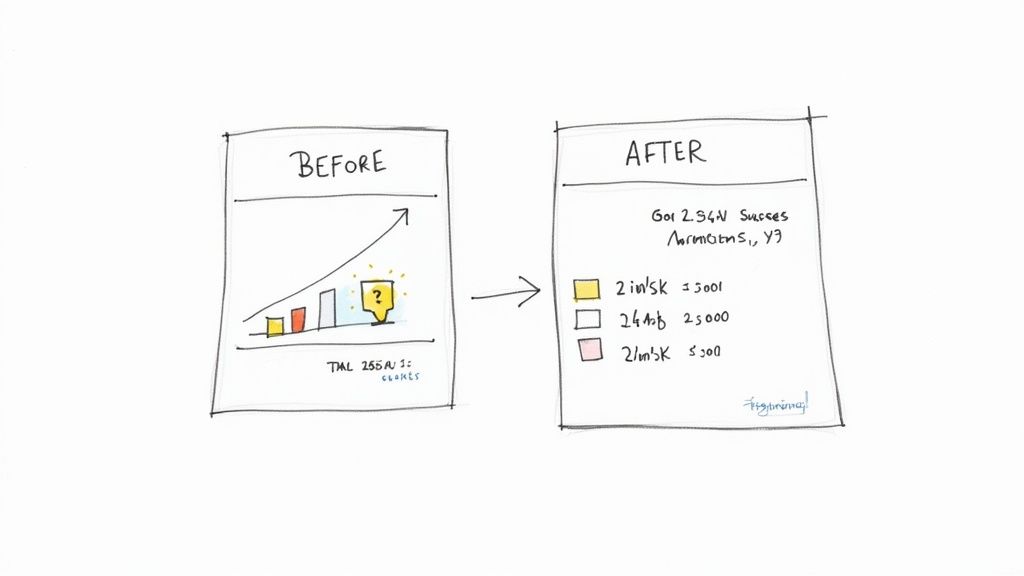
- Tactic 1: Focus on the "Before and After." Basecamp clearly articulates the chaotic state of a business before using their tool and contrasts it with the organized, calm state after. This simple narrative structure makes the value proposition immediately clear and emotionally resonant.
- Tactic 2: Use Authentic Customer Voice. The stories are filled with direct quotes and told from the customer's perspective. This lends authenticity and social proof, as prospective customers see themselves in the stories of their peers.
- Tactic 3: Quantify the Transformation. While focusing on the story, Basecamp still weaves in key metrics, like "cut down on meetings" or "everything is in one place." These tangible outcomes provide the rational justification needed to support the emotional story.
- Productivity Workflow:
- Automate the Request: When a project concludes successfully, use an automated email to ask satisfied clients if they'd be willing to be featured. Include a link to a simple form with questions.
- Use an Interview Template: Conduct a 15-minute recorded call (using Zoom or Riverside.fm) with a standard set of questions: What was the biggest challenge? What was the solution like? What are the top 3 results?
- Leverage Transcription: Use a service like Otter.ai to transcribe the call. Pull out the best direct quotes—this is much faster than writing from scratch.
- Build a Case Study Template: Create a document template with the sections: Challenge, Solution, Results, and a space for a key "pull quote." This streamlines the writing process for every new case study.
10 Thought Leadership Content Formats Compared
| Content Type | 🔄 Complexity | ⚡ Resources | 📊 Expected Outcomes | Ideal Use Cases | ⭐ Key Advantages & 💡 Tip |
|---|---|---|---|---|---|
| Long-Form Articles & Essays | 🔄🔄🔄 High time & research | ⚡⚡ Moderate–high (writers, research, visuals) | 📊 Strong SEO, backlinks, lasting authority | Pillar content, deep analysis, repurposing | ⭐ Deep credibility & evergreen value. 💡 Include original data and clear subheadings. |
| Executive Podcasts | 🔄🔄 Moderate (scheduling + production) | ⚡⚡ Moderate (audio gear, editing, guests) | 📊 High engagement & listener loyalty | Personal brand building, interviews, long-form insights | ⭐ Builds personal connection and loyalty. 💡 Use notable guests and provide transcripts. |
| Research Reports & Whitepapers | 🔄🔄🔄 High (methodology & review) | ⚡⚡⚡ High (data access, statisticians, design) | 📊 Data-driven credibility; lead gen via gating | Industry benchmarks, original research, PR outreach | ⭐ Authoritative citations and media pickup. 💡 Invest in original research and strong visuals. |
| Video Content & Webinars | 🔄🔄🔄 High (production & editing) | ⚡⚡⚡ High (equipment, editors, platforms) | 📊 Highest engagement; strong YouTube SEO | Demos, training, personality-led thought leadership | ⭐ High engagement and brand humanization. 💡 Prioritize audio quality and strong hooks. |
| Speaking Engagements & Conferences | 🔄🔄 Moderate–high (application + prep) | ⚡⚡ Moderate (travel, materials, media kit) | 📊 Immediate credibility, networking, press opportunities | Keynotes, industry visibility, partnership building | ⭐ Direct credibility and media exposure. 💡 Apply early and repurpose presentations. |
| Opinion Pieces & Bylined Articles | 🔄 Low–moderate (writing + pitching) | ⚡ Low (writing time; editorial relationships) | 📊 Third‑party validation and new audience reach | Timely commentary, thought leadership in trade media | ⭐ Third‑party credibility and reach. 💡 Pitch timely angles and follow outlet guidelines. |
| Social Media Thought Leadership | 🔄 Low (low setup, high cadence) | ⚡ Low (time-intensive, minimal cost) | 📊 Rapid audience growth; real-time engagement | Community building, short insights, viral threads | ⭐ Direct engagement and low barrier to entry. 💡 Master one platform and post consistently. |
| Book Publishing & Authorship | 🔄🔄🔄 Very high (writing + publishing) | ⚡⚡⚡ Very high (editing, design, marketing) | 📊 Ultimate credibility; long-term authority & opportunities | Comprehensive subject authority, keynote/speaking boosts | ⭐ Highest authority marker and legacy. 💡 Validate concept and plan launch strategy early. |
| Industry Newsletters & Email Content | 🔄🔄 Moderate (cadence & curation) | ⚡⚡ Moderate (platform, content, list growth) | 📊 High ROI; owned audience and deep engagement | Subscriber education, recurring insights, product announcements | ⭐ Direct owned channel with strong ROI. 💡 Keep issues concise and deliver unique value. |
| Case Studies & Success Stories | 🔄🔄 Moderate (data collection & approvals) | ⚡ Low–moderate (interviews, design) | 📊 Persuasive proof; sales enablement; qualified leads | Sales collateral, proof of concept, industry-specific demos | ⭐ Concrete social proof and credibility. 💡 Quantify results and obtain client permission. |
From Examples to Execution: Your Thought Leadership Flywheel
We've explored a wide spectrum of powerful thought leadership content examples, from Rand Fishkin's transparent long-form essays to Adam Grant's insightful social media threads and the deep data dives of industry research reports. Across every format, a single, unifying thread emerges: effective thought leadership is not about a singular act of genius. It's about consistently and generously sharing valuable insights with a specific audience.
The goal isn't to create one perfect, viral masterpiece. For busy founders, marketers, and small business operators, that approach is a recipe for burnout. The true path to establishing authority lies in building an efficient, repeatable system for generating and distributing your unique perspective. It’s about turning the sporadic effort of content creation into a sustainable engine for growth.
The Power of the Content Flywheel
The secret to sustainable thought leadership is the concept of a 'content flywheel'. Instead of creating ten different pieces of content on ten different topics, you start with one substantial "pillar" piece and systematically atomize it into smaller, repurposed assets. This model respects your most valuable resource: time.
Imagine you invest the effort to create a comprehensive research report or an in-depth whitepaper, as we discussed. That’s your pillar. From that single asset, your flywheel can spin off:
- A 10-part LinkedIn thread summarizing the key data points.
- Three short-form videos for TikTok or Instagram Reels, each highlighting one surprising statistic.
- A webinar presentation where you walk through the findings and host a live Q&A.
- Four dedicated newsletter editions, each exploring a different chapter or theme from the report.
- A bylined article for an industry publication, offering a unique angle on your research.
This approach transforms one major effort into weeks or even months of high-value content, maximizing the return on your initial investment of time and expertise. You're not just creating content; you're building an interconnected ecosystem of ideas that reinforces your authority across multiple platforms. This is how you move from being a sporadic contributor to a consistent, recognized voice in your field.
Your Actionable Next Steps
Reviewing these thought leadership content examples can feel overwhelming, but progress starts with a single step. The key is to move from passive inspiration to active creation. Don't try to master all ten formats at once. Choose the one that best aligns with your strengths and your audience's preferences.
- Select Your Format: Are you a natural writer? Start with a long-form article. A data wizard? A research report is your launchpad. A compelling speaker? Record a video or plan a webinar.
- Identify Your Core Idea: What is a common problem your customers face that you have a unique solution or perspective on? What contrarian view do you hold that challenges the status quo in your industry?
- Time-Block the Work: Schedule 90 minutes in your calendar this week. Use that time to outline your pillar piece. The next block can be for drafting, and the one after for editing. Break the process down into manageable, non-intimidating tasks.
For many businesses, starting with customer results is the most direct path. Turning a successful project into a compelling narrative is a powerful form of thought leadership that demonstrates your expertise rather than just claiming it. For those looking to turn results into compelling narratives, exploring resources like an ultimate case study template can provide a structured framework to ensure your success stories land with maximum impact.
The journey to becoming a thought leader is a marathon, not a sprint. It’s built on the compound interest of consistently showing up, sharing what you know, and adding value to your community. Pick your first piece, commit to the process, and start building your flywheel today.
Ready to build your thought leadership flywheel on LinkedIn but short on time? Postful helps you turn your core ideas into engaging posts and carousels in minutes using AI. Stop staring at a blank screen and start building your authority by visiting Postful to see how you can streamline your content creation.