
This article was assisted with AI. We may include links to partners.
Before you even think about posting, the real work of lead generation begins. It’s about laying a solid foundation. Jumping straight into content creation without this groundwork is like building a house without a blueprint—it’s just not going to hold up.
This isn’t just about broadcasting your message; it’s about turning your social media presence into a finely tuned lead magnet. And it works. A whopping 66% of marketers are already getting leads from these platforms. To join them, you need to start with a clear, deliberate strategy.
Build Your Foundation for Lead Generation Success
The first step is to get laser-focused on who you’re talking to. Move beyond a vague idea of your audience and define a crystal-clear Ideal Customer Profile (ICP). This goes way beyond basic demographics. You need to understand their biggest challenges, their goals, what drives them, and even the specific words they use to talk about their problems.
Let’s get specific with a practical example:
- For a B2B software company: Your ICP isn’t “small business owners.” It’s “CEOs of Series A tech startups with 10-50 employees who are struggling with project management efficiency and are active in LinkedIn industry groups.” See the difference?
- For a B2C fitness coach: It’s not just “people who want to lose weight.” It’s “busy working mothers aged 30-45 who need 30-minute home workouts, follow wellness influencers on Instagram, and are part of supportive Facebook groups for moms.”
A detailed ICP acts as your compass. Every piece of content, every platform choice, and every call-to-action should be designed to resonate directly with this specific person.
Choose Your Platforms Wisely
Once you know your ICP inside and out, picking your platforms becomes an evidence-based decision, not just a gut feeling. Don’t chase the latest shiny object. Instead, ask the most important question: “Where does my ideal customer actually spend their time and look for solutions?”
This decision tree gives you a simple way to think about it, breaking it down by B2B vs. B2C.
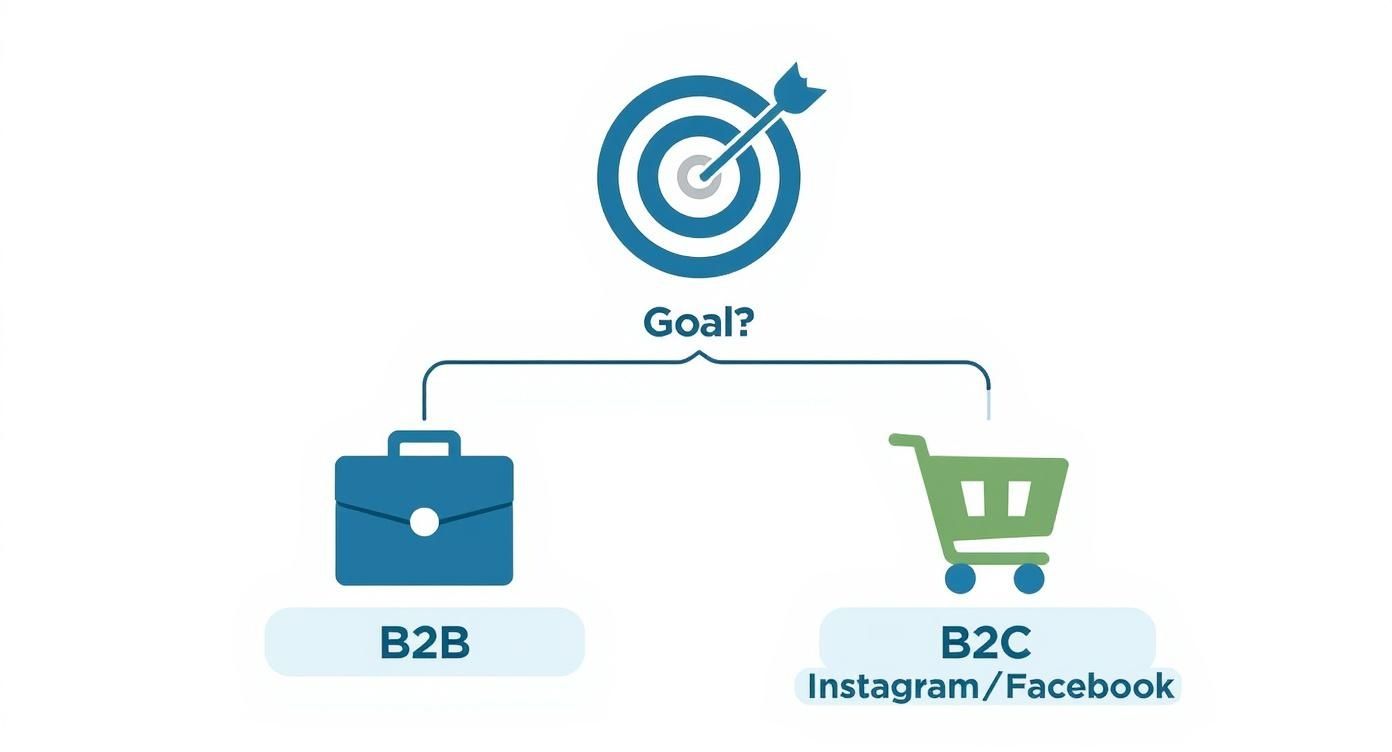
As you can see, your business model is the starting point. If you’re B2B, professional networks like LinkedIn are a no-brainer. If you’re B2C, you’ll likely find your audience on more consumer-focused platforms like Instagram and Facebook.
To help you get started, here’s a quick framework for thinking through your options.
Platform Selection Framework for Lead Generation
This table breaks down the most popular platforms to help you pinpoint where your efforts will have the biggest impact based on your business and audience.
| Platform | Best For (B2B/B2C) | Primary Audience Demo | Top Content Formats for Leads |
|---|---|---|---|
| B2B | Professionals, C-suite, decision-makers | Thought leadership articles, case studies, webinar invites, industry reports | |
| B2C | 18-34, visually-driven consumers | Product demos (Reels), user-generated content, interactive Stories, influencer collabs | |
| B2C & B2B (Local) | 25-55+, community-focused users | Live Q&As, community group discussions, event promotion, customer testimonials | |
| X (Twitter) | B2B & B2C | Tech-savvy, news-oriented users | Quick tips, industry news, polls, links to blog posts/lead magnets |
| B2C | 25-49 (predominantly female), planners | Visual guides, infographics, product discovery Pins, DIY tutorials | |
| TikTok | B2C | 16-24, trend-driven audience | Behind-the-scenes videos, educational shorts, user challenges, authentic content |
Choosing the right one or two platforms to focus on is far more effective than trying to be everywhere at once. Quality over quantity always wins in social media.
Optimize Your Profile for Conversions
Think of your social media profile as a mini-landing page. It’s often the very first place a potential lead interacts with your brand, and you have just a few seconds to make an impression. It needs to quickly tell people who you are, what you do for them, and exactly what you want them to do next.
Your social media bio is prime real estate. Make it concise, focused on the benefits you offer, and include a clear call-to-action (CTA).
A practical example for an agency:
Before: “We are a full-service digital marketing agency.”
After: “We help B2B SaaS startups scale with paid ads. 👇 Get our free ’50-Point Ad Creative Checklist’ here.”
Use your pinned posts, link-in-bio tools, and featured sections to guide visitors toward your newsletter, a free download, or your contact form. The goal is to make the journey from discovering you to becoming a lead as smooth and simple as possible. For a more detailed walkthrough, this guide to social media for lead generation is a fantastic resource.
Create Content That Captures and Converts
Your content is the bridge that turns a passive follower into an active lead. If you want to generate leads on social media, every post needs a purpose that goes way beyond just chasing likes.
The best way I’ve found to do this is with a “Value-First” framework. The idea is simple: consistently solve your audience’s problems long before you ever ask for anything in return. Forget generic company updates; your content calendar should be packed with posts that educate, guide, and offer genuine insight. Think tangible solutions, not just noise.
Offer High-Value Lead Magnets
A lead magnet is that free, incredibly useful resource you offer in exchange for an email address. It’s the core of your conversion strategy, but it doesn’t need to be a 50-page ebook. In fact, I’ve seen quick, actionable resources outperform massive guides time and time again.
Here are a few practical examples for high-converting lead magnets:
- Actionable Checklists: A simple one-page PDF that helps someone complete a specific task. A marketing agency could offer a “10-Point Social Media Profile Audit Checklist.”
- Plug-and-Play Templates: A ready-to-use resource that saves your audience a ton of time. A project management consultant might create a “Trello Board Template for Agile Sprints.”
- Exclusive Mini-Guides: A short, focused guide that nails one specific problem. Think something like a “5-Step Mini-Guide to Choosing Your First Index Fund” from a financial advisor.
The best lead magnets give your audience an immediate “win.” They should be so genuinely useful that someone is happy to trade their email for access. This simple value exchange is how you start building trust and bringing in quality leads.
Once you have a few lead magnet ideas, it’s time to build them into your content plan. A simple productivity tool like Trello or Asana can be a lifesaver. Create columns for “Lead Magnet Ideas,” “Content in Progress,” and “Published & Promoting” to track your entire workflow from a rough concept to a live campaign.
Craft Compelling Calls-to-Action
Your posts can be packed with value, but without a clear next step, you won’t get any leads. This is where your Call-to-Action (CTA) comes in. The secret to a great CTA is making it feel like a natural extension of the value you just provided, not some jarring sales pitch.
Instead of a boring “Click the link in bio,” frame your CTA around the benefit.
- Weak CTA: “Download our guide.”
- Strong CTA: “Tired of social media guesswork? Grab our free content planning template to save hours each week. Link in bio!”
See the difference? The strong CTA connects the problem (guesswork) with the solution (the template) and highlights a real benefit (saving time). You can easily take a single lead magnet and create dozens of different posts around it. Our guide to content repurposing has a ton of workflows for getting the most out of every single piece you create.
This focus on valuable content isn’t just a hunch; the data backs it up. Content marketing now drives over 51.5% of lead acquisition globally. Marketers are leaning into educational content because it flat-out works. And by 2025, an impressive 72.5% of marketers agree that blogging and similar value-driven content have become more effective for lead generation.
Master B2B Lead Generation on LinkedIn

When it comes to B2B, LinkedIn isn’t just another social network—it’s the main event. This is where your ideal customers hang out, share what they know, and, most importantly, make buying decisions. It’s the digital town square for professionals.
The numbers back this up. A staggering 89% of B2B marketers lean on LinkedIn for lead generation, and 62% of them say it actually works. That makes it a non-negotiable part of any serious B2B marketing plan. You can see more LinkedIn stats over at SproutSocial.com.
But success here isn’t about just having a profile. It’s about a smart, deliberate strategy focused on dialing in your profile, showing you know your stuff, and building real professional connections.
Optimize Your Profile for Search and Authority
Think of your personal and company profiles as valuable digital real estate. They need to be optimized for search just like a website. What keywords would your dream client type into the search bar to find someone like you? “SaaS sales consultant,” “logistics software expert,” “B2B content marketing”—sprinkle those terms throughout your headline, summary, and experience sections.
A well-optimized profile works like a magnet for inbound leads. For a full breakdown, take a look at our guide on how to create a business profile on LinkedIn.
Once your profile is solid, it’s time to get active in relevant industry groups. And I don’t mean just joining them. You have to contribute. Jump in to answer questions, share a useful insight from a recent project, and comment on other members’ posts.
Here’s a simple, actionable workflow for productivity:
- Find 3-5 active groups where your target customers are talking.
- Set a recurring calendar reminder for 15 minutes each morning to scroll through the feeds.
- Your daily goal: leave one genuinely helpful comment or answer one question.
This isn’t about pitching. It’s about consistently showing up and adding value, which positions you as an authority. When you do eventually reach out, people will already know who you are.
A Practical Workflow for Sales Navigator
If you’re serious about prospecting, LinkedIn Sales Navigator is an absolute game-changer. Forget endless manual searches. It lets you build incredibly specific lists of leads based on things like company size, job title, industry, or even if they’ve recently changed jobs.
Here’s a workflow I’ve seen work time and again to turn Sales Navigator into a lead-generating machine:
- Build Your Lead List: Use the advanced filters to create a saved list of at least 50 ideal prospects. For example, filter for “VP of Marketing” at “SaaS companies” in the “United States” with “51-200 employees.”
- Engage Before Connecting: Before you hit that “Connect” button, go find a recent post they shared or commented on. A thoughtful reply shows you’ve actually paid attention.
- Send a Personalized Connection Request: Please, ditch the generic template. Keep your message short, sweet, and to the point.
A Connection Request That Actually Works:
“Hi [Name], I saw your recent post about [Topic] and thought your point on [Specific Insight] was excellent. I’m also focused on helping [Their Industry] leaders with [Your Solution]. Would be great to connect and follow your work.”
This simple approach turns a cold outreach into a warm introduction. You’re starting the relationship by giving, not asking, which dramatically increases the odds they’ll accept and be open to a real conversation.
Turn Conversations into Customers with Direct Engagement
Automated funnels are great, but some of the best leads I’ve ever seen came from old-fashioned human connection. It’s about stepping out from behind your scheduled posts and actually starting conversations. When you do this, your social media presence stops being a broadcast channel and starts becoming a community hub.
The whole strategy pivots on one simple idea: show up where your ideal customers are already talking. Instead of waiting for them to find your page, you go to them. You offer helpful advice, build a little rapport, and turn a passive follower into a real relationship. This is how you generate leads on social media that actually stick—it’s all built on a foundation of authenticity and trust.
Use Social Listening to Find Your Opening
Think of social listening as your secret weapon for finding warm prospects. It’s really just the practice of keeping an ear out on social platforms for mentions of your brand, your competitors, or specific pain points your industry solves. Find one of these conversations, and you’ve got the perfect, non-intrusive opening to offer some real value.
Ready to give it a shot? Here’s a simple workflow using tools like Brand24 or Sprout Social:
- Set Up Keyword Alerts: Track the exact phrases a potential customer would use when they’re stuck. A financial advisor, for instance, might track things like “best way to start investing” or “confused about 401k options.” A software company could track “looking for CRM recommendations” or “[Competitor Name] alternative.”
- Monitor Industry Hashtags: Keep an eye on both the big, popular hashtags and the smaller, niche ones in your field. This is where you’ll find people asking really specific questions.
- Jump In and Be Genuinely Helpful: When you spot an opportunity, respond with a useful tip or a resource. And I mean actually useful—not a sales pitch. The goal is to help, not to sell.
The point of social listening isn’t to interrupt conversations, but to become a valued participant in them. When you offer advice with no strings attached, you build instant goodwill and start positioning yourself as the expert they remember.
Master the Art of the Non-Spammy DM
Direct Messages can be an incredible tool for moving an interested person to the next step. But let’s be honest, a cold, generic pitch is the fastest way to get ignored, muted, or even blocked. You have to earn the right to slide into someone’s DMs.
The best time to send a DM is right after a positive public interaction—maybe they left a great comment on your post or replied to one of your stories.
Here’s a practical example of this workflow:
- The Public Interaction: Someone leaves a thoughtful comment on your latest post about project management tips: “This tip about batching tasks is a game-changer!”
- The DM That Follows: “Hey [Name]! Thanks so much for the great comment on my post. I’m glad you found the tip on task batching useful. I actually have a quick one-page checklist for weekly planning if you’d find it helpful?”
See the difference? The message is personal and adds even more value. You’re offering another free resource based on an interest they’ve already expressed. It makes the jump from a public chat to a private one feel completely natural. It’s this simple, relationship-first approach that turns a casual follower into a genuinely warm lead.
Amplify Your Results with Paid Social Ads
Organic content is fantastic for building trust and a loyal community. But when you need to hit the accelerator, paid social ads are your best friend. They let you jump the line, bypassing the slow burn of organic reach to put your best offers right in front of a hand-picked audience.
This isn’t about randomly “boosting” a post and hoping for the best. It’s about a more surgical approach. We’re going to use the powerful targeting tools inside platforms like Meta and LinkedIn to zero in on exactly who you want to talk to. The goal is to spend smarter, not just more, and make every dollar count.
Setting Up a High-Impact Lead Gen Campaign
The most direct path to getting leads is to use the native “Lead Gen” ad objectives. Both Meta (for Facebook and Instagram) and LinkedIn have this built right in.
It works by showing users a simple, pre-filled form without ever making them leave the app. That seamless experience is a game-changer. It massively cuts down on the friction that makes people abandon a sign-up process, which means your conversion rates go way up.
Here’s a practical workflow to launch your first campaign:
- Define Your Audience with Precision: Don’t just stick to basic demographics. Get granular. Use interest targeting (e.g., people interested in “SaaS” and “Marketing Automation”), create lookalike audiences from your existing customer lists, and on LinkedIn, target specific job titles or industries.
- Craft a Compelling Offer: Your ad has to promise immediate value. A great practical example is offering a “Free 15-minute SEO Audit” or a “Webinar on Improving Team Productivity.” Give people a good reason to hand over their contact info.
- Keep Your Lead Form Simple: Ask only for what you absolutely need. For most, that’s just a name and an email. Every extra field you add is another chance for someone to drop off.
The real magic of paid ads is in their specificity. You can target people who’ve visited your website, engaged with your posts, or look just like your best customers. That’s a level of precision you’ll never get with organic content alone.
Testing and Tracking for Better ROI
Launching your ad is just the starting line. The real work is in the constant cycle of testing and tweaking to get your costs down and your lead quality up. This is where A/B testing becomes your most valuable tool.
You need to systematically test one thing at a time to see what your audience responds to. Is it the image? The headline? The call to action?
Visuals are a huge part of this. To really make your ads pop and boost conversions, it pays to understand what goes into creating compelling video ads.
Once your ads are running, you need to know what success actually looks like. I recommend creating a simple spreadsheet or using a tool’s native dashboard to track a few key metrics.
Key Metrics for Social Media Lead Generation
Here’s a quick rundown of the metrics I watch like a hawk. These numbers tell the real story of whether your campaigns are working or just burning cash.
| Metric | What It Measures | Why It’s Important | Industry Benchmark (Example) |
|---|---|---|---|
| Cost Per Lead (CPL) | The average cost to acquire one new lead from a specific campaign. | This is your North Star. It tells you if your ad spend is efficient and sustainable. | $5 – $50 (Varies wildly by industry) |
| Conversion Rate | The percentage of people who click your ad and successfully submit the lead form. | A high conversion rate means your ad, offer, and form are all working together perfectly. | 2% – 5% is a good starting point. |
| Click-Through Rate (CTR) | The percentage of people who see your ad and click on it. | Indicates if your ad creative and copy are grabbing attention and are relevant to the audience. | ~1% on most platforms. |
| Lead Quality Score | A score you assign to leads based on how likely they are to become a customer. | Not all leads are equal. This helps you focus on campaigns that bring in valuable prospects, not just names. | Varies based on your internal scoring system. |
By keeping a close eye on these numbers, you can spot what’s working and what isn’t.
If your CPL is too high, maybe your targeting is off or your offer isn’t strong enough. If your conversion rate is low, perhaps your lead form is too long. This data-driven approach is what turns your ad spend from a simple expense into a predictable, scalable investment in your business’s growth.
A Few Common Questions About Social Media Leads
When you’re first diving into social media lead generation, a handful of questions always seem to pop up. Getting straight answers is the best way to move forward with a solid plan and sidestep the common mistakes that trip people up.
Let’s walk through a few of the most frequent ones I hear from marketers.
How Long Does It Take to See Results?
This is always the first question, and the honest answer is: it really depends. Your timeline for seeing real, tangible results comes down to your strategy and your industry.
- Organic Methods: If you’re building a community and putting out value-first content, you’re playing the long game. Trust doesn’t happen overnight. You should expect to see consistent, quality leads coming in after 3-6 months of dedicated work.
- Paid Advertising: On the flip side, a well-tuned paid campaign on Meta or LinkedIn can start pulling in leads within a few days. The trade-off? It requires a budget and constant tweaking to keep it effective.
Honestly, a mix of both usually works best. Use paid ads to get some quick wins while your organic efforts are building a more sustainable, long-term engine for growth.
The single biggest mistake is being too sales-focused too soon. Social media is a ‘social’ platform first. The most successful strategies follow the 80/20 rule: 80% of your content should be valuable and educational, with only 20% being promotional.
What Is the Biggest Mistake to Avoid?
Jumping straight into a sales pitch. It’s a classic mistake and a recipe for getting ignored. Too many businesses treat their social media profiles like a digital billboard, just shouting about their product over and over. This completely alienates the very people you’re trying to reach, who are there to connect and learn, not get a hard sell.
The fix is simple: build a relationship first. Solve small problems for them, for free, with your content. This simple shift establishes a baseline of trust and makes your audience far more open to hearing you out when you do eventually present an offer.
Do I Need Expensive Tools to Start?
Absolutely not. You can get a ton done using just the native features on each platform. Things like direct outreach in LinkedIn DMs or building a community inside a Facebook Group don’t cost a dime—just your time.
When you’re starting out, a simple spreadsheet is all you need to track your leads. As you start to get more traction, then you can think about investing in a few key tools to make your life easier. A CRM like HubSpot (which has a free tier), a social media scheduler like Buffer, or a landing page builder can help you automate things and manage more leads without going crazy. The key is to start simple and only add tools when you feel a real need for them.
Ready to build a consistent, effective social media presence without the grind? Postful offers AI-powered templates and brainstorming tools to jumpstart your content creation. Join the waitlist today to secure early access.