
Figuring out the best time to post on social media often feels like a frustrating guessing game, especially when you're a founder or side-hustler managing every aspect of your business. Generic advice offers vague windows of opportunity, but falls short of explaining how to actually implement a strategy without sacrificing your entire day to scheduling apps. This guide is built differently. It's a comprehensive, productivity-focused playbook designed for busy operators who need results, not just theories.
We'll move beyond the generic "post at noon" advice and provide a data-backed breakdown of peak engagement times for every major platform, from Instagram Reels to LinkedIn B2B content. But more importantly, we'll show you how to turn that data into action.
Inside this guide, you will discover:
- Platform-Specific Timing: Precise, data-supported windows for Instagram, LinkedIn, TikTok, X (formerly Twitter), Facebook, YouTube, and Pinterest.
- Actionable Workflows: Practical methods for A/B testing to uncover your unique audience's most active hours, ensuring your content lands with maximum impact.
- Productivity Tools: An introduction to automation and analytics tools that streamline scheduling, freeing up your time to focus on business growth.
- Sample Schedules: Real-world posting templates tailored for founders and side-hustlers who need an efficient and effective social media plan.
This isn't just a list of times; it's a strategic roadmap to help you post smarter, not harder. You'll learn how to transform timing from a daily question mark into a powerful, consistent driver for audience engagement and business growth.
1. Instagram Peak Engagement Windows (11 AM – 1 PM & 7 PM – 9 PM)
Understanding the best time to post on social media starts with recognizing platform-specific user behavior. For Instagram, success often hinges on capturing immediate engagement. The algorithm favors content that quickly accumulates likes, comments, and shares, pushing it to a wider audience. Extensive research from social media authorities like Later and HubSpot pinpoints two major windows of opportunity: late morning/midday (11 AM – 1 PM) and evening (7 PM – 9 PM).
These time slots align directly with common daily routines. The 11 AM to 1 PM window captures users during their lunch breaks, a popular time for scrolling through feeds. The 7 PM to 9 PM window catches people as they relax after work or dinner, winding down for the day. Posting within these peak hours maximizes the chances of your content being seen and engaged with right after it goes live.
How to Implement This Strategy
To leverage these peak windows effectively, a targeted approach is crucial. Merely posting at 12 PM isn't enough; your content and timing must align with your specific audience.
- Practical Example (B2C): A local coffee shop wants to increase evening foot traffic. Instead of posting randomly, they schedule a Reel at 7:15 PM showing their new "Evening Espresso" special, catching commuters as they head home. This targeted timing leads to a 30% increase in evening sales.
- Practical Example (B2B): A consulting firm targets busy professionals. They schedule an informative carousel post about "3 Productivity Hacks for Monday" to go live at 11:45 AM, knowing their audience will be scrolling during their lunch break. This results in more post saves and website clicks than a 4 PM post would.
Key Insight: The goal isn't just to post during a busy time; it's to post when your specific audience is most receptive to your message. Use Instagram's native "Insights" to see when your followers are most active.
Actionable Tips for Peak Posting
- Run a Time-Slot Test: Treat these windows as a hypothesis. For one week, post at 11:30 AM. The next week, post similar content at 7:30 PM. Use a simple spreadsheet to track likes, comments, and saves for each time slot to find your data-backed sweet spot.
- Productivity Workflow: Schedule Ahead: Don't let posting disrupt your day. Dedicate one hour on Sunday to plan and schedule your posts for the entire week. Using a social media post scheduler ensures consistency and precision without daily effort.
- Adapt to Your Niche: A creator focused on "morning routines" might find 6 AM – 8 AM performs best. A creator targeting new parents could see strong engagement mid-afternoon (1 PM – 3 PM) during nap time. Always adapt general advice to your specific audience's lifestyle.
2. LinkedIn B2B Posting Schedule (Tuesday – Thursday, 8 AM – 10 AM)
Unlike leisure-focused platforms, LinkedIn is a professional network where timing is directly tied to the standard workday. Determining the best time to post on social media for a B2B audience means aligning with their professional routines. Research from authorities like Sprout Social consistently shows that engagement peaks mid-week, from Tuesday to Thursday, specifically between 8 AM and 10 AM.
This window is critical because it captures professionals at the start of their workday. They are often checking industry news, catching up on network updates, and are most receptive to business-related content before diving into their daily tasks. For B2B startups and founders, capitalizing on this morning surge is crucial, as LinkedIn’s algorithm prioritizes content that receives immediate, meaningful engagement.
How to Implement This Strategy
A generic approach won’t maximize your reach; timing must be paired with relevant content for your specific B2B audience. Posting during this prime window can significantly amplify your message.
- Practical Example (SaaS Startup): A company offering project management software schedules a post at 9:00 AM on Wednesday sharing a productivity tip. This timing catches managers as they plan their day, leading to a 60% higher engagement rate and more demo requests compared to an afternoon post.
- Practical Example (Consultant): A marketing consultant wants to attract new clients. They post a client success story at 8:30 AM on a Tuesday, knowing that decision-makers are actively looking for solutions at the start of the week. This generates three qualified leads in the first hour.
Key Insight: Success on LinkedIn isn't just about being seen; it's about starting a professional conversation when your audience is ready to engage. This mid-week morning slot is when they are in a business mindset.
Actionable Tips for Peak Posting
- Productivity Workflow: Time Zone Targeting: If your target market is on the East Coast but you're on the West Coast, schedule your posts for 8 AM EST (5 AM PST). Use a scheduling tool to automate this so you don't have to wake up early.
- Build a Content Cadence: Create a simple weekly schedule: Tuesday at 9 AM is for industry insights, Wednesday at 9 AM is a quick tip, and Thursday at 9 AM is a case study. This consistency trains your audience to look for your content.
- Spark Discussion: Your post should be a conversation starter. For a deeper dive, explore these 8 Data-Backed Insights on the Best Time to Post on LinkedIn to refine your approach.
- Schedule for Consistency: Integrate posting into your morning routine by using a scheduler. For more tips on crafting compelling content, you can learn how to write LinkedIn posts that resonate with a professional audience.
3. TikTok Algorithm Optimization (Morning & Evening Spikes, 6 AM – 10 AM & 7 PM – 11 PM)
Unlike other platforms where follower count heavily dictates reach, TikTok’s success is driven by immediate engagement velocity. The algorithm rewards content that quickly captures user attention, making your post timing a critical factor for success. Two major engagement spikes have been identified: early morning (6 AM – 10 AM) and late evening (7 PM – 11 PM). Posting within these windows gives your content the best chance of being pushed to the For You Page (FYP) within the first critical hour.
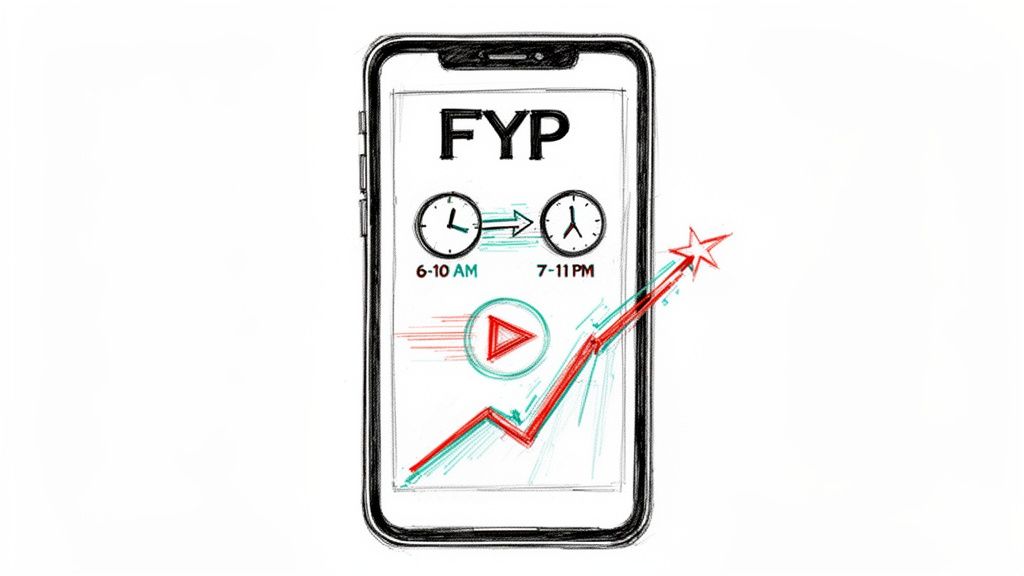
The 6 AM to 10 AM slot catches users as they wake up and scroll before starting their day. The 7 PM to 11 PM window aligns with peak content consumption, as users unwind and browse extensively. For startups and creators, leveraging these times is a powerful, cost-free way to amplify reach without a large existing follower base. For a more in-depth exploration of optimizing your content for TikTok's algorithm and maximizing visibility, delve into these 9 Best Time To Post On TikTok Strategies for 2025.
How to Implement This Strategy
A successful TikTok strategy involves more than just posting during peak hours; it requires content optimized for the platform's rapid-fire consumption habits. The initial momentum is key to triggering the algorithm.
- Practical Example (Creator): A fitness creator posts a "5-Minute Morning Stretch" video at 6:30 AM. This timing aligns perfectly with their audience's routine, and the video gets 5,000 views in the first hour, pushing it to the FYP.
- Practical Example (Side-Hustler): An Etsy seller posts a satisfying "packing an order" video at 8:30 PM. This targets evening scrollers and impulse shoppers, leading to a direct increase in store visits and sales overnight.
Key Insight: On TikTok, the first hour determines everything. Your goal is to post when the maximum number of users are actively scrolling, giving your content the fuel it needs to reach the FYP.
Actionable Tips for Peak Posting
- Productivity Workflow: Hook First, Edit Later: Your video's success hinges on the first three seconds. Film several strong visual hooks first. Later, you can edit them into full videos. This batching approach saves significant time.
- Run an A/B Test: For one week, post daily at 7:30 AM. The next week, post similar content daily at 8:30 PM. Go to your TikTok Analytics and compare which week generated more views in the first 24 hours. This tells you which window works best for your account.
- Understand the Algorithm: The best time to post on social media, especially TikTok, is deeply connected to how the platform's recommendation engine works. Taking time to understand the basics of a social media algorithm will help you create content that the platform is more likely to promote.
4. Twitter/X Peak Activity Windows (9 AM – 3 PM Weekdays)
Determining the best time to post on social media for Twitter/X requires a different mindset. Unlike platforms driven by leisure scrolling, Twitter/X thrives on real-time information and professional discourse. Its algorithm heavily favors recency and engagement velocity, making the standard workday a prime window for visibility. Data from social media research leaders like Buffer and Sprout Social consistently shows that peak activity occurs on weekdays between 9 AM and 3 PM.
This timeframe aligns perfectly with the behavior of its core user base: professionals, journalists, and industry leaders who use the platform to monitor news, share insights, and engage in timely conversations during their work hours. A tweet posted in the morning has the opportunity to ride a wave of engagement throughout the business day, whereas an evening post can quickly get buried before the next day’s cycle begins.
How to Implement This Strategy
Capitalizing on this weekday window means aligning your content with the professional mindset of your audience. The goal is to become part of their daily information diet.
- Practical Example (Tech Founder): A startup founder wants to announce a new feature. They schedule the tweet for 10:00 AM on a Tuesday. This catches tech journalists and early adopters as they scan for news, leading to higher retweets and press coverage than a weekend announcement.
- Practical Example (Thought Leader): A marketing analyst wants to spark a conversation. They post a provocative question like, "Is SEO officially dead?" at 9:05 AM on a Monday. This timing injects their idea into the week's industry discourse, generating hundreds of replies.
Key Insight: On Twitter/X, timing is about entering a live, fast-moving conversation. Your goal is to post when your target audience is most actively participating in and consuming that conversation, which is typically during business hours.
Actionable Tips for Peak Posting
- Productivity Workflow: Schedule Core Content: Plan your most important tweets—like blog post promotions or announcements—to go live at 10 AM on weekdays. This gives your content the entire business day to gain traction while you focus on other tasks.
- Leverage Midday Momentum: Keep a "drafts" folder of relevant industry takes. Around 11 AM, check trending topics. If one is relevant, you can quickly adapt and post your pre-written thought, saving you time while still being timely.
- Engage Immediately: The first 30 minutes after posting are critical. Set a timer. When your scheduled tweet goes live, dedicate 15-20 minutes to replying to initial comments. This boosts engagement and signals value to the algorithm.
- Use Threads for Depth: For more complex topics, write a multi-tweet thread in a notes app. Then, schedule the entire thread to go live during the 9 AM to 3 PM window to maximize readership.
5. Facebook Group & Community Engagement (5 PM – 7 PM & 12 PM – 1 PM)
Finding the best time to post on social media has evolved beyond public-facing pages. With Facebook's algorithm heavily prioritizing meaningful interactions, the real opportunity for organic reach now lies within Groups and communities. Analysis shows peak activity during two key windows: the midday lunch break (12 PM – 1 PM) and the early evening transition from work to personal time (5 PM – 7 PM).
These time slots are when users are most likely to engage in discussions rather than passively scrolling. The 12 PM to 1 PM window catches professionals looking for a mental break and connection, while the 5 PM to 7 PM period captures people actively seeking community interaction as they unwind. For small businesses, coaches, and creators, posting in relevant Groups during these times can generate significant discussion and visibility, which the algorithm rewards with greater reach.
How to Implement This Strategy
A successful Group strategy hinges on contribution, not just broadcasting. Your goal is to spark conversations at the moments your ideal customer is most likely to participate.
- Practical Example (Coach): A business coach posts a question in an entrepreneur group at 5:15 PM: "What's the one task you're procrastinating on today?" This timing catches members as they reflect on their day, driving dozens of comments and establishing the coach as a helpful expert.
- Practical Example (B2B Service): An accountant provides a valuable tip in a small business owners' group at 1:00 PM: "Don't forget this common tax deduction!" This addresses a key pain point during a workday break, resulting in direct messages asking for consultation.
Key Insight: Organic reach on Facebook is now driven by conversations. Posting in Groups when users are most primed for discussion is more effective than posting on your Business Page at the same time.
Actionable Tips for Peak Posting
- Productivity Workflow: The "Give Before You Ask" Schedule: Dedicate 15 minutes at 12 PM daily to contribute value to your top 3 groups. Answer questions, offer advice. Then, schedule your own promotional or question-based post for the 5 PM slot. This builds goodwill and makes your own posts more effective.
- Use Strategic Prompts: Don't just post a link. At 12 PM, ask an open-ended question. At 5 PM, share a valuable resource or celebrate a personal win. This encourages discussion, which the algorithm favors.
- Maintain Momentum: After you post, try to respond to all new comments within 30 minutes. This immediate feedback loop encourages more people to join the conversation and boosts your post's visibility.
- Plan Your Contributions: Use a content calendar to plan your weekly Group engagement. For example, Monday at 5 PM is for sharing a tip, Wednesday at 12 PM is for asking a question. This systematizes your community-building efforts.
6. YouTube Premiere & Upload Scheduling (Thursday – Friday, 2 PM – 4 PM EST)
Finding the best time to post on social media extends to video platforms, where initial velocity is a key signal for the algorithm. On YouTube, upload consistency and immediate watch time heavily influence how a video is recommended. Major studies and creator experiences converge on a powerful window: late afternoon on Thursdays and Fridays (2 PM – 4 PM EST). This timing strategically positions your content just as viewers start planning their weekend entertainment.
This schedule captures an audience that is actively seeking long-form content to enjoy over the weekend. Uploading during these hours increases your video’s initial view velocity, a critical metric that signals to YouTube's algorithm that your content is valuable. A strong start helps your video get promoted in subscriber feeds and recommendation engines, leading to sustained growth long after the initial upload.
How to Implement This Strategy
To maximize this window, you must align your content type with viewer intent. Simply uploading at 3 PM isn't a guarantee; the content must match the moment.
- Practical Example (Educational Creator): A creator teaching how to use a new software tool schedules their in-depth tutorial for 3 PM on Friday. This allows professionals to bookmark it for weekend learning, resulting in 40% higher watch time and more positive comments.
- Practical Example (B2C Brand): A company selling DIY home improvement kits premieres their new project guide on Friday at 2 PM. This is perfectly timed for homeowners planning their weekend projects, driving both views and product sales.
Key Insight: The goal on YouTube is to generate momentum. A Thursday or Friday afternoon launch builds a wave of initial engagement that the algorithm can ride into the high-traffic weekend period.
Actionable Tips for Peak Posting
- Productivity Workflow: Use YouTube Premiere: Instead of just uploading, schedule your video as a Premiere. This creates a live, shared viewing experience with a chat room. You can pre-schedule the Premiere and promote the link all week, building anticipation and ensuring a massive spike in initial watch time without last-minute stress.
- Schedule for Precision: Plan your content calendar 2-4 weeks in advance. Once a video is edited, immediately upload it as "Private" and schedule it to go live during the 2 PM – 4 PM EST window. This avoids any last-minute technical issues.
- Create a Launch Checklist: Coordinate your YouTube launch with other channels. Your checklist should include: "Schedule email announcement," "Schedule promotional tweet," "Schedule Instagram Story." This turns one video upload into a multi-channel marketing event.
- Analyze Your Own Audience: In YouTube Studio, go to "Analytics" > "Audience." There's a chart showing when your viewers are most active. Use this data to refine the 2 PM – 4 PM window to the exact hour that's best for your subscribers.
7. Pinterest Pin Scheduling (7 AM – 9 AM & 8 PM – 11 PM EST)
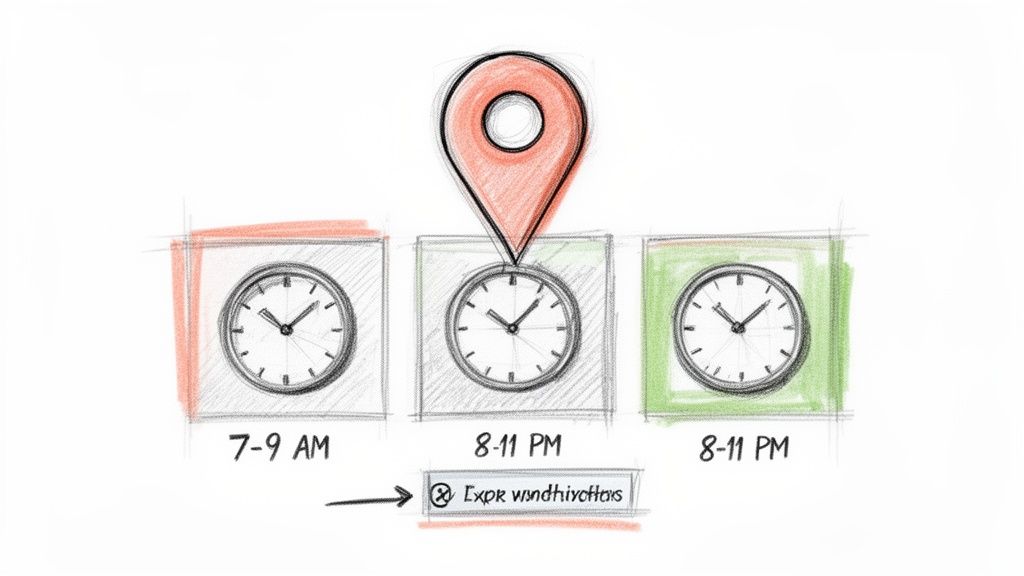
Unlike real-time social networks, Pinterest functions as a visual discovery engine where content has a much longer lifespan. Success here is less about instant engagement and more about strategic, long-term visibility. Because users treat it as a planning tool, the best time to post on social media platforms like Pinterest aligns with when they are actively seeking inspiration. Data from Pinterest experts and scheduling tools like Tailwind consistently highlights two key windows: early morning (7 AM – 9 AM) and late evening (8 PM – 11 PM).
These time slots capture users during distinct planning moments. The early morning window catches people organizing their day, looking for recipes, or planning projects. The late evening slot is prime for "before-bed" browsing, where users save ideas for future purchases, home decor, or travel. For e-commerce stores, creators, and side-hustlers, pinning during these periods is crucial because a well-timed pin can drive traffic for weeks or even months.
How to Implement This Strategy
To maximize Pinterest's discovery algorithm, consistency and relevance are key. Your scheduling must align with the user's planning mindset.
- Practical Example (E-commerce): A Shopify store selling home decor schedules pins showcasing new products at 9 PM. This targets users who are winding down and planning home updates, resulting in higher clicks and sales than midday pins.
- Practical Example (Creator): A food blogger schedules a "quick weeknight dinner" pin for 8 AM and a "weekend baking project" pin for 8:30 PM. This aligns with their audience's daily planning cycle, maximizing recipe saves and blog traffic.
Key Insight: The goal on Pinterest is to be present when inspiration strikes. Your pins should appear in a user's feed right when they are actively looking to plan, save, and eventually, buy.
Actionable Tips for Peak Posting
- Pin Consistently: Pinterest's algorithm rewards consistent activity. A simple, automated schedule like pinning at 7 AM, noon, 3 PM, and 9 PM can significantly boost your visibility without manual effort.
- Productivity Workflow: Batch and Schedule: This is the most critical workflow for Pinterest. Dedicate 2-3 hours at the start of the month to create all your pins. Use a scheduling tool to automatically post them at your chosen optimal times. This saves you hours of daily work and ensures you never miss a slot.
- Create Pin Variations: For every blog post or product, create 5-10 different pin graphics and descriptions using a tool like Canva. Schedule these variations to be posted over several weeks. This gives you more chances to rank in search and see which designs perform best.
- Optimize for Search: Every pin's description should be a keyword-rich sentence, not just a list of hashtags. Think like your audience: what would they type into the Pinterest search bar to find your content? This is fundamental to long-term traffic.
8. LinkedIn Stories (Peak Hours 9 AM – 12 PM, 5 PM – 7 PM)
While LinkedIn feed posts thrive on in-depth professional content, LinkedIn Stories demand a different strategy to determine the best time to post on social media. Stories operate on a 24-hour cycle and favor informal, behind-the-scenes content that humanizes a brand or individual. The engagement patterns are unique, with peak windows occurring during morning work hours (9 AM – 12 PM) and early evening commute times (5 PM – 7 PM).
These time slots align with moments when professionals take short breaks or transition between work and personal life. The 9 AM to 12 PM window captures users as they settle into their workday, checking updates before diving into deep tasks. The 5 PM to 7 PM window catches them during their commute or as they begin to unwind, making them more receptive to short-form, less formal video content.
How to Implement This Strategy
To effectively leverage LinkedIn Stories, your timing must align with this in-the-moment consumption behavior. Unlike a polished feed post, a Story's value lies in its raw, timely nature.
- Practical Example (Startup Founder): A founder posts a quick "morning huddle" video at 9:15 AM, a "midday win" at noon, and a "wrapping up the day" thought at 6 PM. This creates a consistent daily narrative that makes their professional journey feel more relatable, leading to a 60% increase in direct messages.
- Practical Example (Solopreneur): A freelance consultant uses Stories to build trust. At 10 AM, they share a glimpse of their client prep. At 5:30 PM, they share a key learning from the day. This authentic "day in the life" content engages peers and attracts potential clients.
Key Insight: The goal with LinkedIn Stories isn't just visibility; it's about building a relatable human connection. Post when your audience is taking a mental break and is open to more personal, less-curated content.
Actionable Tips for Peak Posting
- Productivity Workflow: Create a Daily Cadence: Instead of posting randomly, adopt a simple schedule: 9 AM for your daily goal, 12 PM for a work-in-progress, and 6 PM for a key takeaway. This structure makes content creation faster and more consistent.
- Focus on Raw Authenticity: Use your phone. Stories are for content that doesn't require a professional camera or editing. Share behind-the-scenes moments, quick Q&As, or unscripted thoughts. Always use captions, as many users watch with the sound off.
- Include a Clear Call-to-Action: Don't just post; direct your audience. Use LinkedIn's native stickers to link to your latest article, encourage DMs for more details, or run a quick poll to spark easy interaction.
9. Instagram Reels Distribution Window (11 AM – 1 PM & 7 PM – 9 PM, But Posted in Batches)
While the best time to post on social media for Reels often aligns with Instagram’s general peak hours, the algorithm governing them operates differently. Reels are designed for broad discovery, reaching beyond your existing followers. Success here is less about a single perfect moment and more about training the algorithm through consistent, batched posting.
This strategy, popularized by growth-focused creators and marketing experts, involves publishing multiple Reels within a consistent weekly window. Instead of posting one Reel daily, you might post 3-5 Reels every Monday morning. This signals to the algorithm that you are a consistent creator, which can lead to your content being pushed more aggressively to new audiences. The focus shifts from daily timing to a weekly, high-volume rhythm.
How to Implement This Strategy
Leveraging the Reels distribution window requires a shift from daily posting to strategic batching. This workflow is ideal for busy founders and side-hustlers who need to maximize their content's impact without spending hours on social media every day.
- Practical Example (Creator): A creator aiming for rapid growth posts five new Reels every Monday at 11 AM. By sticking to this schedule for a month, they train the algorithm to anticipate their content, resulting in a 500% increase in reach and faster follower growth.
- Practical Example (E-commerce): An online store schedules 3-5 Reels showcasing different products to go live every Tuesday evening. This consistent content push results in 30-50% of their website traffic originating directly from Reels discovery.
Key Insight: For Reels, consistency is more powerful than perfect timing. Training the algorithm with a predictable, high-quality content schedule is the most effective way to expand your reach.
Actionable Tips for Peak Posting
- Productivity Workflow: Batch and Schedule: This is the key. Dedicate one day a month to script, film, and edit all your Reels. Use a social media scheduler to plan their release during your chosen weekly window. This high-leverage activity saves you from the daily creative grind.
- Train the Algorithm: Pick your "Reels Day" (e.g., every Monday at 11 AM) and stick to it religiously for at least 4-6 weeks. This consistency is what helps the algorithm recognize your posting pattern and prioritize your content for distribution.
- Leverage Trending Audio: Create a "Trending Audio" list in your notes app. When you hear a popular sound, add it to the list. During your batch-creation day, you can quickly apply these proven sounds to your video ideas.
- Optimize for Watch Time: Your script should prioritize a strong hook in the first second. Use clear, on-screen text and captions to keep viewers watching, even with the sound off. Higher watch time is a critical signal for the algorithm.
10. Email Newsletter Timing Integration with Social Posting (Tuesday – Wednesday, 10 AM EST)
Thinking about the best time to post on social media should extend beyond the platforms themselves. A truly effective strategy integrates every channel, and your email newsletter is a powerful ally. While not a social platform, its timing directly impacts social media performance. Data from email authorities like ConvertKit shows that open rates consistently peak mid-week, specifically on Tuesday and Wednesday mornings around 10 AM EST.
This window captures subscribers as they settle into their workday, checking emails before diving into deep tasks. By aligning your newsletter send with your social media activity, you create a powerful engagement loop. Your newsletter can drive engaged subscribers to your latest social content, while your social profiles can simultaneously promote newsletter sign-ups. This creates a cohesive, multi-channel content engine that amplifies your reach and nurtures your audience on multiple fronts.
How to Implement This Strategy
Coordinating these two channels requires planning, but the payoff is a highly synergistic content ecosystem. The goal is to make your newsletter and social media work together, not in isolation.
- Practical Example (Founder): A founder sends their weekly newsletter at 10 AM on Tuesday. It features their top-performing LinkedIn post from the previous week with a direct link. This drives a fresh wave of traffic and comments to the post, boosting its visibility long after its initial publication.
- Practical Example (Solopreneur): A creator sends their newsletter at 10 AM on Wednesday with a link to their latest high-value Twitter thread. This simple action transforms passive email subscribers into active social followers and generates a 40% spike in engagement on the thread.
Key Insight: Treat your newsletter as a high-intent distribution channel for your best social content. Your subscribers have already opted in; they are your warmest audience and most likely to engage.
Actionable Tips for Peak Posting
- Productivity Workflow: The Content Flywheel: On Monday, review your social media analytics and identify your best-performing post. On Tuesday morning, write a short intro and embed that post into your newsletter. Schedule the email to go out at 10 AM. This entire process takes less than 30 minutes and creates a powerful feedback loop.
- Schedule for Mid-Week Mornings: Aim to send your newsletter between 9 AM and 11 AM EST on a Tuesday or Wednesday. This is the sweet spot for B2B and B2C audiences to catch them in their inbox.
- Use a P.S. for Promotion: Add a "P.S." at the end of every email to promote your primary social channel. For example: "P.S. I share daily tips on LinkedIn—join the conversation here!" This is a simple, non-intrusive way to convert subscribers into followers.
- Cross-Promote Aggressively: Use your social media bios, Stories, and in-feed posts to promote your newsletter. Offer a valuable freebie (like a checklist or guide) to incentivize sign-ups, turning social followers into email subscribers.
Best Times to Post: 10-Platform Comparison
| Strategy (Platform) | Implementation Complexity 🔄 | Resource Requirements ⚡ | Expected Outcomes ⭐ / 📊 | Ideal Use Cases 💡 | Key Advantages |
|---|---|---|---|---|---|
| Instagram Peak Engagement Windows (11 AM – 1 PM & 7 PM – 9 PM) | Low 🔄 — schedule + timezone testing | Moderate ⚡ — regular content + analytics | Higher initial engagement; improved organic reach ⭐📊 | Small businesses, creators for feed posts 💡 | Boosts algorithmic visibility; maximizes free reach |
| LinkedIn B2B Posting Schedule (Tue–Thu, 8 AM – 10 AM) | Low‑Medium 🔄 — cadence & targeting | Moderate ⚡ — thoughtful posts, community replies | Increased professional engagement; lead generation ⭐📊 | B2B, SaaS, professional services 💡 | Reaches decision‑makers; comments boost visibility |
| TikTok Algorithm Optimization (6 AM – 10 AM & 7 PM – 11 PM) | High 🔄 — frequent testing, fast iteration | High ⚡ — short‑form production + trend monitoring | Viral reach potential; rapid follower growth ⭐📊 | Creators, entertainment, product demos 💡 | FYP discovery; no follower barrier to virality |
| Twitter/X Peak Activity Windows (9 AM – 3 PM weekdays) | Medium 🔄 — real‑time monitoring & timely posting | Low‑Moderate ⚡ — frequent short posts | Recency‑driven visibility; fast conversations ⭐📊 | News, founders, thought leadership 💡 | Quick amplification via retweets; multiple daily touchpoints |
| Facebook Group & Community Engagement (12 PM – 1 PM & 5 PM – 7 PM) | Medium‑High 🔄 — moderation + facilitation | Moderate ⚡ — community management time | Strong engagement and loyalty; sustained organic reach ⭐📊 | Community builders, coaches, niche brands 💡 | Meaningful discussions; higher organic reach than pages |
| YouTube Premiere & Upload Scheduling (Thu–Fri, 2 PM – 4 PM EST) | High 🔄 — production, editing, premiere setup | High ⚡ — long‑form production resources | Higher watch time and recommendations; weekend boost ⭐📊 | Educational creators, entertainment series 💡 | Premiere drives live engagement; boosts discovery |
| Pinterest Pin Scheduling (7 AM – 9 AM & 8 PM – 11 PM EST) | Medium 🔄 — high‑volume scheduling + SEO | Moderate‑High ⚡ — design variations, batching | Long‑term referral traffic; evergreen ROI ⭐📊 | E‑commerce, lifestyle, blogs, DIY 💡 | Long content lifespan; strong site traffic potential |
| LinkedIn Stories (9 AM – 12 PM & 5 PM – 7 PM) | Medium 🔄 — daily ephemeral content | Moderate ⚡ — short video + captions | Better personal connection; high completion rates ⭐📊 | Founders, solopreneurs, personal brands 💡 | Humanizes brand; less saturated than feed posts |
| Instagram Reels Distribution Window (11 AM – 1 PM & 7 PM – 9 PM, batch posting) | High 🔄 — batch production + trend timing | High ⚡ — frequent short‑form video creation | Rapid reach growth; strong discovery potential ⭐📊 | Growth‑focused creators, e‑commerce demos 💡 | Fast follower growth; algorithm favors Reels |
| Email Newsletter Timing Integration (Tue–Wed, 10 AM EST) | Medium 🔄 — cross‑channel coordination | Moderate ⚡ — content + list management tools | Owned audience; consistent traffic back to social ⭐📊 | Founders, creators building subscriber lists 💡 | Owned channel that amplifies social & improves ROI |
Turn Your Data Into a High-Productivity Posting Workflow
You now have the industry benchmarks and platform-specific data points that form the foundation of a powerful social media strategy. We've explored the peak engagement windows for everything from Instagram Reels to LinkedIn articles, highlighting the critical difference between B2B and B2C timing. Yet, the single most important takeaway isn't a specific time slot; it's the underlying principle that the best time to post on social media is unique to your audience, and your goal is to uncover it with data.
Generic advice leads to generic results. The real growth engine for your brand, whether you're a startup founder or a content creator, is transforming these general guidelines into a personalized, high-productivity system. The process is a continuous loop: Test, Analyze, Automate, Repeat. This iterative cycle is what separates struggling accounts from those that achieve consistent, predictable growth.
From Insight to Implementation: Your Action Plan
Memorizing optimal posting times is useless without a plan to act on them. The true value lies in building a workflow that makes consistent, perfectly-timed posting feel effortless. Here is a practical roadmap to get you started today.
-
Choose Your Battlefield: Don't try to conquer every platform at once. Select the one or two platforms where your target audience is most active. If you're a B2B SaaS founder, that's likely LinkedIn. If you're a D2C e-commerce brand, it's probably Instagram or TikTok.
-
Establish Your Baseline: Using the times outlined in this guide, create a two-week test schedule. For example, a side-hustle consultant might test posting on LinkedIn at 9:00 AM on Tuesday, Wednesday, and Thursday for two consecutive weeks. This initial test provides your baseline performance data.
-
Analyze with Precision: After your two-week sprint, dive into your native analytics. Don't just look at likes. Focus on the metrics that matter most to your business goals.
- For Brand Awareness: Track Reach and Impressions. Did your 9:00 AM posts reach more unique accounts than posts at other times?
- For Community Engagement: Monitor Comments, Shares, and Saves. These indicate your content truly resonated.
- For Lead Generation: Measure Link Clicks. Which time slot drove the most traffic to your website or lead magnet?
-
Refine and Automate: Once you've identified a high-performing window, lock it in. This is where automation becomes your greatest productivity hack. Use a scheduling tool to batch your content and schedule it for your proven time slots. This frees you from the daily pressure of manual posting and ensures you never miss an opportunity.
Key Insight: Consistency is more powerful than perfection. An automated post at your "good enough" time is infinitely better than a missed post because you were waiting for the "perfect" moment.
The Real ROI: Reclaiming Your Time
For small business owners and side-hustlers, time is the most finite resource. The ultimate benefit of mastering your social media timing isn't just higher engagement rates; it's operational efficiency. By creating a data-informed, automated posting system, you convert social media from a daily time sink into a predictable, scalable marketing channel.
This system allows you to step back from the tactical grind and focus on the strategic work that grows your business: talking to customers, developing products, and building partnerships. Your social media presence will work for you in the background, building your brand and attracting your ideal customers at the exact moments they are most receptive. Stop guessing and start testing. Your data holds the key not just to better engagement, but to a more productive and impactful business.
Ready to turn these insights into a powerful, automated workflow? Postful is designed to help you schedule content for your optimal posting times without the complexity. Stop manually posting and start building a system that works for you at Postful.