
For busy founders and small teams, social media often feels like a constant battle against the clock. Between creating content, engaging with followers, and trying to decipher what actually works, it’s easy to get lost in a cycle of guesswork and inconsistent results. This leads to burnout and a social presence that fails to deliver meaningful business impact. But what if you could trade that chaos for a proven, efficient system?
This guide is not a collection of generic advice. It's a productivity-focused playbook detailing essential best practices for social media tailored for operators who wear multiple hats. We're cutting through the noise to deliver actionable strategies, workflow shortcuts, and specific tool recommendations that help you build a powerful and consistent online presence without sacrificing your most valuable asset: your time. To effectively navigate the social media landscape, a solid playbook begins with understanding the core principles, and this guide provides a deep dive into the most crucial ones. For a foundational overview, many experts point to core tenets like those outlined in these 10 Social Media Best Practices as a starting point for building a robust strategy.
Here, we will expand on those fundamentals with practical implementation details. You'll learn how to establish a consistent posting schedule that doesn't overwhelm you, use data to optimize your content, build genuine community engagement, and repurpose your work for maximum efficiency. We will cover everything from authentic storytelling and visual branding to leveraging trends and forming strategic partnerships. Let's dive into the strategies that will help you spend less time managing social media and more time growing your business.
1. Consistent Posting Schedule
Maintaining a regular posting cadence is one of the most impactful best practices for social media. It signals to both your audience and the platform algorithms that your account is active, reliable, and a valuable source of information. This consistency builds anticipation and trust with your followers, making your content a predictable part of their daily or weekly scroll.
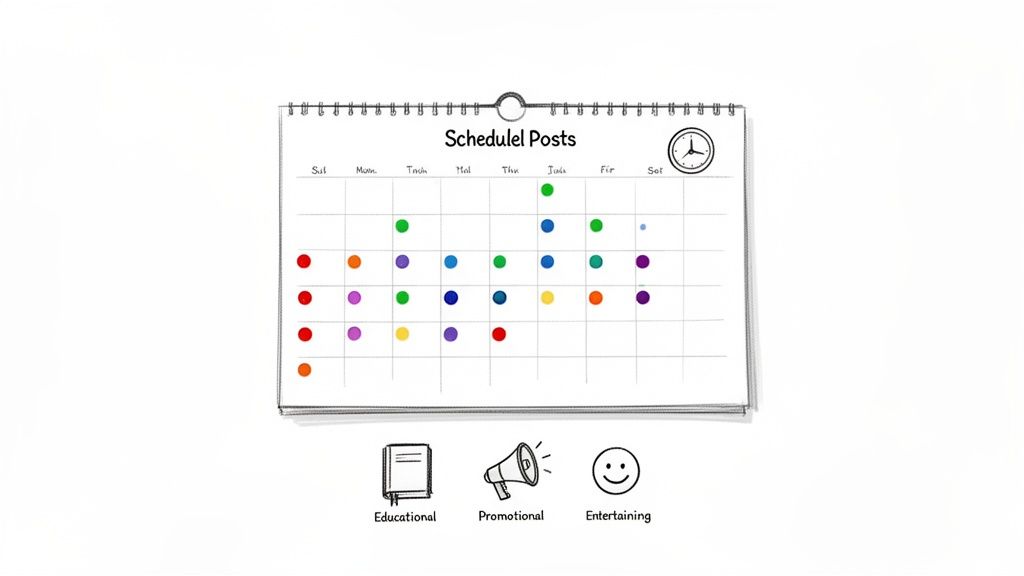
For busy founders and small teams, a structured schedule eliminates the daily pressure of deciding what to post. It transforms social media from a reactive, time-consuming task into a proactive, manageable strategy.
Why Consistency Matters
Algorithms on platforms like Instagram and LinkedIn favor accounts that post regularly. Frequent, predictable activity increases your chances of appearing in your followers' feeds and on discovery pages. Beyond algorithms, a consistent schedule establishes credibility and keeps your brand top-of-mind. Think of how brands like Morning Brew deliver their newsletter at the same time every weekday, creating a strong reader habit.
How to Implement a Consistent Schedule
Getting started is simpler than it seems. The key is to create a sustainable workflow that prevents burnout.
- Start with a Content Calendar: Plan your posts 2-4 weeks in advance using a simple tool like Google Sheets, Trello, or a dedicated platform like Asana. Create columns for the date, platform, content pillar (e.g., educational, behind-the-scenes), caption, and visual asset.
- Batch Create Your Content: Dedicate a 4-hour block on a Friday afternoon to create all content for the following week. During this block, write all captions in a Google Doc, design all graphics in Canva, and edit all short videos. This "batching" method is far more efficient than creating content daily.
- Use Scheduling Tools: Once content is created, use scheduling software to automate the posting process. To maintain a consistent posting schedule across multiple platforms and meet the relentless demand for high-quality content, leveraging content marketing automation tools can be invaluable. This ensures your content goes live at optimal times, even when you're busy with other tasks.
- Set a Realistic Cadence: You don't need to post multiple times a day. Practical example: Commit to posting on LinkedIn and Instagram three times per week (e.g., Monday, Wednesday, Friday). Stick to this for a month before considering adding more. Consistency beats frequency every time.
2. Authentic Storytelling and Personal Branding
In a crowded digital landscape, authentic storytelling moves your brand beyond a simple product or service. It involves sharing the genuine narratives of your business journey, including challenges, lessons learned, and personal wins, rather than relying on purely promotional content. This approach builds a deep, emotional connection with your audience and fosters trust far more effectively than polished corporate messaging.

For solo founders and small teams, your personal story is your greatest competitive advantage. Sharing the human side of your business, like the late-night work sessions or the breakthrough moments, makes your brand relatable and memorable. This is a core tenet of effective social media best practices today.
Why Authenticity Matters
People connect with people, not logos. When you share your authentic story, you differentiate your brand in a way that competitors cannot replicate. This vulnerability builds a loyal community that is invested in your journey, not just your transactions. Think of how Alex Hormozi combines high-value business education with personal stories of his own entrepreneurial struggles, creating a highly engaged and loyal following. This strategy transforms followers into true advocates for your brand.
How to Implement Authentic Storytelling
Weaving your personal brand into your content strategy doesn't have to be complicated. The goal is to be genuine and consistent.
- Document, Don't Just Create: Practical example: If you're launching a new feature, don't just post the announcement. Post a short video clip of your team brainstorming on a whiteboard, a screenshot of an early design mock-up, or a quick story about a bug you squashed late at night. This transparency is highly engaging.
- Share One Personal Lesson Weekly: Dedicate one post each week to a specific lesson you've learned. Workflow: Create a running list in your notes app of small challenges or "aha" moments. Each week, pick one and write a short post structured as: 1. The problem, 2. The mistake I made, 3. The lesson learned.
- Leverage "Raw" Content Formats: Use Instagram Stories, live videos, or simple phone recordings to share unfiltered thoughts. Tool suggestion: The CapCut mobile app is excellent for quickly adding captions to a raw, "talking head" video, making it more accessible and professional in under five minutes.
- Show Up in Your Community: Respond to comments and DMs personally. Your direct engagement reinforces that there is a real person behind the brand, which is essential if you want to learn how to build a personal brand that resonates.
- Balance Wins with Struggles: Don't just post highlight reels. Sharing pivots, mistakes, and moments of doubt humanizes your brand and makes your eventual successes feel more impactful and inspiring.
3. Data-Driven Content Optimization
Guessing what your audience wants is a recipe for wasted effort. Instead, data-driven content optimization uses analytics to inform your strategy, ensuring every post has a purpose. This approach involves analyzing platform metrics to understand which topics, formats, and posting times drive the most meaningful results, like engagement, reach, and conversions.

For solo founders and small teams with limited resources, this practice is non-negotiable. It allows you to focus your creative energy on content that is proven to perform, maximizing the return on your time and effort.
Why Data Matters
Relying on data removes subjectivity from your content strategy. It provides concrete evidence of what resonates with your audience, allowing you to double down on successful tactics and stop ineffective ones. Brands like HubSpot consistently analyze their social media and blog performance to identify popular topics, which then guide their entire content calendar for maximum impact. This is one of the most effective best practices for social media because it connects content creation directly to business goals.
How to Implement Data-Driven Optimization
You don't need a complex analytics suite to get started. The tools are already at your fingertips.
- Use Native Analytics First: Before paying for third-party tools, master the built-in analytics on Instagram, LinkedIn, TikTok, and other platforms. Practical example: On Instagram, go to "Professional Dashboard" -> "Account Insights." Filter your posts from the last 30 days by "Saves." The top posts are your most valuable content—create more like them.
- Track Key Metrics Monthly: Dedicate one hour on the first Monday of each month to this task. Workflow: Create a simple Google Sheet with columns for Post, Date, Platform, Reach, Likes, Comments, Saves/Shares, and Engagement Rate. Fill this out for your top 5 and bottom 5 posts. Look for patterns in the topic, format (e.g., video vs. carousel), and call-to-action.
- Set Up UTM Parameters: To connect social media activity to website performance, use Google's free Campaign URL Builder. Example: When linking to a new blog post from LinkedIn, create a UTM link where
utm_source=linkedin,utm_medium=social, andutm_campaign=blog-promo. This lets you see in Google Analytics that LinkedIn drove specific traffic. - Be Patient with Data: Avoid making drastic strategy changes based on a single post's performance. Track at least four weeks of data to identify reliable trends before adjusting your content plan.
4. Multi-Platform Strategy with Platform-Specific Content
Resisting the urge to "copy and paste" the same post across all your social channels is a defining best practice for social media. A multi-platform strategy involves tailoring your messaging, format, and tone to each platform's unique audience and algorithm. This approach maximizes reach and engagement by respecting the distinct culture of each online space.
For a small team, this doesn't mean creating entirely new content from scratch for every platform. Instead, it’s about adapting a core message into different formats that feel native to each environment. This strategic repurposing ensures your efforts are both efficient and effective.
Why Platform-Specific Content Matters
Each platform has a different purpose and user expectation. LinkedIn users seek professional insights, while TikTok users want short, entertaining videos. Posting a formal business case study on TikTok will likely fall flat, just as a viral dance challenge would seem out of place on LinkedIn.
Adapting content demonstrates a deeper understanding of your audience on each platform, building stronger connections and driving better results. Practical example: A SaaS company launches a new feature. On LinkedIn, they post a detailed text breakdown of its business benefits. On Instagram, they create a 30-second Reel showing a screen recording of the feature in action. On X (Twitter), they write a thread of 5 tweets highlighting different use cases.
How to Implement a Platform-Specific Strategy
The key is to work smart, not harder. Create a central piece of "pillar" content, like a blog post or a long-form video, and then adapt it.
- Identify Your Core Platforms: Don’t try to be everywhere. Start with the 2-3 platforms where your target audience is most active and engaged.
- Create a Content Adaptation Guide: Productivity tip: In a shared document, create a simple checklist for each pillar content piece. For example: "Blog Post -> LinkedIn Article (full text), Instagram Carousel (5 key takeaways), X Thread (10-tweet summary), 2 Short Videos (scripted from sub-headings)."
- Repurpose a Core Message: Take one idea and translate it. A customer success story could become a professional case study on LinkedIn, a quick testimonial video for Instagram Reels, and a Q&A thread on Twitter.
- Prioritize Native Features: Platforms reward the use of their own tools. Instead of linking out to a YouTube video on Instagram, upload the content directly as a Reel. Tool suggestion: Use a tool like Repurpose.io to automatically convert and distribute video content to multiple platforms in their native format.
5. Community Engagement and Relationship Building
Actively engaging with your audience is a cornerstone of modern social media, transforming your account from a passive broadcast channel into a thriving community hub. This practice involves interacting through comments, direct messages, mentions, and collaborations. Social media is fundamentally social, and platform algorithms are designed to prioritize content that sparks conversation and connection.
For busy founders and small teams, this approach creates a powerful flywheel. Genuine engagement often yields higher-quality leads, brand advocates, and invaluable customer feedback far more effectively than broadcasting to an indifferent audience. It’s about building relationships, not just chasing metrics.
Why Engagement Matters
Engaging with your audience sends a strong signal to algorithms that your content is valuable and relevant, which can boost its visibility. More importantly, it builds genuine human connections. When followers feel seen and heard, they transition from passive consumers to loyal supporters. Think of how creators like Alex Hormozi build massive loyalty by frequently responding to comments and DMs, making their large audience feel like a close-knit community.
How to Implement Community Engagement
Building a community requires a proactive and consistent effort, but it doesn't have to consume your entire day. A structured approach makes it manageable.
- Set Aside Daily Engagement Time: Use a "time-blocking" method. Workflow: Schedule two 15-minute blocks in your calendar each day labeled "Social Engagement." Use the morning block to respond to comments on your posts and the afternoon block to comment on 5-10 posts from key accounts in your niche.
- Prompt Conversations: Don't just post, provoke a response. End your captions with a specific, open-ended question. Practical example: Instead of "Here's our new productivity feature," try "Our new feature helps you save time on reporting. What's the one task you wish you could automate right now?"
- Acknowledge and Amplify Your Audience: Regularly feature user-generated content (UGC). Example workflow: Create a folder in your Instagram DMs or a saved collection for every time a customer tags you. Once a week, choose the best one and re-share it to your Stories with a thank-you message.
- Respond with Substance: Go beyond generic "thanks!" replies. Example: If someone comments, "Great tip!", respond with, "Thanks so much! Have you ever tried applying it to X problem? I've found that works well too." This deepens the conversation and is one of the most effective best practices for social media growth.
6. Value-First Content Strategy
Adopting a value-first content strategy means prioritizing content that serves your audience before asking for anything in return. This approach flips the traditional marketing model on its head. Instead of leading with a sales pitch, you lead with genuine help, establishing trust and authority long before you mention your product or service.
The core principle is the 80/20 rule: 80% of your content should provide pure value by educating, entertaining, or inspiring your audience. The remaining 20% can then be dedicated to direct promotion. This strategy is one of the most effective best practices for social media because it transforms your brand from a seller into a trusted resource.
Why a Value-First Approach Matters
In a crowded digital landscape, a constant stream of "buy now" messages alienates potential customers. Providing value first builds a loyal community that is more receptive to your promotional content when it does appear. Think of how HubSpot offers thousands of free templates and guides; by the time a user is ready to buy marketing software, HubSpot is already their go-to authority.
This method also naturally fuels your sales funnel. High-value content attracts a qualified audience, and by solving their problems, you demonstrate your expertise and the potential of your paid offerings without a hard sell.
How to Implement a Value-First Strategy
Executing this strategy requires a deep understanding of your audience’s needs. The goal is to become their favorite source of information in your niche.
- Identify Core Audience Pain Points: Workflow: Use a tool like AnswerThePublic or browse relevant Reddit/Quora forums to find the exact questions your audience is asking. List the top 10 questions and build your next month's content calendar around answering them.
- Teach Your Process: Don't just show off your successful results; break down the "how." Practical example: A marketing agency could create an Instagram carousel detailing their 5-step process for creating a high-converting landing page, including screenshots and pro tips. This builds immense trust and showcases their expertise.
- Share Insights Generously: Follow the lead of thinkers like Naval Ravikant, who share profound ideas on Twitter without any self-promotion. This positions you as a thought leader and attracts a highly engaged following.
- Create Usable Frameworks: Develop simple, actionable frameworks or checklists that your audience can implement immediately. Practical example: A financial advisor could create a one-page "Monthly Budgeting Checklist" PDF and offer it as a free download in their bio link, providing instant value.
7. Visual Consistency and Brand Identity
Maintaining a cohesive visual identity across all your social media posts is a powerful practice for building a memorable brand. This means using a consistent color palette, typography, design style, and photo filters. Visual consistency makes your content instantly recognizable, helping it stand out in a crowded feed and building brand recall with your audience.
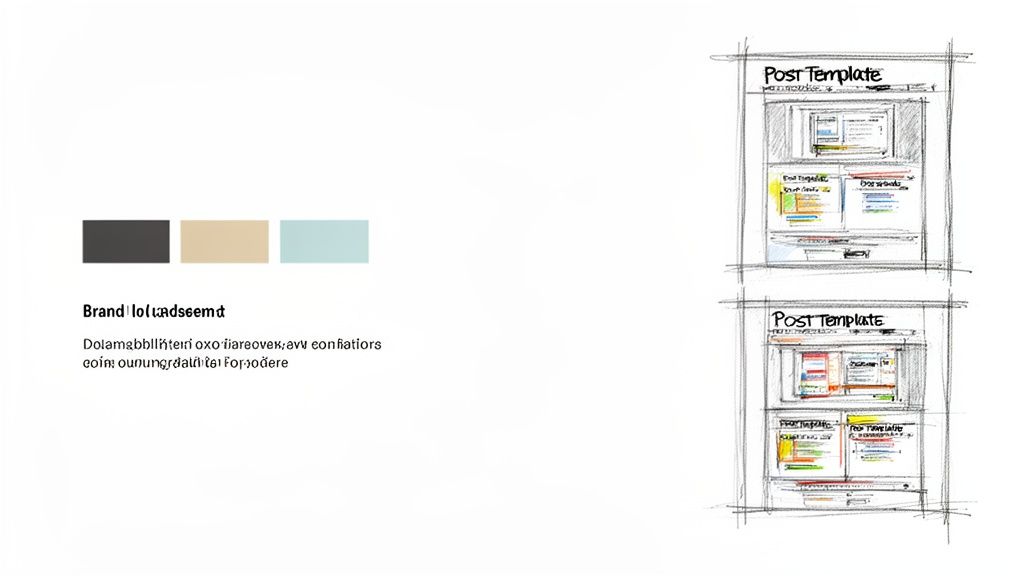
For small teams, a strong visual identity projects a level of professionalism and polish that rivals larger competitors. It creates a seamless and trustworthy experience for followers as they interact with your brand across different platforms.
Why Visual Consistency Matters
A consistent look and feel reinforces your brand identity with every post. When a user scrolls through their feed, they should be able to identify your content before they even see your profile name. This immediate recognition is crucial for capturing attention and building the kind of brand memory that drives loyalty. Think of how Mailchimp uses its distinctive illustrated style or how Slack maintains a playful, colorful aesthetic on every platform.
How to Implement Visual Consistency
Creating a professional-looking feed doesn't require a full-time designer. The key is to establish simple rules and leverage efficient tools.
- Create a Simple Brand Guide: Workflow: Create a one-page document listing your 2-3 primary brand colors (with hex codes), 2 fonts (one for headers, one for body), and your logo. This is your North Star for all visual content.
- Use Design Templates: Tool recommendation: Use Canva's "Brand Kit" feature to save your colors, fonts, and logos. Create 5-10 reusable templates for different post types (e.g., quotes, announcements, tips). This ensures consistency and reduces design time from hours to minutes.
- Stick to a Cohesive Photo Style: If you use photography, decide on a consistent editing style. Tool suggestion: Use a Lightroom preset (many are available for free or for purchase) and apply it to all your photos with a single click to create a unified and professional look.
- Audit Your Feed Quarterly: Take a step back every few months and look at your profile grid as a whole. Productivity tip: Use a tool like Planoly or Later to preview how new posts will look in your grid before you publish, ensuring they maintain the cohesive aesthetic.
8. Trending Topics and Timely Content Leverage
Capitalizing on current events, viral trends, and industry news is a powerful social media best practice for boosting discoverability. This real-time marketing approach involves tapping into conversations your audience is already having, which can significantly increase your content's algorithmic reach and engagement. By joining a relevant, trending dialogue, you place your brand in front of a much larger audience than your follower count alone.
This strategy transforms your social media presence from a one-way broadcast into an active, relevant voice in your community. For founders and small teams, it offers a high-leverage way to gain visibility without a large ad budget, simply by being agile and culturally aware.
Why Timely Content Matters
Algorithms on platforms like X (formerly Twitter) and TikTok are designed to push timely content to the forefront. When you engage with a trending topic, you are essentially piggybacking on a wave of interest that the platform is already prioritizing. This leads to higher impressions, engagement, and potential follower growth. Brands like Wendy's have mastered this on X, using witty, real-time commentary on cultural events to build a massive, engaged following.
How to Implement a Timely Content Strategy
Integrating timely content requires a system for monitoring trends and acting quickly. The goal is to be reactive in a planned, strategic way that aligns with your brand voice.
- Monitor Trends Proactively: Workflow: Spend 10 minutes each morning checking the "Trending" tab on X and TikTok and scanning industry newsletters like The Hustle or Morning Brew for relevant news. Use a tool like Google Alerts for industry keywords.
- Create Quick-Turnaround Templates: Prepare 2-3 simple graphic or video templates in Canva or CapCut with your branding pre-applied. Practical example: Have a "Hot Take" template ready. When industry news breaks, you can quickly add your opinion text, export, and post within minutes.
- Evaluate for Brand Alignment: Not every trend is right for your brand. Before jumping in, ask a simple question: "Can we add a valuable or unique perspective here that serves our audience?" Forcing a connection can appear inauthentic and damage credibility.
- Balance with Evergreen Content: Relying solely on trends is a risky strategy. A good workflow is to aim for one timely/trending post per week, with the rest of your content calendar filled with evergreen, value-first posts.
9. Content Repurposing and Distribution Efficiency
For a solo founder or small team, creating unique content for every platform is an unsustainable path to burnout. Content repurposing is a game-changing best practice for social media that focuses on working smarter, not harder. This strategy involves taking a single, high-value content idea and adapting it into various formats for distribution across multiple channels.
This approach multiplies your reach and impact from a single effort, ensuring your core message connects with different audience segments on their preferred platforms. It transforms content creation from a relentless treadmill into an efficient, scalable system.
Why Repurposing Matters
Repurposing maximizes the return on your initial time investment. A single podcast episode, for example, contains enough material for a blog post, multiple video clips for TikTok and Reels, a detailed Twitter thread, an Instagram carousel with key takeaways, and a newsletter summary. This efficiency allows you to maintain a consistent presence everywhere without having to generate brand-new ideas daily. It reinforces your authority by presenting the same core concepts in diverse, engaging ways.
How to Implement Content Repurposing
Creating a systematic workflow is essential for making this strategy effective and manageable.
- Start with a "Pillar" Piece: Your pillar is a substantial piece of content like a blog post, YouTube video, or podcast episode. This will be the source material for all other repurposed assets.
- Develop a Repurposing Checklist: Create a standard operating procedure (SOP) in a document. Example Workflow:
- Publish new blog post.
- Use Opus.pro to generate 5 short video clips from the main ideas.
- Use Canva to create a 10-slide Instagram carousel summarizing the key steps.
- Write a 10-tweet thread on X based on the post's outline.
- Post a text-only summary on LinkedIn with a key insight.
- Adapt, Don't Just Copy-Paste: Tailor the content for each platform. Practical example: For an Instagram carousel from a blog post, use strong visual icons and minimal text on each slide. For the LinkedIn post, use professional language and focus on business outcomes.
- Create a Content Asset Library: Use a simple spreadsheet or a tool like Notion to track your pillar content and its derivatives. Productivity Tip: Create columns for "Pillar Title," "Pillar Link," "Carousel Link," "Video Clips Link," and "Last Shared Date." This helps you easily find and re-share evergreen content every 3-6 months.
10. Strategic Partnerships and Cross-Promotion
Collaborating with complementary brands and creators is a powerful way to expand your reach and credibility beyond your existing audience. Strategic partnerships introduce your brand to new, relevant followers, combine audience bases for mutual growth, and leverage each partner's established trust. For founders with smaller audiences, these collaborations act as a force multiplier.
This approach transforms social media from a solitary effort into a community-driven growth engine. By tapping into another brand's audience, you gain warm introductions to potential customers who are already interested in your niche, making this one of the most effective best practices for social media growth.
Why Partnerships Matter
A well-chosen partnership provides an instant credibility boost. When a trusted creator or brand co-signs your work, their audience is far more likely to pay attention. This method bypasses the slow grind of building an audience from scratch, allowing you to get in front of thousands of potential followers. For example, Alex Hormozi frequently collaborates with other business coaches and fitness brands, cross-pollinating audiences and reinforcing his authority in both domains.
How to Implement Strategic Partnerships
Successful collaborations are built on mutual value and clear communication. The goal is to create a win-win scenario that benefits both parties and their respective audiences.
- Identify Potential Partners: Productivity tip: Create a spreadsheet of 20 potential partners. Look for non-competing accounts that serve a similar audience. A project management tool might partner with a time-tracking app, for instance. A good rule of thumb is to target partners with an audience size from 20% smaller to 20% larger than your own.
- Create a Clear Value Proposition: When you reach out, don't just ask for a shoutout. Propose a specific, valuable collaboration. Example pitch: "Hi [Name], I love your content on [topic]. I'm launching a guide on a related topic, [Guide Topic], and thought it would be valuable for your audience. Would you be open to a collaboration where we co-host an Instagram Live to discuss the top 3 takeaways?"
- Start with Micro-Influencers: These creators often have highly engaged, niche audiences and are more accessible for new partnerships. Their endorsement can feel more authentic and drive significant results.
- Formalize the Agreement: Even for informal partnerships, a simple email outlining the deliverables prevents misunderstandings. Workflow: Send a follow-up email confirming: 1. What each partner will post. 2. The dates and times of posting. 3. Who is responsible for creating the assets.
- Track Performance: Create unique UTM links or discount codes for each collaboration to measure its impact. This data helps you understand which partnerships drive the most traffic and conversions, allowing you to refine your strategy over time.
10-Point Social Media Best Practices Comparison
| Strategy | 🔄 Implementation Complexity | ⚡ Resource Requirements | ⭐📊 Expected Outcomes | 💡 Ideal Use Cases | ⭐ Key Advantages |
|---|---|---|---|---|---|
| Consistent Posting Schedule | Medium — requires planning, batching, calendar setup | Low–Medium — time for batch creation; scheduling tools | ⭐ High; 📊 steady reach, predictable engagement growth | Founders, side-hustlers, brands needing reliable presence | Builds trust; reduces decision fatigue; automatable |
| Authentic Storytelling and Personal Branding | Medium — ongoing personal input, less formulaic | Low–Medium — time for recording/responding; minimal tools | ⭐ High (emotional connection); 📊 deeper loyalty & shareability | Solo founders, creators, niche brands seeking differentiation | Creates emotional bonds; memorable with low production needs |
| Data-Driven Content Optimization | High — analytics setup, testing, interpretation | Medium–High — analytics tools, tracking, time to analyze | ⭐ High (efficiency); 📊 improved ROI and repeatable wins | Resource-constrained founders needing measurable impact | Removes guesswork; identifies high-performing patterns |
| Multi-Platform Strategy with Platform-Specific Content | High — tailoring formats, tones, and schedules per platform | High — multiple content variants, platform know‑how, management tools | ⭐ High reach; 📊 diversified discovery and audience growth | Brands targeting varied audiences across channels | Maximizes reach; mitigates single-platform risk; tailored engagement |
| Community Engagement and Relationship Building | Medium–High — continuous, real-time interaction required | High — significant time or community managers | ⭐ High (loyalty); 📊 better lead quality, retention, referrals | Community-driven products, service businesses, retention-focused brands | Builds advocates; yields authentic feedback and collaborations |
| Value-First Content Strategy | Medium — requires audience research & consistent substance | Medium — time for research and thoughtful content creation | ⭐ High credibility; 📊 long-term traffic and trust-building | Thought leadership, inbound marketing, education-first brands | Attracts qualified audience; content with long shelf-life |
| Visual Consistency and Brand Identity | Medium — upfront design system, then repeatable | Low–Medium — templates, style guide, occasional designer | ⭐ Medium–High recognition; 📊 improved professional perception | DTC brands, visual platforms (Instagram, TikTok), scaling brands | Instant recognizability; saves design time; polished appearance |
| Trending Topics and Timely Content Leverage | Medium — monitoring plus rapid execution | Low–Medium — alerts, quick-turn templates, agile creators | ⭐ Variable; 📊 short-term spikes in reach and engagement | Brands seeking viral moments or topical relevance | Rapid visibility boosts; positions brand as current and relevant |
| Content Repurposing and Distribution Efficiency | Medium — systematized repurposing workflow required | Low–Medium — asset management, batching, templates | ⭐ High ROI; 📊 multiplies reach and lifetime value of content | Small teams, time-constrained creators, evergreen content producers | Maximizes output per idea; reduces cost per asset |
| Strategic Partnerships and Cross-Promotion | Medium — partner discovery, coordination, clear agreements | Low–Medium — outreach time, co-creation effort | ⭐ High (reach & credibility); 📊 audience expansion and trust transfer | Small audiences seeking growth; complementary creators & brands | Access to new audiences; shared credibility; cost-effective growth |
Putting It All Together: Your Path to Social Media Mastery
Navigating the world of social media can often feel like trying to hit a constantly moving target. We've journeyed through ten foundational pillars of success, from establishing a consistent posting schedule and weaving authentic storytelling into your brand narrative, to leveraging data-driven insights for content optimization. Each of these principles represents a critical piece of the puzzle, but the true power lies not in tackling them all at once, but in building a sustainable, integrated system that works for you.
Remember, the goal is not to be present on every platform, posting endlessly. It is to be strategically present where your audience lives, delivering consistent value that builds trust and fosters community. Mastering these best practices for social media is about transforming your online presence from a scattered set of activities into a cohesive, high-impact engine for growth.
Your Actionable Roadmap to Implementation
The sheer volume of advice can be overwhelming, so let's distill it into a practical, step-by-step plan. Don't try to boil the ocean. Instead, focus on incremental, intentional progress.
Month 1: The Foundation. Choose just two core practices to master. Start with #1 (Consistent Posting Schedule) and #6 (Value-First Content Strategy). Your only goal for the next 30 days is to show up regularly with content that genuinely helps or entertains your audience. Use a simple content calendar in Google Sheets or Trello to plan ahead and batch-create your posts for the week.
Month 2: The Engagement Loop. Now, layer in #5 (Community Engagement). Dedicate two 15-minute blocks in your calendar each day specifically for responding to comments, engaging with your followers' content, and participating in relevant conversations. Combine this with #2 (Authentic Storytelling) by sharing behind-the-scenes glimpses or personal anecdotes in your posts and stories.
Month 3: The Optimization Engine. With a consistent flow of content and engagement, it's time to get smart with your efforts. Dive into #3 (Data-Driven Optimization). On the first of the month, open your native platform analytics and identify the top 3 posts by saves and shares. Break down what made them successful (topic, format, hook) and create more content based on that winning formula.
Key Insight: Social media mastery is not a destination; it's a process of continuous improvement. The cycle is simple: Plan & Create -> Engage -> Analyze -> Repeat. Each cycle makes your strategy smarter, your content more resonant, and your workflow more efficient.
Building a System, Not Just a To-Do List
For solo founders and small teams, the biggest challenge isn't knowing what to do, it's finding the time to do it. This is where creating a workflow becomes a non-negotiable part of your strategy.
Leverage the power of #9 (Content Repurposing) to maximize your output. A single blog post can be transformed into a carousel for Instagram, a thread for X (formerly Twitter), a short-form video script, and a series of key takeaways for LinkedIn. This isn't about being lazy; it’s about working smarter and respecting your most valuable resource: your time.
By implementing these best practices for social media, you shift from a reactive state-constantly chasing trends-to a proactive one. You build a brand that is not only visible but also valuable and memorable. You create a community that is not just following you but is genuinely invested in your journey. This is the ultimate return on investment-a loyal audience that trusts you, champions your work, and drives sustainable growth for your business. The journey starts with one small, consistent step. Choose yours today and begin building.
Ready to implement these best practices without the burnout? Postful is the AI-powered social media manager designed to streamline your entire workflow, from generating on-brand content ideas to scheduling posts at the optimal time. Stop spending hours on social media management and start getting results by visiting Postful to supercharge your strategy.